
Article: Cat litter when pregnant: who empties the tray, and how to run it
Cat litter when pregnant: who empties the tray, and how to run it
The NHS advice on the litter tray during pregnancy is one line long: avoid emptying it. The concern is a parasite called Toxoplasma gondii, which can be in cat faeces, and the advice is about who handles the tray rather than whether the cat stays.
This page sets out what the NHS and Tommy's say, and the routine for whoever takes the scoop. It is not medical advice. Anything that worries you, speak to your midwife or GP. I sell litter and a litter tray, so the obvious question is whether a particular litter changes the advice. It does not. None of the guidance from the NHS, Tommy's, International Cat Care or Cats Protection mentions what the litter is made of. What matters is who empties the tray, how often, and what they do with their hands afterwards.
Can a pregnant woman be around cat litter?
The cat can stay. The NHS is clear that you cannot catch toxoplasmosis from stroking a cat, having a cat as a pet, or from contact with someone who has the infection. Tommy's, the pregnancy charity, says the same. What the NHS advises against is emptying the litter tray while pregnant, because cat faeces may contain the parasite and toxoplasmosis can harm a baby.
Around, in practice, means everything that sharing a house with a cat involves: a lap, a bed, a head on your arm while you read. The sources place the parasite in cat faeces and in soil that faeces have touched, and Cats Protection says it has not been found on cats' coats even while a cat is shedding it. The tray is the point in the home routine where contact with faeces is likely, and that is the point the guidance addresses. If you are expecting a baby and a kitten at the same time, the same rule holds: hand the tray over, not the cat.
Is cat litter harmful when pregnant?
The concern is the parasite Toxoplasma gondii, not the litter itself. The NHS describes toxoplasmosis as a common infection caught from the faeces of infected cats or from infected meat, and says it is usually harmless but can cause serious problems in some people. Tommy's adds that if you get the infection while pregnant, or just before, it can increase your risk of miscarriage and stillbirth, or cause serious health problems for your baby. If you were infected more than a few months before becoming pregnant, Tommy's notes, you will have developed immunity that protects your baby.
The tray is one route among several. Tommy's lists eating raw or undercooked meat showing any traces of pink or blood, eating cured, dried or smoked meats like salami, eating unwashed fruit and vegetables that may be contaminated by cat faeces, and touching cat faeces, for example when changing the litter tray, then touching food. The litter question is real, but it sits alongside the kitchen and the garden, not above them. That proportion is worth keeping in mind, because a search for "cat litter when pregnant" can make the tray sound like the only risk, and the sources say it is not.
Around 350 people in total are diagnosed with toxoplasmosis in England and Wales each year, according to Tommy's. That is the only UK figure the sources give.
How do I safely clean my cat's litter if I'm pregnant?
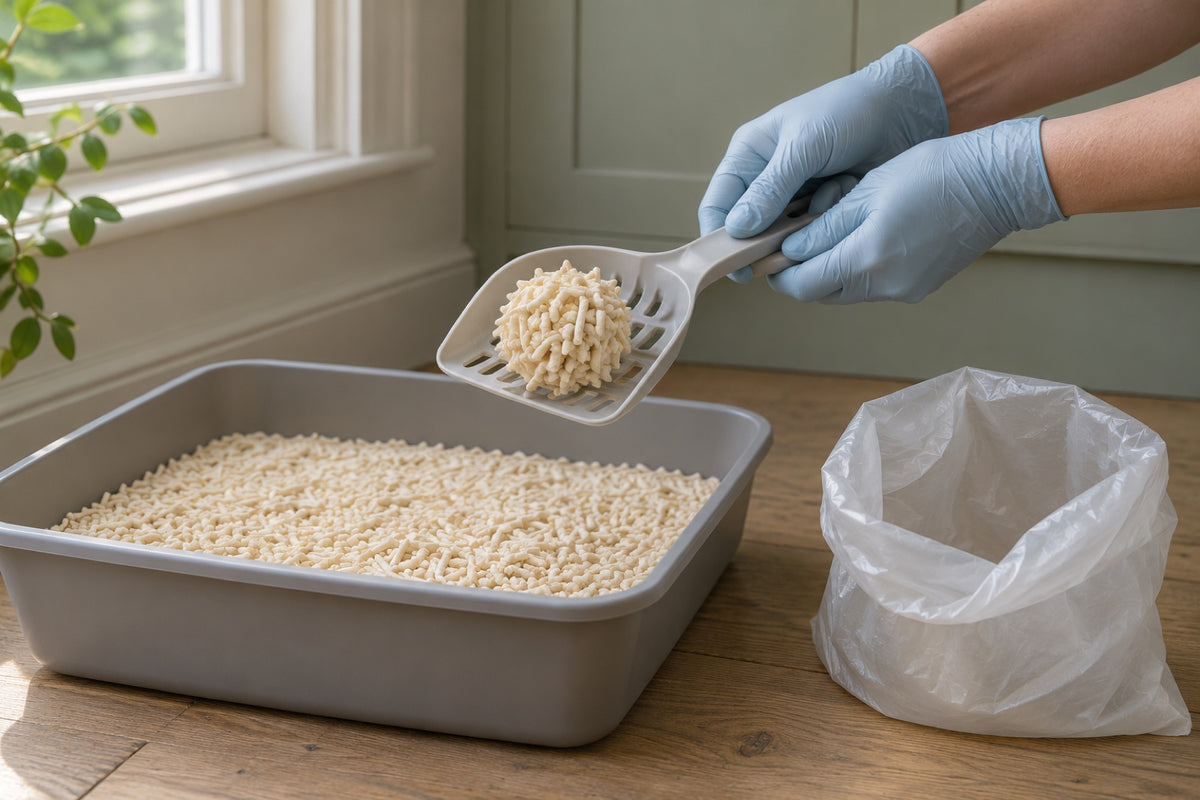
The NHS advice is that someone else does it. If nobody else can, use disposable rubber gloves, clean the tray daily, and wash your hands thoroughly afterwards. Tommy's gives the same instruction with the same emphasis: have someone else change the litter, or wear gloves and wash your hands.
On the cat-charity side, Cats Protection's guidance is to avoid cleaning out litter trays if pregnant, to get someone else to do it if possible, and if you have to, to wear gloves and wash your hands afterwards. International Cat Care adds: use litter tray liners if possible, and wear gloves when handling cat litter. One line that belongs here rather than later: the NHS also advises wearing gloves when gardening, even if you do not have a cat, in case the soil is contaminated with faeces.

The full routine for whoever takes over is further down this page, under how to set up a tray someone else can run.
Why the tray is emptied every day
Every source agrees on daily. Tommy's gives the reason: the litter tray should be changed daily, as it takes several days for a cat's faeces to become infectious. The NHS says trays should be cleaned daily. International Cat Care says to empty litter trays daily, so that eggs do not have time to become infective.
Daily scooping is not a full change. With a clumping litter, it means lifting out the clumps and solids each day, topping up the clean litter, and replacing the lot on a longer cycle. The full-change schedule, by material and number of cats, has its own page. If the person taking over has never run a litter tray before, how to litter-train a kitten covers the basics of fill depth and placement, and what matters here is that the person doing the daily job has everything they need beside the tray so the step is quick and complete. That is what the hand-over card below sets out.
Can you get toxoplasmosis from an indoor cat?
Infection with Toxoplasma gondii is much more common in cats that hunt or eat raw meat, according to International Cat Care, and most cats become infected by eating meat containing the parasite, whether raw or undercooked meat or, more commonly, prey such as mice or voles. The NHS advises not to feed cats raw or undercooked meat, and Tommy's says the same.
That said, the NHS and Tommy's advice on the litter tray makes no exception for indoor cats, and neither source says why. The cat charities fill in some of the gap: Cats Protection notes that if you own an older cat, it may have already been infected and is therefore unlikely to be a risk, and that a blood test via the vet can check; International Cat Care names raw or undercooked meat as a route whatever the cat's lifestyle. The tray routine the NHS describes applies to every cat. I would follow it. International Cat Care's advice to feed only properly cooked food or commercial cat food applies to every household here, not only to the ones whose cats go outside.
I accidentally touched cat poop while pregnant. Can I get toxoplasmosis?
Wash your hands thoroughly. The NHS says that if you come into contact with cat faeces, wash your hands thoroughly. The NHS says toxoplasmosis does not usually cause any symptoms, and that you can ask for an urgent GP appointment or get help from NHS 111 if you are pregnant and have any symptoms of toxoplasmosis. Tommy's adds that you can ask your midwife or GP for a blood test if you are worried; the test is not part of routine antenatal care.
This is the point where a worried reader deserves the routing, not the reassurance. If you have no symptoms, wash your hands and speak to your midwife at your next appointment. If you do have symptoms (the next section), the NHS says to ask for an urgent GP appointment, use NHS 111, or call your midwife for advice.
What are the symptoms of toxoplasmosis?
Toxoplasmosis does not usually cause any symptoms, and the NHS says most people do not know they have had it. When symptoms do appear, the NHS lists a high temperature, headache, sore throat, aching body, swollen glands, feeling tired, and feeling sick or being sick. More serious symptoms include confusion, blurred vision, slurred speech and unsteady walking. The NHS says to go to A&E or call 999 if you or someone else suddenly gets confused or has slurred speech.
For anyone reading this who is pregnant: the symptoms page on the NHS website is the one to keep, and I have listed it under Sources at the end of this page.
Do you need to rehome the cat?
No. This is the worry that the charities answer most directly, and every one of them says the same thing. The NHS says you cannot catch toxoplasmosis from stroking a cat, having a cat as a pet, or from contact with someone who has the infection. Tommy's says the same. Cats Protection says there are really very few instances where a pet needs to be rehomed to safeguard an owner's health, and that studies show stroking a cat does not spread infection to people; even when cats are shedding the parasite in their faeces, it has not been found on their coats. International Cat Care cites research showing that contact with cats, or owning a cat, does not increase the risk of infection in people.
The cat stays. The tray changes hands. If a pregnancy is the moment a household is also thinking about getting a cat for the first time, the same routine applies from the first day: set up the tray, hand over the scooping from the start, and keep the cat's food cooked or commercial. None of it changes whether you can share a home with a cat.
How do you set up a tray someone else can run?
Below is the public guidance, put in the order the job is done. I have not added to it or tested anything; the sequence is mine, the content is theirs.
- Who: someone other than the pregnant person. "Avoid emptying cat litter trays while you're pregnant" (NHS). "Or have someone else change the litter" (Tommy's).
- When: every day. "Trays should be cleaned daily" (NHS). "The litter box should be changed daily" (Tommy's).
- Gloves on, disposable. "Use disposable rubber gloves" (NHS).
- Lift the clumps and solids into a bag; seal it; general waste. "Dispose of cat litter safely. For example, seal it in a bag before putting it with other household waste" (International Cat Care).
- Top up the litter to the depth given for the litter in use (5 to 7cm for the two CocoCat litters below).
- Gloves off, hands washed thoroughly. "Wash your hands thoroughly" (NHS).
- Not before food is touched. Tommy's lists "touching cat poo (for example, when changing the litter box) and then touching food" as a route of infection. The tray is not done until hands are washed.
- Periodically, the deep clean. "Periodically clean the litter tray with detergent and scalding water" (International Cat Care), which it says kills the eggs.
- The cat's food: cooked or commercial, not raw. "Do not feed cats raw or undercooked meat" (NHS).
- If nobody else can do it: the same steps, gloves non-negotiable. "If nobody else can empty the litter tray, use disposable rubber gloves" (NHS).
Anything that worries you: speak to your midwife or GP.
What this means for the tray
None of the guidance from the NHS, Tommy's, International Cat Care or Cats Protection mentions what the litter is made of. The routine is what matters, and a litter and a tray can honestly do one thing for it: make the daily scoop quick and complete.
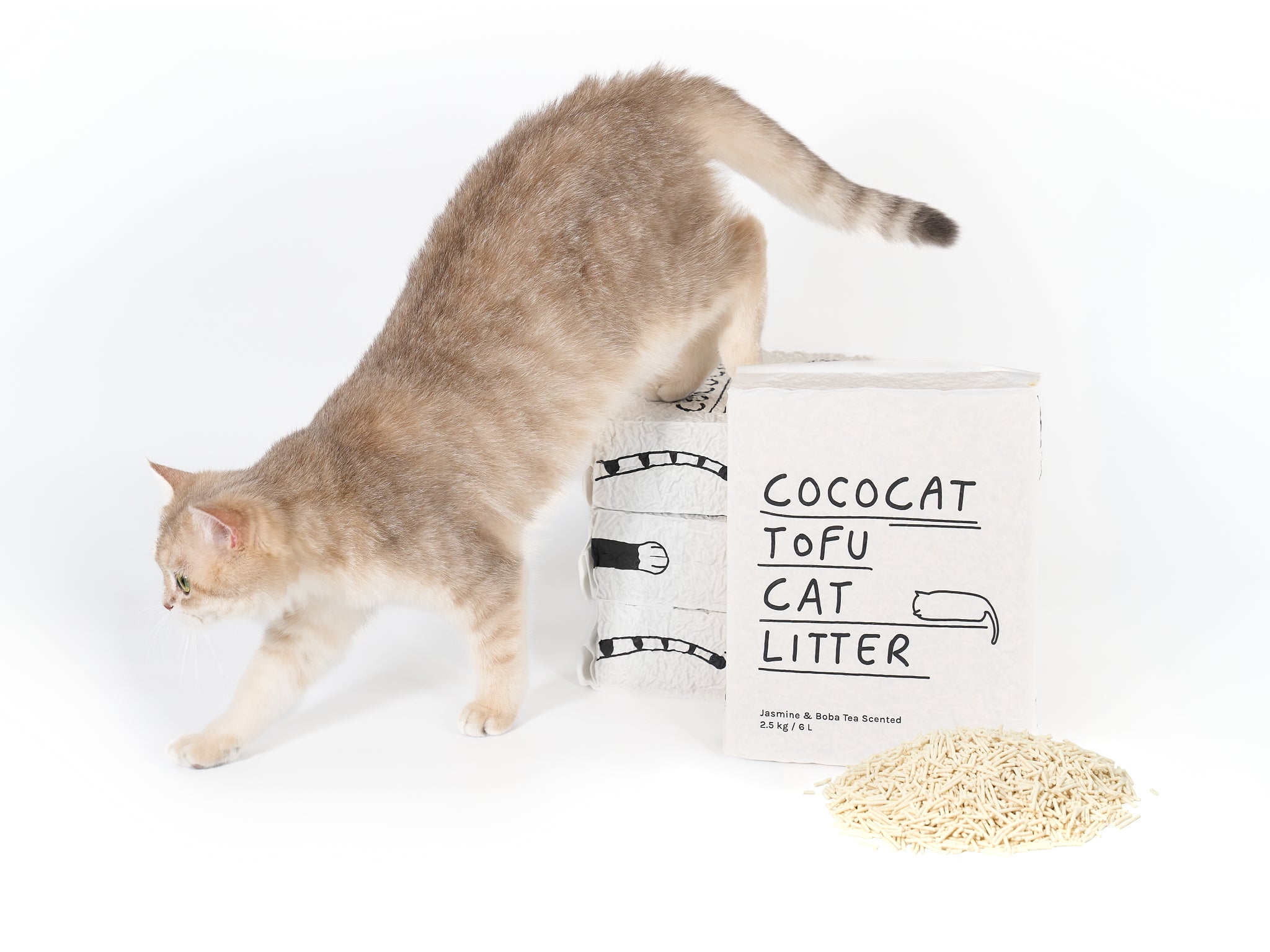
A clumping litter turns each job into a lift-out rather than a full empty. CocoCat's tofu litter is a pea-fibre pellet that forms solid clumps for effortless scooping, lightly scented with jasmine bubble tea. Fill it to 5 to 7cm. Solids go in the bin, bagged. The tofu litter is the same bag discussed in the disadvantages piece and in the tofu-versus-clay comparison, where the disposal route is the same: solids bagged to the bin.
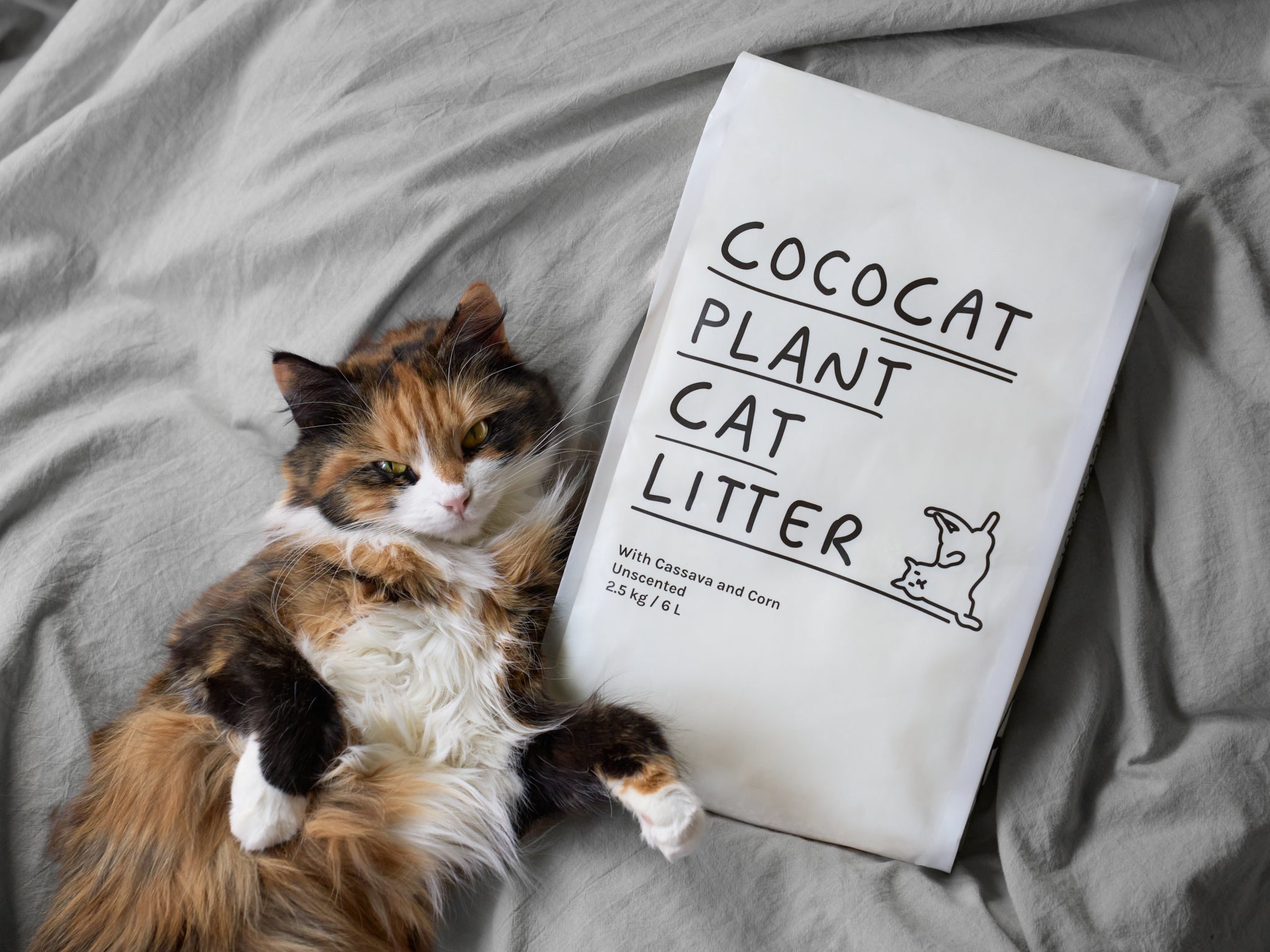
CocoCat's cassava litter is unscented, made from cassava flour, corn starch, corn flour and guar gum. It forms solid, firm clumps that do not stick to the tray, making scooping effortless. Fill the tray with 5 to 7cm. The product's own instruction is "Not Flushable", so everything goes bagged to the bin. Unscented also makes it the litter I would choose for a household that wants no fragrance in the room, though in this piece the point is simpler: the person scooping daily can do it without being met by a scent they did not choose.

For the tray itself, the pidan Snow Dome has a dome that lifts off for cleaning and a scoop that lives inside or outside the box. The round, seamless basin holds about 4 to 5cm of litter. It is a large tray, 54.8cm wide, and suits cats under 7kg. A scoop stored with the tray is one less thing the person taking over has to look for.

None of the guidance mentions automatic litter boxes. A machine's waste drawer is still emptied by hand, and I would treat it the same way: gloves, bag, bin, hands washed. Which litters work in an automatic litter box has its own page.
Both litters are in the cat litter collection, and the Snow Dome is in the litter box collection. If you are weighing up the five plant litters or want to know whether vets recommend tofu litter, those pages exist and neither one makes a pregnancy claim, because there is none to make.
If you are pregnant and live with a cat
Hand the tray over for the pregnancy. The routine for whoever takes it is daily, gloves, hands washed, bag to the bin, and the hand-over card above has the rest. Speak to your midwife or GP about anything that worries you.
Tommy's runs a free pregnancy line: you can call 0800 014 7800, Monday to Friday, 9am to 5pm (read from the Tommy's page on 15 November 2026).
If you want the full-change schedule, or you are setting up a tray in a flat, or this pregnancy is also bringing a kitten into the house, the next read is there.

Leave a comment
This site is protected by hCaptcha and the hCaptcha Privacy Policy and Terms of Service apply.