
Tofu cat litter vs clay litter: what changes when you switch, and what doesn't
Pour water on clumping clay and the clay swells around the wet patch and sets into a hard grey lump. Pour it on tofu litter and the pellets it lands on soak it up and stick together within seconds. Either way you lift a clump out on a scoop, which is why leaving clay for tofu is a smaller change than it looks: the same tray, the same scoop, the same minute a day. What changes is the material, and with it the dust, the bin, the cupboard and the number of litres you get through in a month.
I make a tofu litter and no clay one, so the two places where clay wins are the two I most need to get right. Clay costs less per litre, and it is the texture a cat raised on clay already knows. Both are on this page, next to everything that changes in tofu's favour.
Is tofu cat litter better than clay?
Tofu cat litter is better than clay on dust, on how much of it gets walked through the house and on what ends up in the bin. Clay is better on price per litre and on familiarity for a cat raised on it. Across 369 UK reviews of five plant-litter brands, firm clumps, low dust and low tracking were the points praised most.
Smell is not the tiebreaker either way, because it follows how the tray is run more than which material is in it. So "better" depends on what you are switching for. If the problem is the cloud off the bag, grit underfoot or a bin full of mineral that will never break down, tofu answers it. If price per litre decides it, clay wins, and the cost section below shows where that gap is real and where it narrows.
What is good about tofu cat litter?
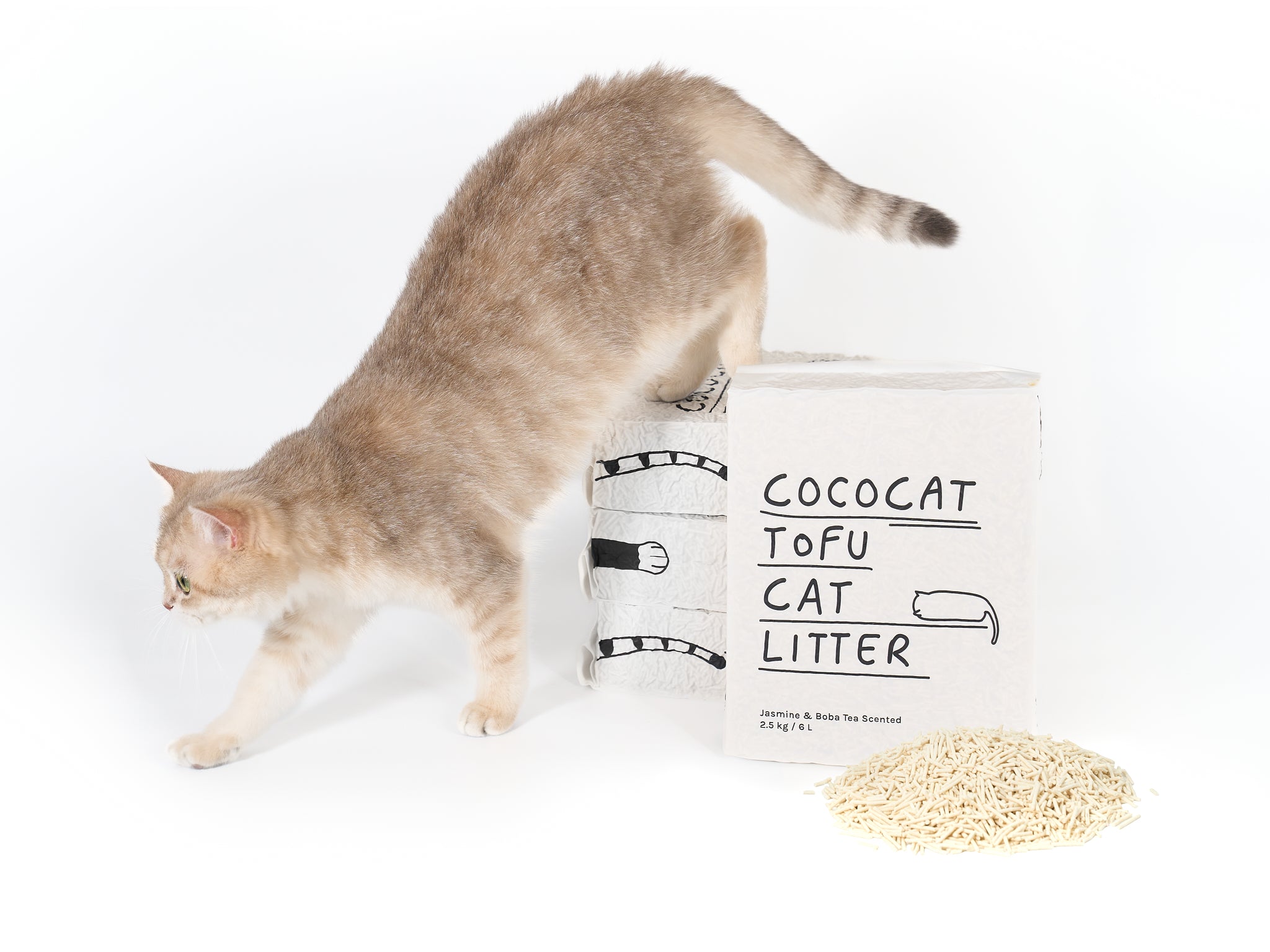
The best thing about tofu cat litter is how little dust comes off it. CocoCat's tofu litter is made of pea fibre, corn starch, guar gum and plant based enzymes, pressed into pellets of roughly 1.5mm. Despite the name there is no tofu in it; "tofu litter" describes the pellet. It clumps within seconds, so the tray is scooped and topped up.
The litter goes through a 99.9 per cent dust-filtration process on the production line, a figure that rates the equipment rather than the air in your home. What owners describe is simpler: no cloud when the bag is poured, no grey film on the skirting board afterwards, no pale paw prints on the windowsill. If someone in the house has asthma, cat or person, the piece on cat litter for cats with asthma sets out what clay dust and silica actually amount to. For everyone else it is a comfort difference, and comfort decides whether the tray is a job you do without thinking or one you put off.
What changes when you switch
Moving from clumping clay to tofu litter changes the material, the dust, the way used litter leaves the house and how the bag is kept. The daily routine stays as it is, because both litters clump, and both are scooped and topped up rather than emptied.
Start with the material. Clumping clay is sodium bentonite, dug from open pits. It is finite and it does not break down, so every trayful thrown away stays in landfill. Tofu litter is made rather than mined. Ours is pea fibre, chosen for how much water it takes up, with corn starch, guar gum and plant based enzymes, and once used it is plant matter: what goes out on bin day is plant fibre, not mineral.
Disposal changes too. Clay leaves the house one way, in the general waste bin. Tofu litter goes in the bin as well, and in some homes there is a second route, which we keep narrow. Scoop faeces into the bin every time, because cat faeces can carry Toxoplasma gondii, and its oocysts survived the chlorine and ozone treatments tested in a 2007 study. Small amounts of clumped tofu litter can go down the toilet where your water company allows it, never on older or restricted plumbing, and we make no septic-safe claim. Water companies advise against flushing cat litter as a category, and for clay and silica they are plainly right, because neither breaks down in water. Anglian Water, one of the companies asking customers not to flush it, clears more than 40,000 blockages a year. Treat flushing as an occasional convenience and the bin as the plan.
The last change is storage. Clay does not mind where it is kept. Plant fibre takes up moisture from the air, so a bag left open beside a tray in a steamy bathroom starts absorbing water before the litter is used, and pellets that have done so soften and clump less cleanly. Roll the bag shut and keep it somewhere dry. Unopened, ours keeps for two years.
Does tofu litter clump?
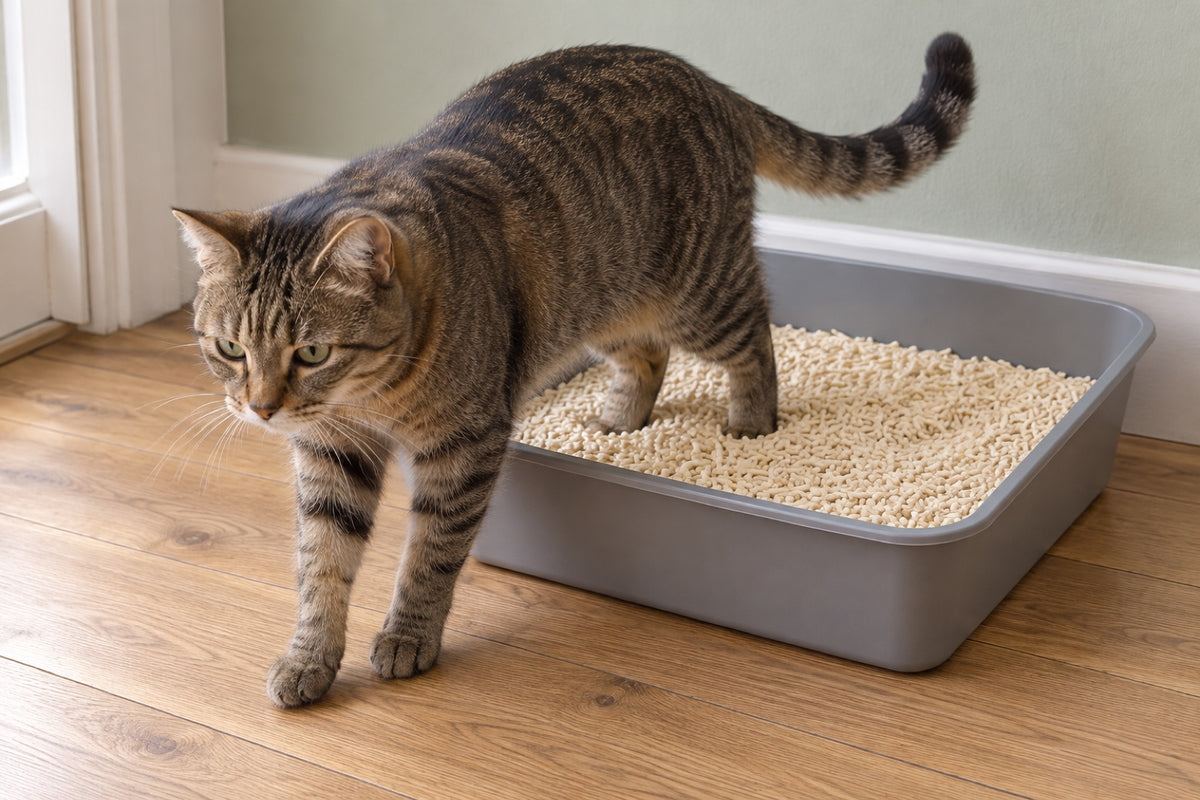
Yes. Tofu cat litter is a clumping litter: the pellets soak up urine and stick together into one lump within seconds, which you lift out whole and replace with a top-up. A tofu clump is firm enough to lift in one piece but does not set rock-hard the way clay does. Fill the tray to 5 to 7cm so the clump forms above the base.

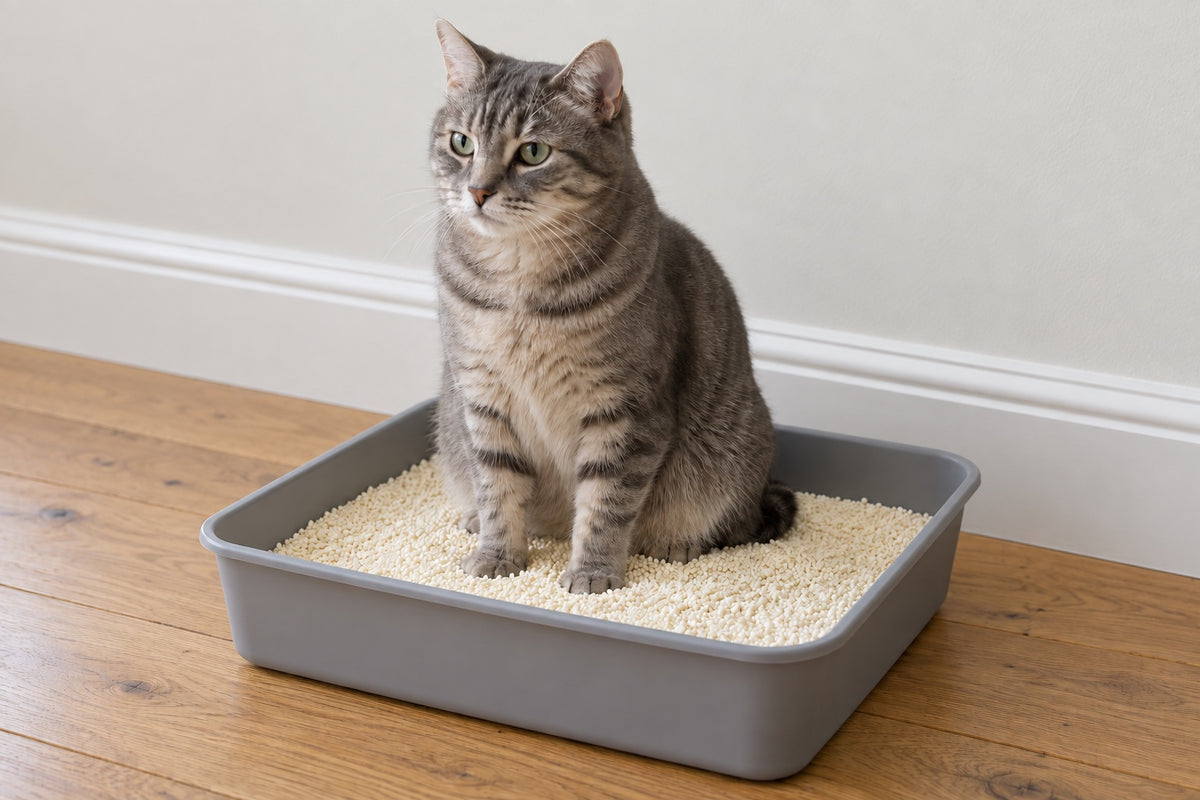
Clumping clay works differently. Bentonite swells to about 15 times its volume when wet and sets hard around the urine, which is why a clay clump can end up cemented to the tray. Tofu has one failure of its own, and it is about depth. In a tray filled to 3 or 4cm, the depth usually given for clay, urine runs to the bottom, soaks the pellets lying against the plastic and leaves a sticky smear to chip off. At 5 to 7cm it is caught on the way down. Give a fresh clump a few seconds to firm, then lift rather than stir, and it comes out in one piece.

Why don't people like clumping cat litter?
The usual complaints about clumping litter are a clump stuck to the tray, dust from finely milled clay, and worry about a kitten swallowing a material that swells. The first is a fill-depth problem, solved at 5 to 7cm. The second is the problem low-dust plant litters were made for. The third is about bentonite clay, not about clumping plant litter.
The charities' advice to avoid clumping litter with young kittens rests on clay swelling in the gut. Pea fibre softens rather than setting in the small amount a curious kitten swallows. A kitten that keeps going back to eat litter of any kind needs a vet, and the kitten litter piece covers the first weeks properly.
What are the differences between clay cat litter and clumping cat litter?
Clay cat litter comes in two kinds, and only one of them clumps. Clumping clay is sodium bentonite, which binds around urine into a lump that is scooped out, so the tray is topped up rather than emptied. Non-clumping clay soaks urine up where it lands, so the whole tray is replaced, usually weekly. Clumping litter also includes tofu, cassava and corn litters.
That difference matters more for the switch than the word "clay" does. Moving from clumping clay to tofu keeps your routine exactly as it is. Moving from non-clumping clay changes it: you start scooping every day and stop emptying the tray every week, and that is where the saving in volume comes from.
Is non-clumping cat litter better for cats?
For an adult cat, non-clumping litter is not the better choice. It is replaced whole rather than scooped, so the tray holds the week's urine until the change, while a clumping litter takes the wet material out daily. Its one real case is a kitten that tastes everything, and that worry is about clumping clay, not plant litter. A kitten that keeps eating litter needs a vet.
What stays the same
The routine, the number of trays and most of what decides whether a tray smells all stay the same when you move from clay to tofu. Scoop at least once a day, give each cat its own tray plus one spare, and wash the tray weekly with hot water and a mild, unscented washing-up liquid, drying it before you refill. Urine left sitting long enough breaks down into ammonia in tofu exactly as it does in clay.
Full changes still happen, on a clock that differs by litter. For our tofu litter, with clumps scooped daily, we suggest a full change every two to three weeks, and four weeks is workable with one cat if the daily scoop never slips. How often to change cat litter goes through the interval by material and by number of cats.
And the cat's standards do not move at all. A tray that is dirty, cramped or badly placed will be refused whatever is in it. A new litter fixes a material problem; it does not fix a tray in the wrong place.
Is there any clumping cat litter that doesn't smell?
No clumping cat litter stops a tray smelling on its own. The smell is ammonia from urine left in the tray, so depth and scooping matter more than brand. A clumping litter helps because the wet material leaves in the clump every day. Fill to 5 to 7cm, scoop daily, keep one tray per cat plus a spare, and a tofu or clay tray stays inoffensive.
The question has a second meaning: a litter with no smell of its own. CocoCat's tofu litter is lightly scented with jasmine milk tea, and there is no unscented version. The scent is a finish on the litter, not a way of covering the tray, and in the reviews we coded it is the attribute people disagree about most. If you want a tray that smells of nothing, CocoCat's cassava litter is unscented, because cassava starch has no base note to cover.
We make no claim that tofu beats clay on odour. In the reviews we coded, the same tofu litters drew praise for odour control and complaints about a tray that smelled after several days, and the complaints shared a pattern: a saturated tray, not a litter failing on contact.
What does each litter cost to run?
Clay costs less per litre than tofu, and no arithmetic changes that. Over a month the gap depends on how much litter leaves the house: a clumping litter is scooped and topped up, while a non-clumping one is replaced whole, usually every week, and goes through far more litres.
| Litter | How it is replaced | Litres a month, one cat |
|---|---|---|
| CocoCat tofu | scooped and topped up | 6 to 12 |
| Clumping clay | scooped and topped up | about 10 |
| Non-clumping clay | replaced whole, weekly | 14 to 20 |
Monthly volumes are a published UK estimate, cross-checked for our own row against a year of our sales data; the two disagree by about a factor of two for plant litter, which is why our row is a range. Tray size, fill depth and how often you change the lot move these figures more than the choice of brand does.
Read honestly, the table puts the real gap against clumping clay, which is used the same way and costs less. Against non-clumping clay the gap narrows, because a weekly change sends 14 to 20 litres a month out of the house. Our own sales data puts one cat at roughly one 6-litre bag of tofu a month with daily scooping, from customers who buy the two-bag pack and reorder. What the extra spend buys, on the review evidence, is the handling switchers praise: clumps that lift out whole, less dust, less underfoot. The 60-litre pack costs less per litre than single bags.
What are the downsides of using tofu litter?
Tofu litter has four real downsides, and each has an answer. CocoCat's tofu litter is lightly scented, and the unscented answer is cassava. It costs more per litre than clay, a gap that narrows over a month. A few cats refuse it, 7 of 369 in the reviews we coded, and a slow switch helps. And it must be stored dry.
The full list, including the parts that are awkward for us, is on its own page: the disadvantages of tofu cat litter. Tracking cuts both ways. A tofu pellet tracks less than fine clay and sweeps up easily from a hard floor, which is why switchers praise it, but it still tracks, and a mat at the tray's exit catches most of what does.
How tofu compares with pellets, corn and cassava
Tofu is one of several plant-based ways off clay. Wood pellets, corn and cassava litters differ from tofu mainly in grain size, in whether they clump and in whether they are scented. Grain size decides whether the cat will use it; clumping decides how you clean the tray. Plant-based cat litter compared sets all five plant materials side by side.
Are litter pellets better?
Litter pellets are better for some cats and some trays, and pellet size decides which. Large wood pellets, around 6mm across, make little dust and suit a sifting tray, but in a field study the 18 cats chose fine clay and silica granules over wood pellets. A tofu pellet is far smaller, and in a 2025 study of nine cats, texture made no detectable difference.
If the pellet you are weighing is wood rather than tofu, tofu against wood pellets has its own page.
Is corn litter better than tofu litter?
Corn litter is not better or worse than tofu litter as a category. Both are plant litters that clump without clay, both make far less dust than milled clay, and both cost more per litre than clay. Two products differ mostly in their clumping, scent and grain rather than in the crop. Corn litter is ground from the kernels or the cobs.
CocoCat's cassava litter is a third plant option: cassava flour with corn starch, corn flour and guar gum, milled to a fine round granule, unscented, and for the bin only. That fine grain is why it is the one made with automatic litter boxes in mind.
How do you move a cat from clay onto tofu?
Move a cat from clay to tofu gradually, over one to two weeks, with the old tray still available. Mix tofu litter into the clay a little at a time, raising the share every couple of days, and set a tray of the old litter alongside so the cat chooses rather than being cornered. Refusal is uncommon: 7 of 369 reviews in our corpus.
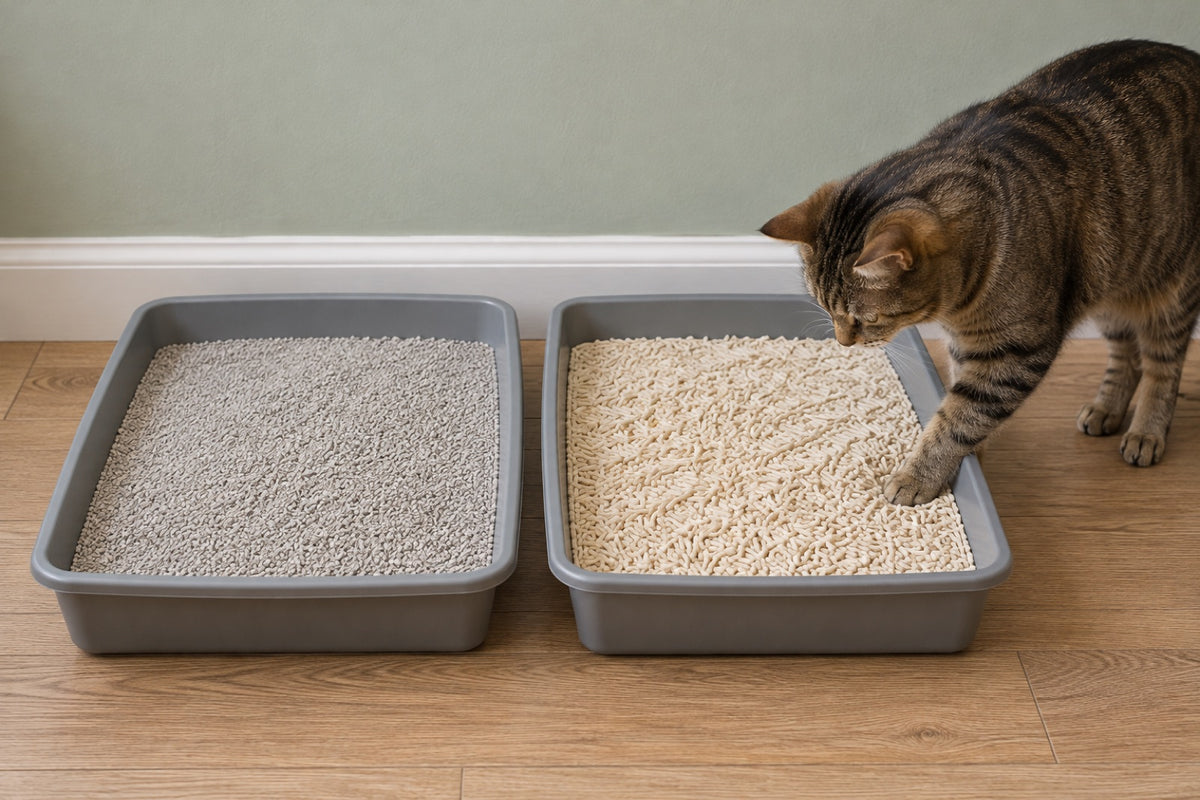
The best direct evidence on tofu against clay is a 2025 study that offered nine cats seven litters, and the clay tray took 148 of 201 deposits. The authors noted that most of the cats had been raised on clay, so the result mostly measures familiarity, and the sample was small. Cats prefer what they know, and a slow switch is how tofu becomes something they know. Of the seven refusals in our reviews, four name the smell rather than the texture, which is one more reason to give the cat time with the new scent while the old tray is still there.
Fill the new tray to 5 to 7cm from the first day, not to the clay depth, or the first clumps stick to the base and the switch looks as if it has failed when it has not. Once the cat is using the new tray confidently, stop changing things: a cat that has settled on one litter is best left on it.
Who should stay on clay
Three kinds of household are better off staying on clay, or at least not forcing the move. If price per litre is what decides it, clumping clay is the economical choice, and the gap is real. If your cat is elderly and has used clay for a decade, the switch may not take, and pushing it helps nobody. And if the cat has had the mixed tray for two weeks and still crosses the room to the clay, the cat has decided.
For the last two there is a middle route, set out below: a tray that is mostly plant and partly clay.
What this means for the tray
For an open tray and a cat arriving from clumping clay, CocoCat's tofu litter is the bag I would pour. Its ingredients are pea fibre, corn starch, guar gum and plant based enzymes, pressed into a pellet of roughly 1.5mm that clumps within seconds, so the routine you had with clay carries straight over: scoop the clump, top up, no sieve. It comes off a 99.9 per cent dust-filtration line, and what you notice is the missing cloud. Fill a plain tray to 5 to 7cm, scoop daily and expect a full change every two to three weeks. It is lightly scented with jasmine milk tea, with no unscented version, and it tracks a little, so a mat from the litter box range goes in with the first bag. The tofu guide keeps the fill and change notes in one place.

If you want a tray that smells of nothing, or you are moving to an automatic box, CocoCat's cassava litter is the bag instead: unscented, a fine round granule closer to clay's texture, and the one an automatic litter box handles best. It goes in the bin, not down the toilet. The cassava guide has its routine, and what cassava litter is has its own page.
And for the cat that will not give up clay, there is a halfway tray. pidan's Mixed Tofu Cat Litter is 70 per cent tofu mix and 30 per cent bentonite on its listing, so it keeps some of the clay grain a reluctant cat recognises while most of the tray is plant. Because part of it is clay, I would put all of it in the bin. All of these are in the cat litter collection.
If you are leaving clay
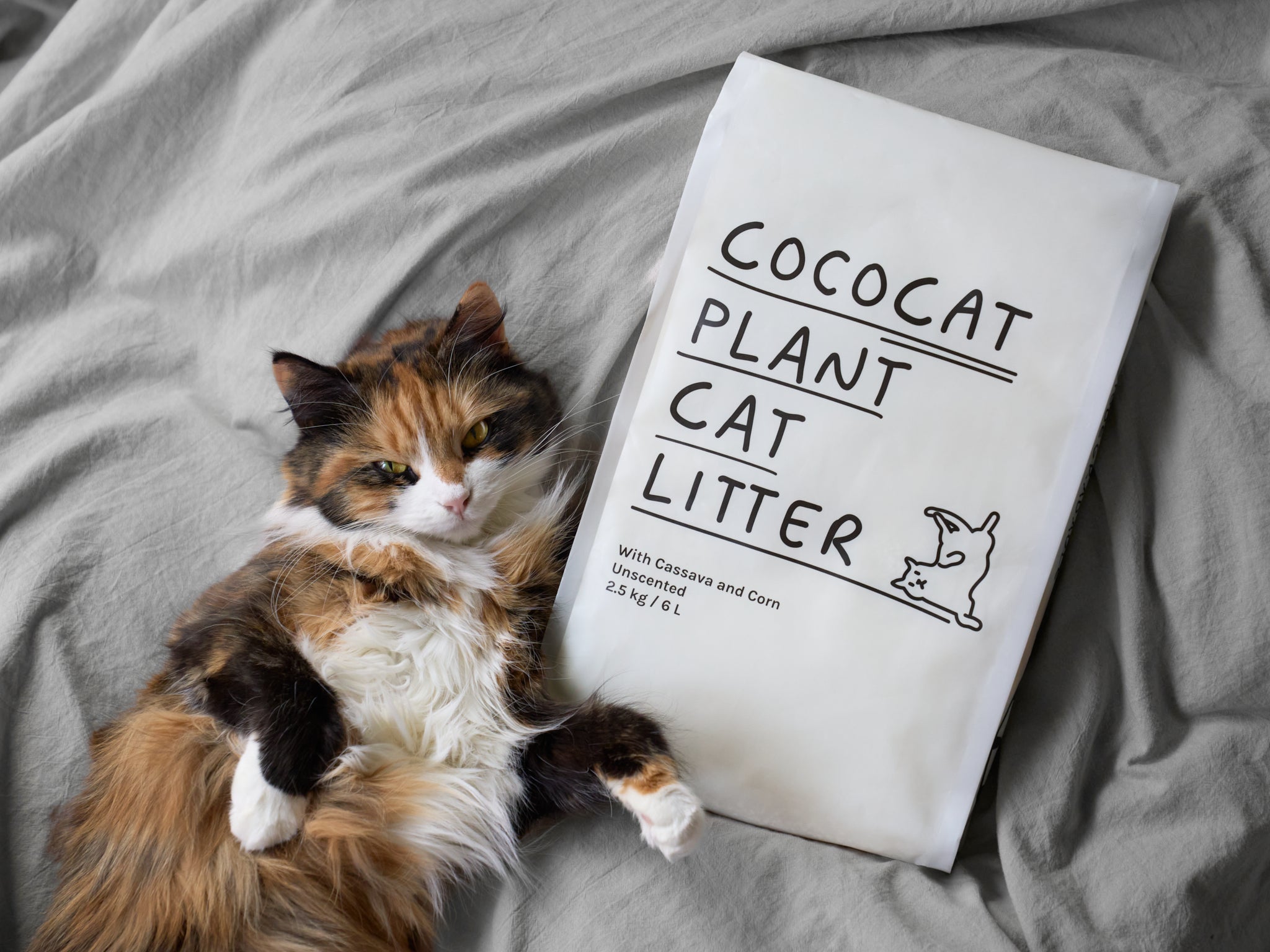
CocoCat's tofu litter is the bag for the switch from clumping clay, and the cassava litter for the fragrance-free tray or the machine. If you want tofu's drawbacks in full before you buy, they are all on one page, and if a kitten will use the tray first, start with the kitten litter piece. If you would like the next piece when it is written, the newsletter box is at the foot of this page.
Related posts
- The disadvantages of tofu cat litter, and what to do about each
- Tofu litter vs wood pellet litter: what changes and what doesn't
- Tofu, cassava, wood, corn or paper: which plant litter suits which household
Sources
- Wainwright, K. E. et al., Chemical inactivation of Toxoplasma gondii oocysts in water, Journal of Parasitology 93(4) (2007)
- Water company issues warning about flushing cat litter, Pet Business World (May 2023)
- How to create the best litter tray set up for your cat, Battersea Dogs & Cats Home
- Villeneuve-Beugnet, V. and Beugnet, F., Field assessment of cats' litter box substrate preferences, Journal of Veterinary Behavior 25 (2018)
- Cassiday, L. and Cassiday, C. J., Evaluating litter substrate preferences in a population of cats, IAABC Foundation Journal 31 (2025)

Leave a comment
This site is protected by hCaptcha and the hCaptcha Privacy Policy and Terms of Service apply.