Article: Do vets recommend tofu cat litter? What the guidance asks for, and where cassava fits better
Do vets recommend tofu cat litter? What the guidance asks for, and where cassava fits better
Cats Protection's guide to choosing a cat litter, updated in August 2026, mentions tofu once, as one plant-based option among several, and says the choice comes down to the cat. That is as close as any UK charity or veterinary body comes to recommending it. I make a tofu litter and went looking for something warmer. There is nothing. What there is instead is a short description of the litter vets want, the same in every source I read, and you can check any bag against it in a minute. I check both of ours below, and the cassava comes out closer to the list than the tofu. If the drawbacks are what you are weighing, the disadvantages of tofu cat litter covers those.
Do vets recommend tofu cat litter?
No. No UK veterinary body or cat welfare charity recommends tofu litter, and none recommends any other material or brand either. What they recommend is a description: fine and sand-like underfoot, no added fragrance, low dust, clumping, filled 3 to 5cm deep, in a tray about one and a half times the cat's length, one tray per cat plus a spare, scooped daily. Two exceptions: no clumping clay for young kittens, and low dust above all for a cat with asthma. Whether a litter suits a particular cat is settled by the cat in its first week with it.
I read the litter advice of five UK cat and animal welfare charities and searched the veterinary professional bodies for anything on choosing a litter. The charities name no brand as best. The professional bodies, as far as I can find, have published nothing on the question. The one detailed veterinary document is the AAFP and ISFM guideline on house soiling, written in 2014 by feline specialists, which asks for "a fine, sand-like, non-scented, clumping material to a depth of at least 1.25 inches (3 cm)" and names no material.
Each line has a reason. Texture: in a field study of 18 cats, they chose fine clay and silica granules over wood pellets. Scent: a cat's nose is far keener than ours, and perfumed litters and deodorisers are a known reason for a cat to leave a tray. Clumping: a urine patch lifted whole leaves the rest of the tray clean, and non-clumping litter sits on the list of tray set-ups linked to stress-related bladder trouble, alongside trays cleaned too rarely or shared. Depth and tray size: a cat digs and turns before and after every visit.
The cat reports back. Hesitating at the edge, not digging or covering, perching on the rim with feet inside, or shaking paws on the way out all mean the litter is wrong for it. Kittens are a separate case, covered in what litter to use for a kitten.
Vets are quoted on tofu litter in the press. In a February 2026 shopping article the vet quoted ran a practice in California, and the article itself says its experts do not necessarily endorse the products featured. One UK feline vet's blog ranks an olive-stone litter first and does not mention tofu. Each is one person's choice. "Vet recommended" on a bag is the maker's claim; I know of no UK scheme that defines it.
Tofu or cassava: how CocoCat's two litters score
The two litters against that list, scored separately because they are different materials.
| What the guidance asks for | CocoCat tofu litter | CocoCat cassava litter |
|---|---|---|
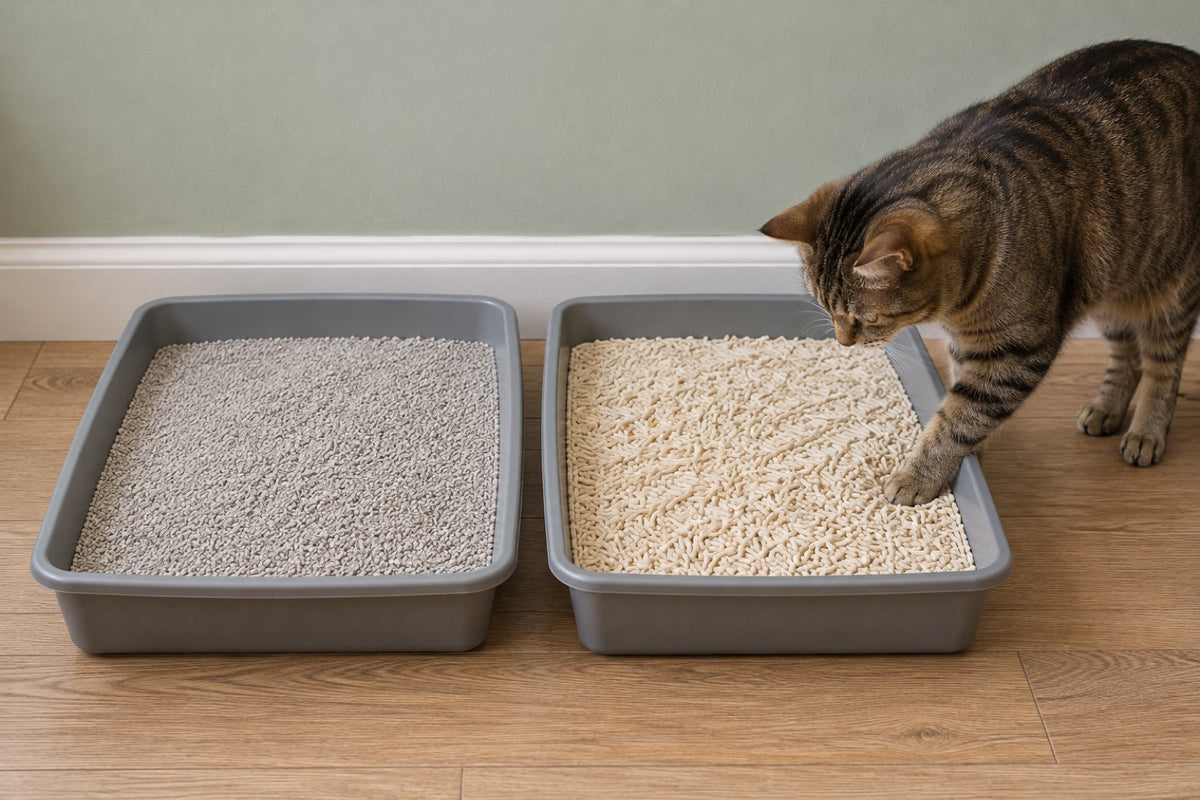
| Fine, sand-like texture | A pellet of roughly 1.5mm: fine for a pellet, not sand | A fine round granule, the closer of the two to sand |
| No added scent | Lightly scented, jasmine milk tea; no unscented version | Unscented |
| Low dust | Made through a 99.9 per cent dust-filtration process on the production line | Low dust; no figure claimed |
| Clumping | Clumps | Clumps on its own starch |
| No clumping clay for kittens | Pea fibre, corn starch, guar gum and plant based enzymes; no clay | Cassava flour, corn starch, corn flour and guar gum; no clay or mineral filler |
| At least 3cm deep | We suggest 5 to 7cm | We suggest 5 to 7cm |
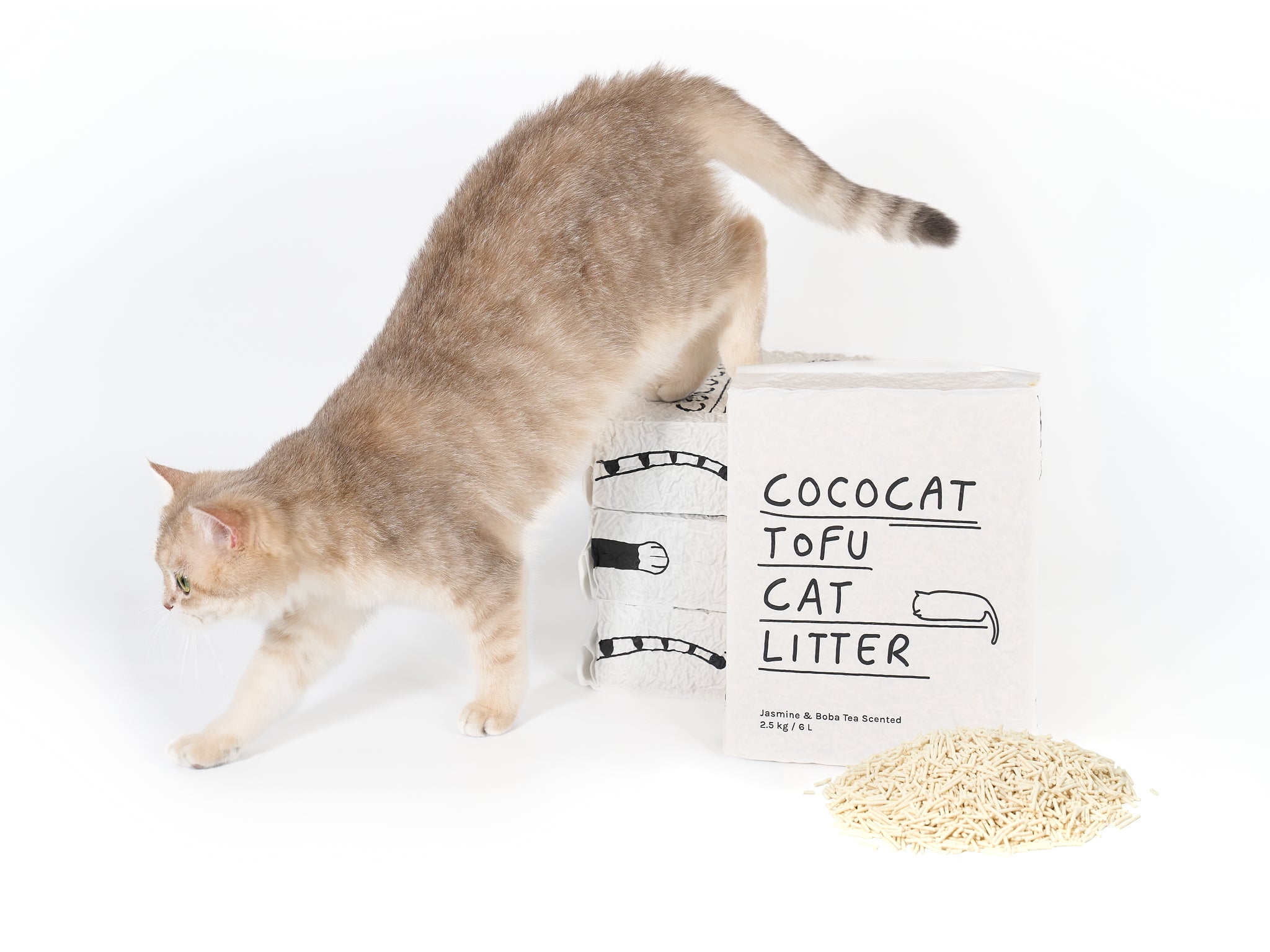
CocoCat's tofu litter passes on the lines that matter most day to day. It clumps, so you lift out what is used and top up, and it is low in dust where you notice it: no cloud when the bag goes in, no pale film on the skirting board. The 99.9 per cent figure rates the factory filtration, not the air in your hallway. There is no tofu in it; "tofu litter" names the pellet shape, and ours is pea fibre, corn starch, guar gum and plant based enzymes. It misses on scent: a light jasmine milk tea scent with no unscented version, so by the guidance's own terms it is not the textbook bag. For a healthy adult cat in a home where dust is the complaint, and a household comfortable with the scent, it is the bag I would put down, filled to 5 to 7cm and scooped daily. The tofu guide has the routine.

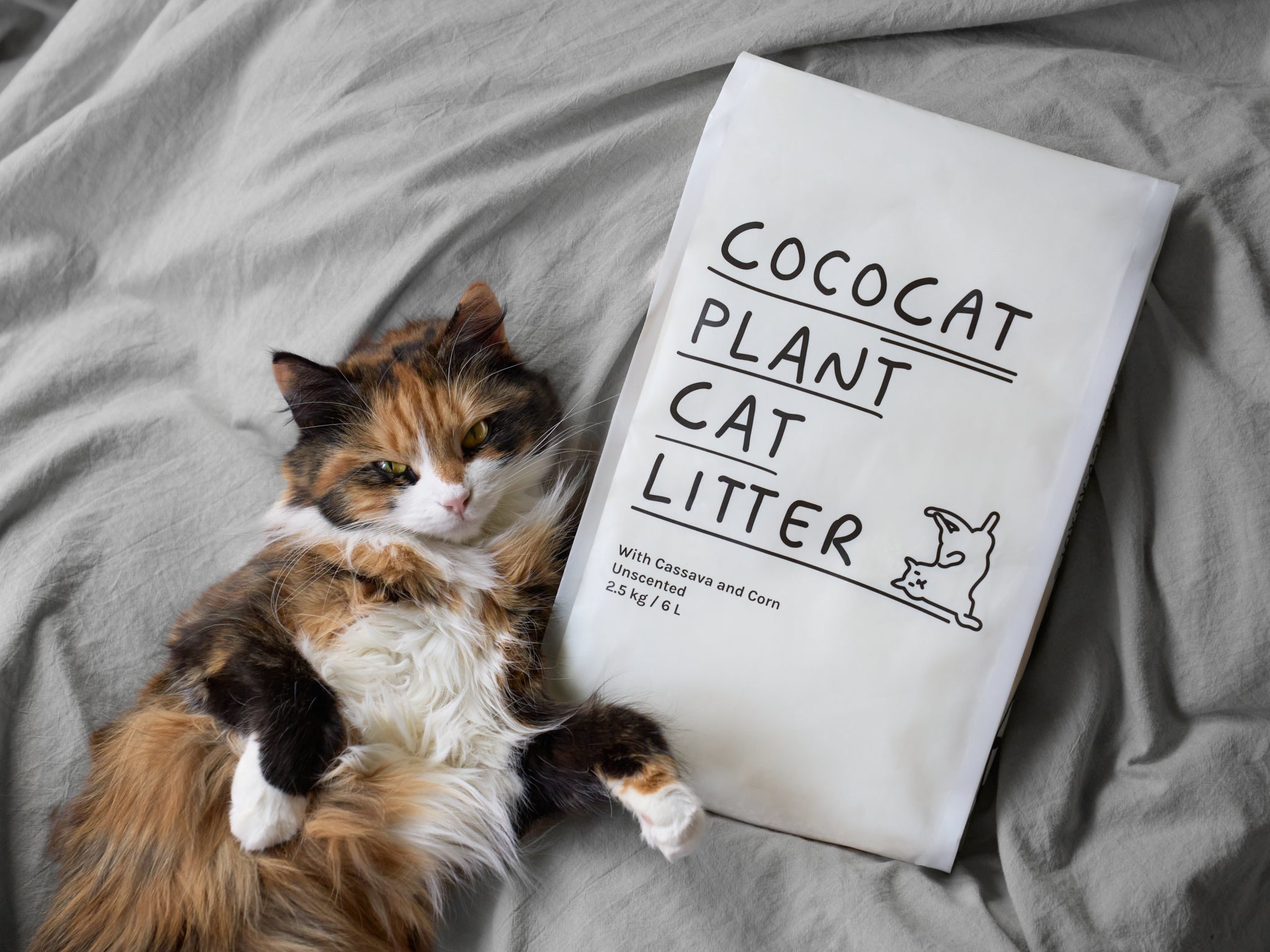
CocoCat's cassava litter ticks every row: unscented, finer, clumping, low in dust, no mineral filler. Where the guidance is to be followed to the letter it is the one, and it is my choice for a cat with asthma, a cat that has refused a scented litter before, and a kitten's second bag. It is also the litter an automatic litter box handles best. The cassava guide has its notes, and both are in the cat litter collection. If neither sounds right, the five plant litters compared puts tofu, cassava, wood, corn and paper side by side.

Is tofu cat litter safe for cats?
The two safety concerns in the published advice are clumping clay, which swells if a kitten swallows it, and dust, for cats with breathing problems. CocoCat's tofu litter contains no clay, so none of its dust is clay or silica. Its main ingredient, pea fibre, softens and passes through in the small amount a curious kitten swallows rather than setting hard the way clay can. Litter is still not food: a cat that keeps eating litter of any kind needs a vet, as does one that suddenly stops using its tray.
Read the ingredients rather than the name. Tofu litters are made from different plants depending on the maker, soya and pea among them, some with a starch added to help them clump.
For kittens, the usual advice is to avoid clumping litter, and the reason is clumping clay. A plant litter clumps without clay, which is why I am happy to put a kitten on one, with the vet line above kept in place. How to litter train a kitten covers the first week.
Two practical points. Plant litter is organic, so reseal the bag and keep it dry. Solids go in the bin every time, because cat faeces can carry parasites, toxoplasma among them. Small amounts of clumped tofu litter can go down the toilet where local rules allow and the plumbing is modern; we make no septic-safe claim, and water companies advise against flushing litter as a category, so the bin is the plan.
Will my cat use tofu litter?
Give it a week. The one controlled test that included tofu shows the hurdle: offered seven litters, nine cats left 148 of 201 deposits in the clay they already knew and 9 in a scented tofu pellet. The study is small, the authors call it a convenience sample, the clay was unscented while the tofu was scented, and familiar clay trays stayed available elsewhere in the house. Tofu use rose in the second week, though not significantly. Read fairly, it shows cats sticking with what they know, which is the habit a slow changeover is designed to shift: mix new into old over at least a week, or run a second tray beside the usual one.
Our own numbers agree. Of 369 UK reviews of five plant-litter brands we coded, 7 describe a cat refusing the tray, and four of those name the smell. That is the case for going slowly, and for the unscented cassava litter if your cat has refused a scented litter before. Leaving wood pellets? Tofu versus wood pellet litter covers that switch.
Which cat litter is the least allergenic?
None is hypoallergenic. The allergen comes from the cat, in skin flakes, saliva and urine, and it is in the tray whatever the tray holds. A litter only changes what it adds to the air: dust and fragrance. The litter that adds least is low dust and unscented, poured from low down and scooped rather than stirred. A plant litter can meet both; a scented one meets only the first. For a cat with diagnosed asthma, treatment comes first; cat litter for cats with asthma goes through the dust question with numbers and says which of our two litters I would use.
What the tray tells your vet
A clumping litter makes the tray readable: every urine visit leaves one clump, so you can see how often your cat goes, roughly how much, and when that changes.
Call the vet for blood in the urine, straining or crying in the tray, small amounts more often than usual with lots of digging and in-and-out, or urine outside the tray. In a male cat, straining with little or nothing coming out is urgent; a blocked cat can become seriously ill quickly. I also mention any change in clump size or number, which is my habit rather than guidance.
If the vet asks for a urine sample, the practice supplies a non-absorbent litter for it. No ordinary litter does that job, tofu included. And if a cat that has used its tray for years suddenly stops, change the litter last: see the vet, rule out a medical cause, then look at the tray. If nothing is wrong, change slowly and let the cat decide; how often to change cat litter is the next question once the new litter is in.
Related posts
- The disadvantages of tofu cat litter, and what to do about each
- What litter to use for a kitten
- Cat litter for cats with asthma
Sources
- How to choose the best cat litter for your cat, Cats Protection
- Carney, H.C. et al., AAFP and ISFM Guidelines for Diagnosing and Solving House-Soiling Behavior in Cats, Journal of Feline Medicine and Surgery 16(7), 2014
- How to create the best litter tray set up for your cat, Battersea
- Cassiday, L. and Cassiday, C.J., Evaluating Litter Substrate Preferences in a Population of Cats, IAABC Foundation Journal, Issue 31, July 2025
- Lower urinary tract diseases: a guide for caregivers, International Cat Care, 2025

Leave a comment
This site is protected by hCaptcha and the hCaptcha Privacy Policy and Terms of Service apply.