The new kitten checklist, from someone who sells half of it
Cats Protection's kitten checklist has twelve lines on it. PDSA's has eleven, and they are not the same eleven: one has a puzzle feeder and a cat tree on it, the other has cardboard boxes and a room with a door that shuts. Put the two together, take out the overlaps, and a kitten needs about a dozen things in place on the day it comes home.
I sell six of them. That is a fair reason to read a shopkeeper's checklist with one eyebrow up, and it is also how I know which lines are worth spending on and which are a cardboard box. Six come off my shelves and six I would send you elsewhere for. There are also a few things on other people's lists that I would not buy yet.
What are the essential things a kitten needs?
A kitten needs twelve things ready before it comes home: one quiet room with a door that closes, a carrier, the food it is already eating, separate bowls for food and water, a low-sided litter tray with a scoop, the litter it already uses, a bed with a blanket from its first home, a cardboard box to hide in, a scratcher, two or three toys, a brush, and a vet it is registered with. A kitten leaves its mother at eight weeks at the earliest, weighing about 900g, and for its first days in a new home all twelve go into that one room. A cat tree, a collar and a cat flap can wait.
| On the list | What to look for | From my shelf? |
|---|---|---|
| A room with a door | Small, quiet, checked at kitten height | Not bought |
| A carrier | Big enough for the adult cat; ask the breeder before buying | Yes |
| The food it already eats | The breeder's or rescue's brand for the first one to two weeks | No |
| Two bowls | Ceramic or steel, wide; water set apart from food | Yes |
| A litter tray and scoop | A side the kitten can step over; a second tray later | No |
| Litter | The litter it already uses, then a fine plant litter | Yes |
| A bed and a blanket | On the floor, soft sides; the blanket from its first home | Yes |
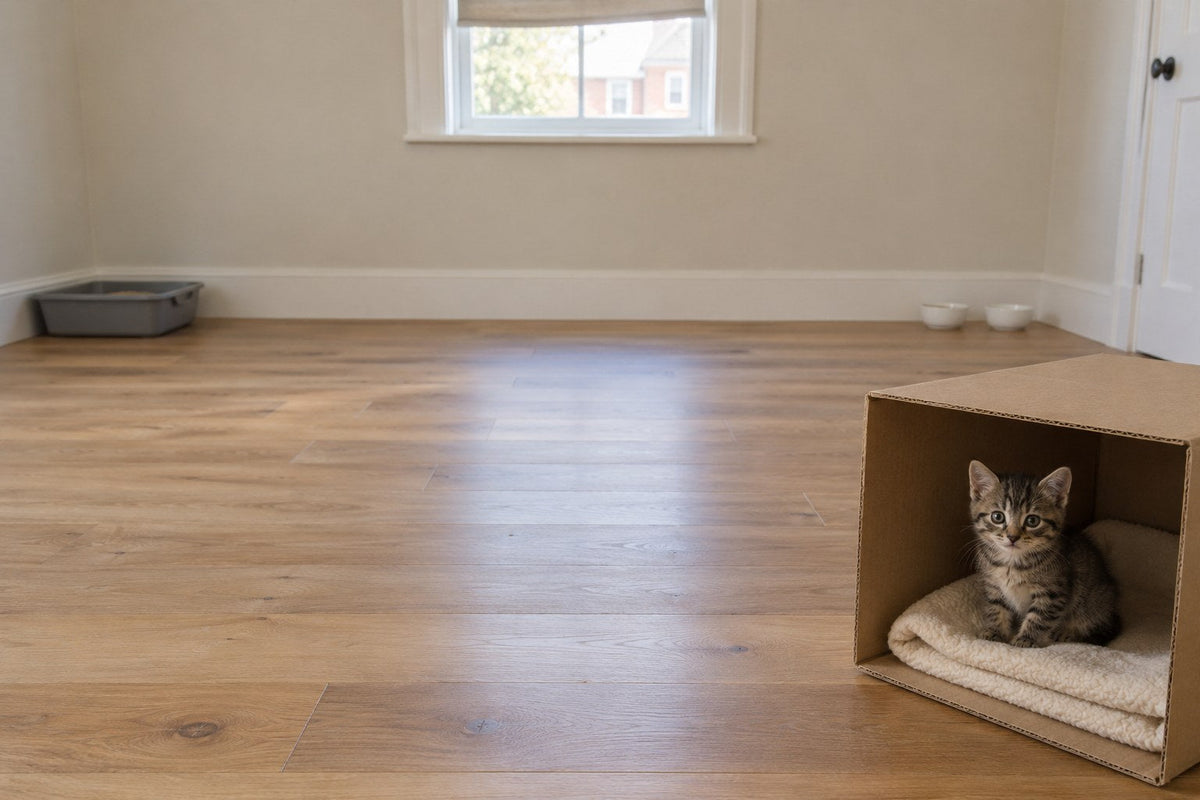
| Somewhere to hide | A cardboard box on its side | Not bought |
| A scratcher | Cardboard now, a tall rope post to follow | Yes |
| Toys | A wand toy and a ball; nothing with string left out | Yes |
| A brush or comb | Any soft cat brush | No |
| A vet, and insurance | Registered before the kitten arrives | No |
The bill people do not expect is the vet's. Budget about £366 for the set-up with the first vaccinations, the microchip and neutering counted in, before the price of the kitten itself, and at least £79 a month after that. Both are 2024 figures.
Where does everything go on the first day?
On the first day everything goes into one small, quiet room with a door that closes. The litter tray goes in a corner, the food bowl on the opposite side of the room, and the water bowl a few feet from the food. The bed goes away from all three, with the scratcher beside it and the carrier left open as a second place to retreat to. The kitten lives in that room for somewhere between a few days and two weeks, until it is eating, using the tray and looks keen to see what is on the other side of the door.

The charities do not agree on how long: a few days in one guide, the first few weeks in another. I let the kitten set it. A bold one is at the door within days. A shy one is still under the chair in its second week, and letting it out early just gives it a bigger place to hide in.
Before the kitten goes in, get down to its height and look. Block the gap behind the wardrobe. Shut the washing machine and the tumble dryer, and check inside both before every wash for as long as you own the cat. Put the toilet lid down, tidy the cables away and close the windows. Lilies go out of the house altogether, because every part of the plant is poisonous to cats, the water in the vase included. A room with full-length curtains is a climbing frame, so pick another room or tie them up.
A spare bedroom does this well. In a one-bedroom flat the bathroom does it too, and keeping a cat in a flat covers where the tray ends up once the kitten has the run of the place.
The carrier, and whether you need to buy one
Ask the breeder or the rehoming centre before you buy a carrier, because the kitten may well come home in one of theirs. Either way it travels in a carrier however short the trip, strapped in with the seatbelt if you are driving. Once home, the carrier stays in the kitten's room with its door open and a towel inside. A cat that has slept in its carrier treats it as furniture, and that is the cat you can get to the vet.
You will need one of your own by the first vet visit. The charities' pick is a rigid plastic carrier with a top that opens or lifts off, and if you are sent home in one of those, keep it. The carrier I stock is a different kind. The pidan Expandable Travel Habitat is a soft-sided backpack, 38 by 38cm and 58cm tall, rated for cats under 7.5kg, and one side unzips into a mesh extension so the kitten has room to lie down and turn round while you wait. It is the one I would carry a kitten in, and at that size it still fits the cat the kitten becomes. Two kittens travel in two carriers.

Food, water and the bowls they go in
Buy the food the kitten is already eating and nothing else for the first one to two weeks. A new house is enough change for one small stomach. When you do move it on to another food, do it gradually over a week or two, and keep it on kitten food for its first year. At eight to twelve weeks a kitten eats at least four small meals a day. That drops to three from about three months and two from six.
It needs two bowls, one for food and one for water, set a few feet apart and both well away from the tray. A double feeder puts them side by side, so leave that on the shelf. The advice on the bowl itself is wide and not too deep, so the kitten's whiskers are not pressed against the sides, and ceramic, glass or steel in place of plastic, which is harder to get clean and holds the smell of old food. You will see wide bowls sold as a cure for "whisker fatigue". I could not find a UK charity that uses the phrase. They just ask for a wide bowl.
The bowls I stock are zeze's. The Popart ceramic bowl is glazed ceramic on a weighted base with non-slip silicone pads, in two sizes: 13.5cm across, which its page suggests for wet food, and 16.5cm for dry food or water. The stainless bowl is a 0.45 litre steel dish that lifts out of its stand for washing, and the detachable metal bowl is steel all through, on rubber strips so it does not skate across a hard floor. All three are raised and tilted, where the advice pictures something flatter. Kittens manage them fine in my experience. If yours does not, a saucer from the cupboard does the first fortnight and the bowl waits.

What this means for the tray
The tray is the first thing on the list the kitten will need, so fill it before you leave to collect it. Use a tray with a side it can step over, about 3cm of the litter it used in its first home, and the corner of the room furthest from the food. One tray is enough while the kitten lives in one room. Once it has the run of the house the rule is one tray per cat plus one, so a single kitten ends up with two, in two different places. Leave the self-cleaning box for later: a toilet that moves and hums is a poor first one, and which litters work in an automatic box is a question for the grown cat.
I do not sell a kitten's first tray. A plain low-sided one from any pet shop is right, with a scoop. The first bag of litter is not mine either: it is the breeder's bag, whatever that is, so ask for its name before collection day. The bag I make is the second one, bought once the kitten has settled and the first has run out.
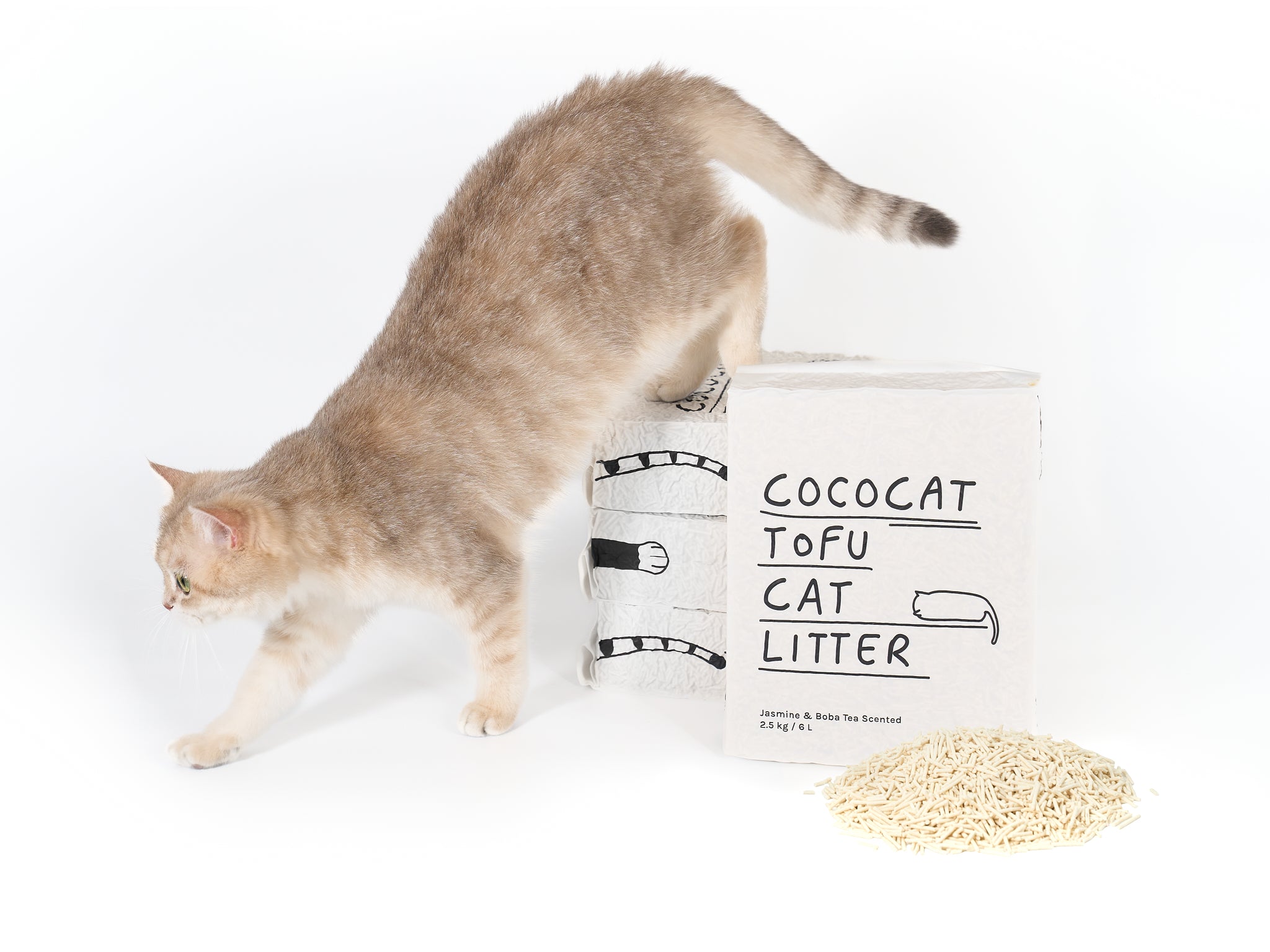
CocoCat tofu litter is pea fibre pressed into pellets of about 1.5mm. There is no tofu in it; the name describes the pellet. It clumps, so you scoop and top up, and we run the bags through a 99.9 per cent dust-filtration process, which is a figure about our production line and not about your air. What customers describe is no cloud when the bag is poured, and in a small shut room with a kitten in it that is worth having. The usual advice against clumping litter for kittens is about clay, which swells when wet and can set in the gut. Pea fibre softens and passes through in the small amount a curious kitten swallows. A kitten that keeps going back to eat litter, whatever it is made of, needs a vet.

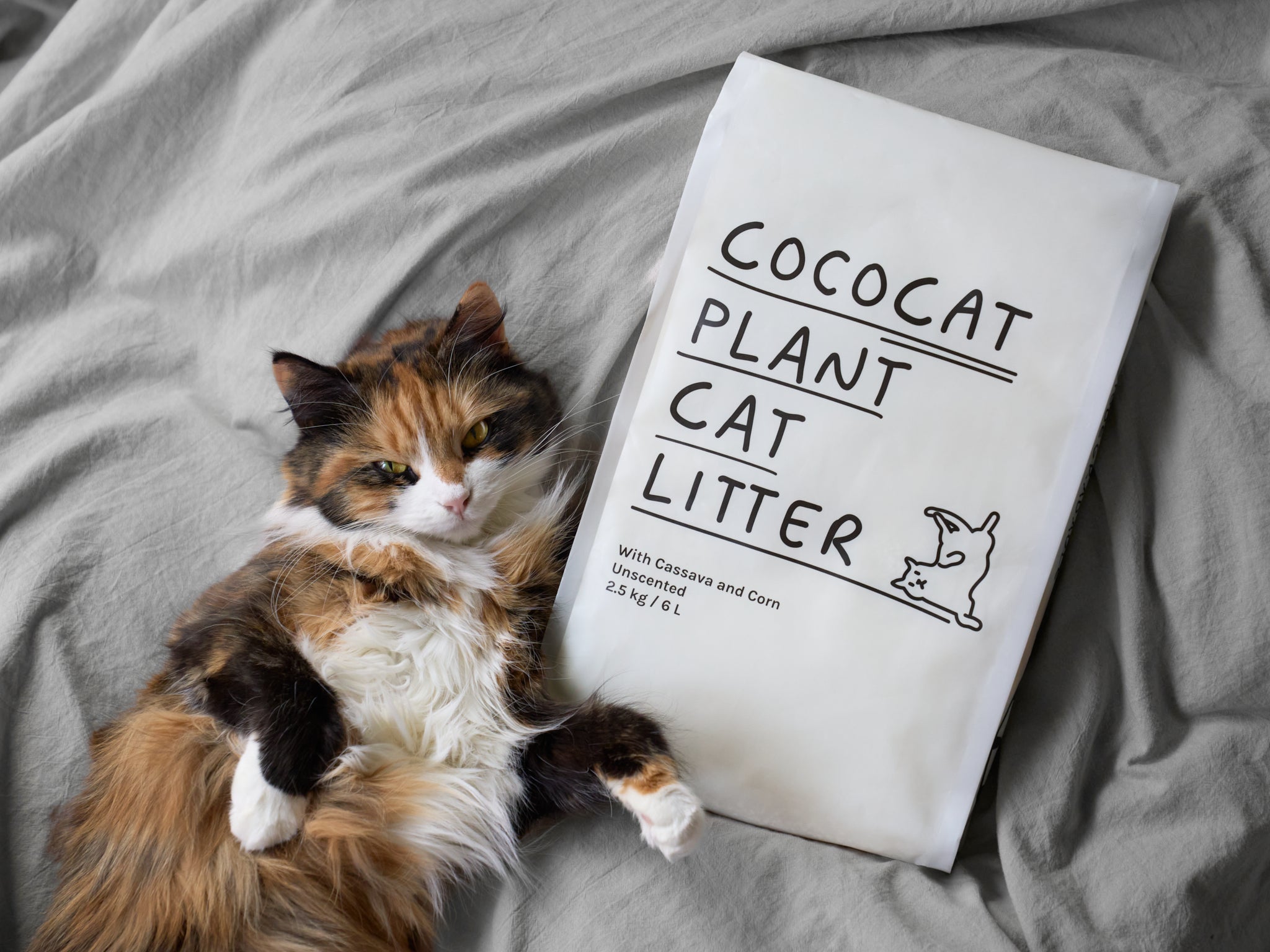
The tofu litter has a light milk-tea scent and there is no unscented version. If you want no scent in a kitten's room, CocoCat cassava litter is the one: unscented, a fine rounded granule made from cassava flour with corn starch, corn flour and guar gum, and it softens if swallowed the same way. The choice between the two has its own piece, what litter to use for a kitten. The first week is in how to litter train a kitten, and how often to change it has its own page.
Where should a kitten sleep on the first night?
A kitten should sleep its first night in its own room, in a bed on the floor with soft sides, lined with the blanket or towel it came home with. The smell of its first home is the most useful thing in the room that night. A cardboard box cut down at the front does the job as well as any bed. On whether you stay with it, the advice splits. One charity's guide holds that it is best not to leave a kitten alone until it has settled. Another's view is that there is nothing cruel in a warm, secure bed in a room of its own until morning. A soft toy or a radio on low helps a kitten that is unsettled by itself.
So ask the breeder for a blanket as well as the name of the litter. If they have none to spare, take a towel with you on collection day and rub it over the kitten's bedding before you leave.
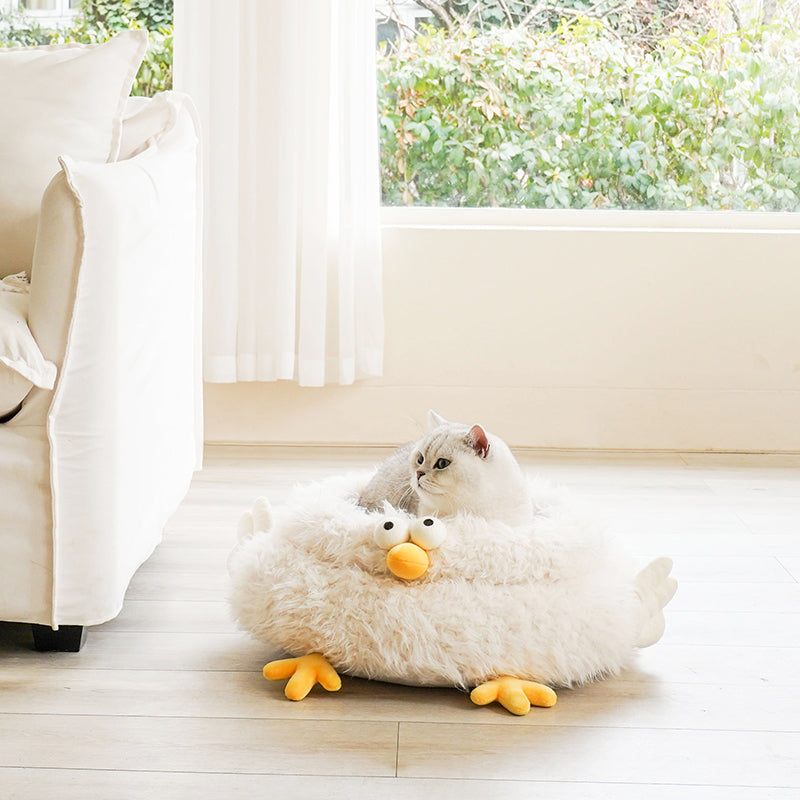
The bed I would put down for a kitten is the zeze Gugu Chicken bed, a round plush nest 49cm across with a padded rim 21cm high. That is the lowest rim of the beds I stock, and once the kitten is in, it has a soft wall at its back. For the kitten that wants a roof, the Blue Monster house is the igloo kind, a 45cm plush dome with a wide doorway and a cushion that lifts out.

The cardboard box stays on the list even if you buy both. Turn it on its side, put a fleece in it and leave it in a corner. If you would like the box to look like something, the zeze Milk Carton house is corrugated cardboard, 55.5cm tall with two round doorways, and the kitten can scratch the walls. What the grown cat wants from a bed is in where cats sleep.
What type of scratching post is best for kittens?
For a kitten the best first scratcher is corrugated cardboard, with a tall rope post to follow. In a 2019 test, 40 kittens under eight weeks old were offered scratchers two at a time, and they chose curved cardboard over a hemp post with a toy on top and scratched an upright surface more than the same one laid flat. Catnip made no difference. The scratcher goes in on the first day, next to the bed, because cats scratch when they wake. As the kitten grows it needs a post tall enough to stretch full length against and heavy enough not to wobble.
A scratcher in the wrong place does not get used. In a national survey of UK pet owners in 2024, cats in homes with a scratching post were as likely to scratch the furniture as cats in homes with none. The survey's own guess at the reason was a post in the wrong place or made of the wrong stuff. Beside the bed is the right place to start, and beside the sofa arm is the second.
In cardboard I stock the pidan round scratcher, a 48cm disc with a dip in the middle that a kitten will sit in as readily as scratch, and the zeze Retro scratcher bed, 41cm square. The pidan L-shape has a raised back for the kitten that reaches up, and the zeze Neon Sweetheart pad is 44cm long and 4cm deep, flat enough to lie along the wall beside the bed. The rope post to grow into is the zeze Cactus post, 65cm of rope on a 35cm base, which its page lists for kittens and adult cats. How to pick between rope, cardboard and carpet for the adult cat is in choosing a cat scratcher.

Toys, and the rule about hands
Never play with a kitten using your hands or feet. A kitten that learns at ten weeks that fingers are prey is an adult cat with adult teeth doing the same thing a year later. A wand toy keeps the game a metre from your skin, and a ball or a toy mouse gives the kitten something to chase when you are busy.
Games are short. One to two minutes is a proper game for a kitten, and several of those a day is better than one long one. When the game ends, the wand goes in a drawer, because a kitten left alone with string or elastic can swallow it or get wound up in it. Leave out nothing with small parts or loose threads. Skip the laser pointer: there is nothing to catch, which frustrates a kitten, and it can damage its eyes. Catnip toys do little for a kitten under three months.
The toy I sell more of than any other is the pidan ball and feather set: three bouncy balls 30mm across, each with a tail of feathers 8 to 10cm long that stops it rolling under the sofa. The feather is the part a kitten will try to chew off, so it is a toy for when you are in the room. The two wands are the Caterpillar and the Dachshund, a fleece toy with a crinkle inside on a flexible rod, about 1.2m long overall.

Can I leave my 8 week old kitten alone at night?
Yes. An eight-week-old kitten can be left overnight in its own room, with its tray, water, bed and blanket, once the room has been checked for anything it could climb into, chew or fall from. Daytime is different. A young kitten should be left for a few hours at most, and it helps to practise in the first week with absences of five to ten minutes a few times a day. Keep checking on it at least every few hours until it is fully grown. An adult cat's limit is around 12 hours.
The same goes for a kitten of ten or twelve weeks. I could not find a charity that publishes a table of hours by age, and I would distrust one if I did. What makes a night alone safe is the room, which is why the wand toys are in the drawer and the washing machine door is shut before you go to bed.
What is the 3-3-3 rule for kittens?
The 3-3-3 rule gives a rehomed animal three days to decompress, three weeks to learn the routine and three months to feel at home. It began as a rule of thumb in American dog rescue, and nobody has measured it on kittens. I could not find it on any UK cat charity's site. Their line is that some kittens settle quickly and others take a few weeks. For a shopping list its use is patience: a kitten that ignores the new bed and sleeps in the cardboard box for three days has not turned the bed down.
For the tray, early misses in those first days come from the move and not from the kitten, and the litter-training piece has what to do about them.
When does a kitten need vaccinating, microchipping and neutering?
A kitten has its first vaccination at eight or nine weeks and a second three to four weeks later, is neutered at around four months, and in England must by law be microchipped before it is 20 weeks old. The microchip law has applied since 10 June 2024 and covers cats that never go outdoors. An owner told to chip a cat has 21 days to do it or faces a fine of up to £500. Register with a vet before the kitten arrives and book a health check for its first week.
Some vets add a third injection at 15 weeks or later, and the kitten is fully protected three to four weeks after the last one. Until it is vaccinated, neutered and chipped it stays indoors, which works out at four months at the earliest for a supervised garden and nearer six for going out alone. When the law came in the government put the cost of a chip at about £25.
A pedigree kitten from a registered breeder comes home later, at 13 weeks or older, with its vaccinations done. Ask for the card. Worm and flea treatment is a question for the vet at that first check, with one rule to know before then: never use a dog's flea treatment on a cat, because the permethrin in some of them can kill it. Compare insurance before the kitten arrives.
What I would not buy yet
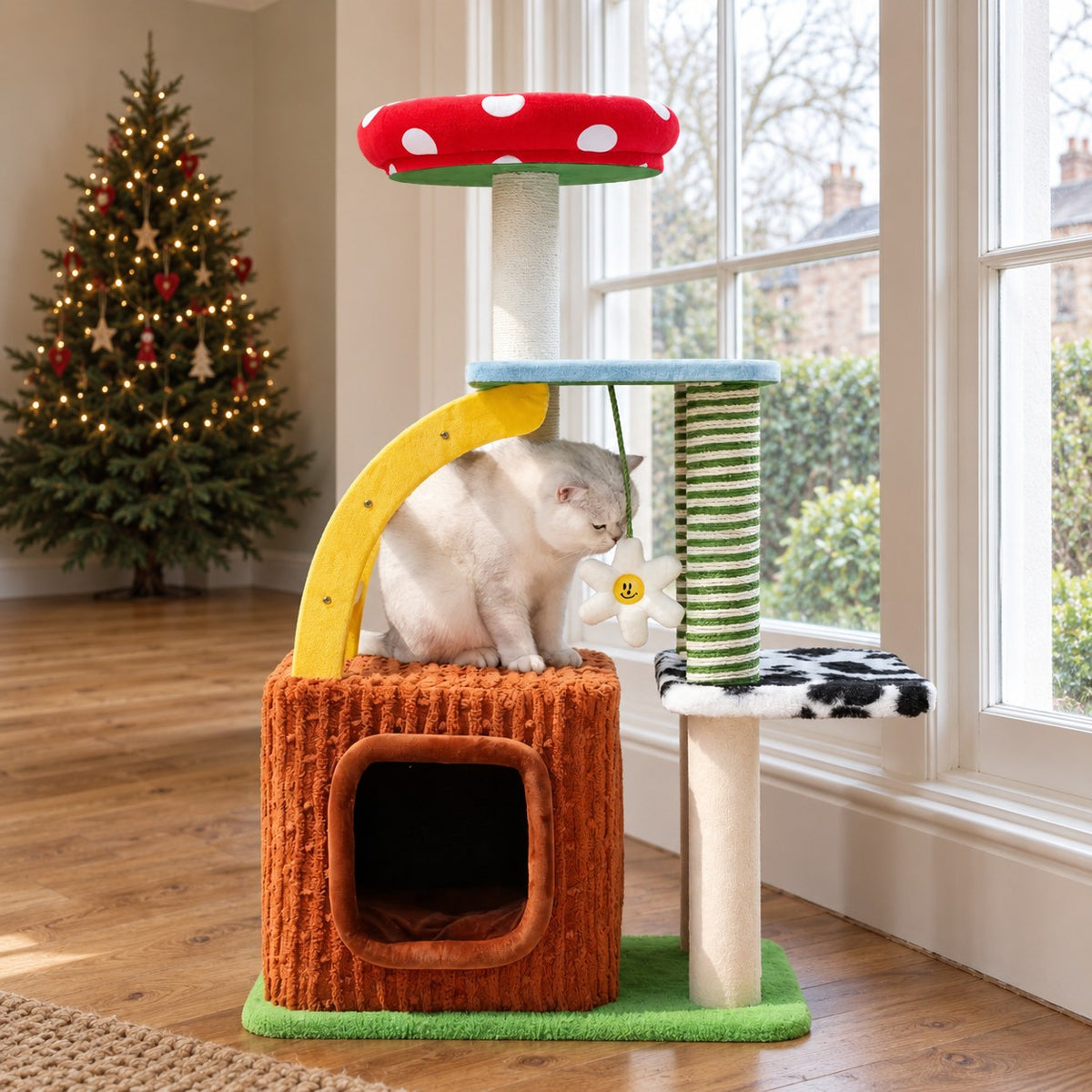
A cat tree. It is on one of the two charity lists and I sell several, so this is me talking myself out of a sale. For its first weeks the kitten lives in one room, and the high place it needs is a chair or a low shelf it can reach without a jump. Buy the tree when it has the run of the house. The zeze Happy Farm tree is 105cm on three levels and its page lists it for kittens as well as adult cats.
A collar is on neither list. One charity is against collars altogether, and another would wait until six months and then use only a quick-release fastening. The microchip is the identification. A cat flap and a harness are for a cat that goes outside, which this one will not for months. A puzzle feeder is a good extra, and I would add it later.
Two kittens
Two kittens need one of everything each, plus one spare: three litter trays, a food bowl and a water bowl each, a bed each, three scratchers, and two carriers, because kittens travel separately. Littermates are the easier pair, and the charities prefer siblings to two unrelated kittens. They may still grow apart. Cats reach social maturity between 18 months and four years, and a pair that shared a bed at ten weeks can want separate ones by then. That is the reason for buying two of everything at the start.
The night before
The room is ready and the door is shut. The tray has 3cm of the breeder's litter in it, the food and water are on the far side, the bed and the box are in their corner with the scratcher beside them, and the washing machine is closed. The carrier is by the front door with a towel in it.
Once the kitten is home, the first week with the tray is written up separately, and so is the second bag of litter. My half of the list is in cat litter, scratchers, trees and beds, bowls, toys and carriers. If you would like the next piece when it is written, the newsletter box is at the foot of this page.
Related posts
- How to litter train a kitten: the tray, the litter and the first week
- What litter to use for a kitten, and what not to
- Choosing a cat scratcher