
What litter to use for a kitten, and what not to
Clumping clay litter clumps because it is made of bentonite, a clay that swells to about 15 times its size when it gets wet. That is what turns a wet patch into a lump you can lift out with the scoop. It is also why nearly every piece of advice about kittens says the same thing: no clumping litter while the kitten is young. The advice is about the clay. It was written before plant litters that clump were on the shelf, and it does not say what to do about them.
Both litters we make clump, and neither is clay. So when a new owner reads "no clumping litter" and then looks at one of our bags, I owe them a straight answer about what that rule means for it. I have had kittens in the house on these litters, and this is that answer.
What type of litter is best for kittens?
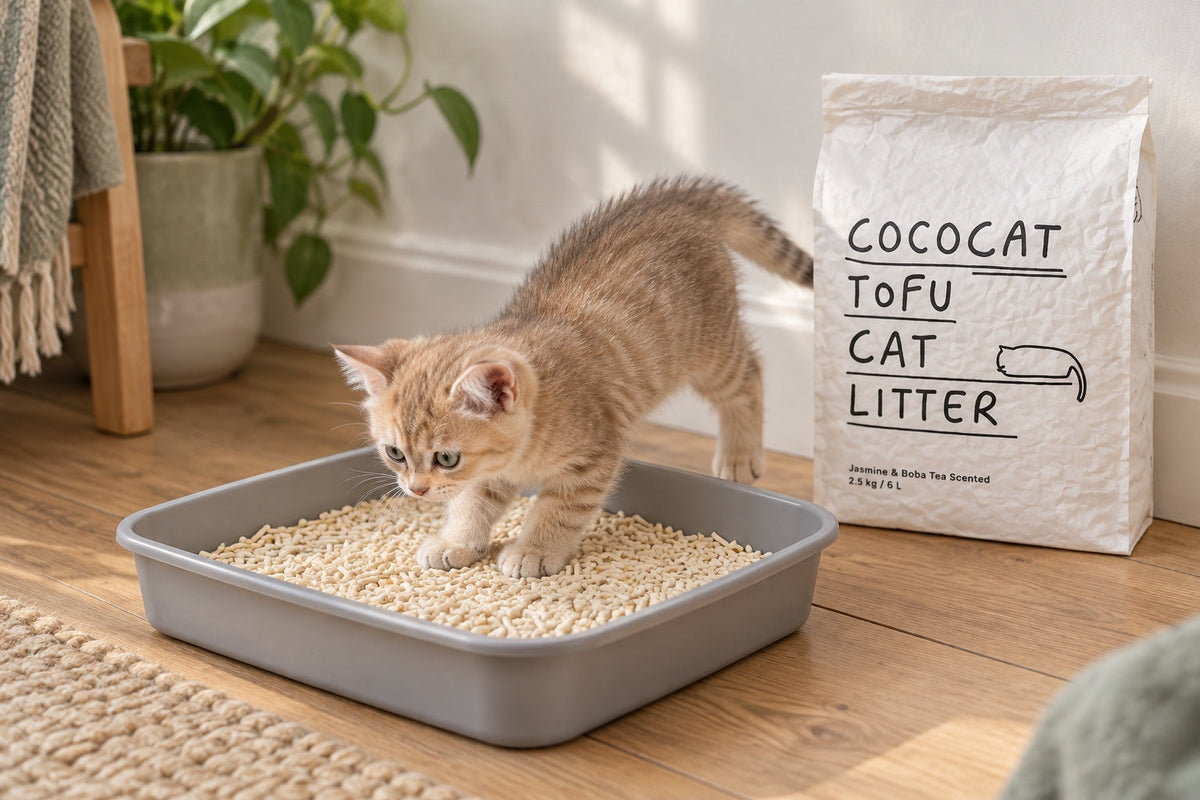
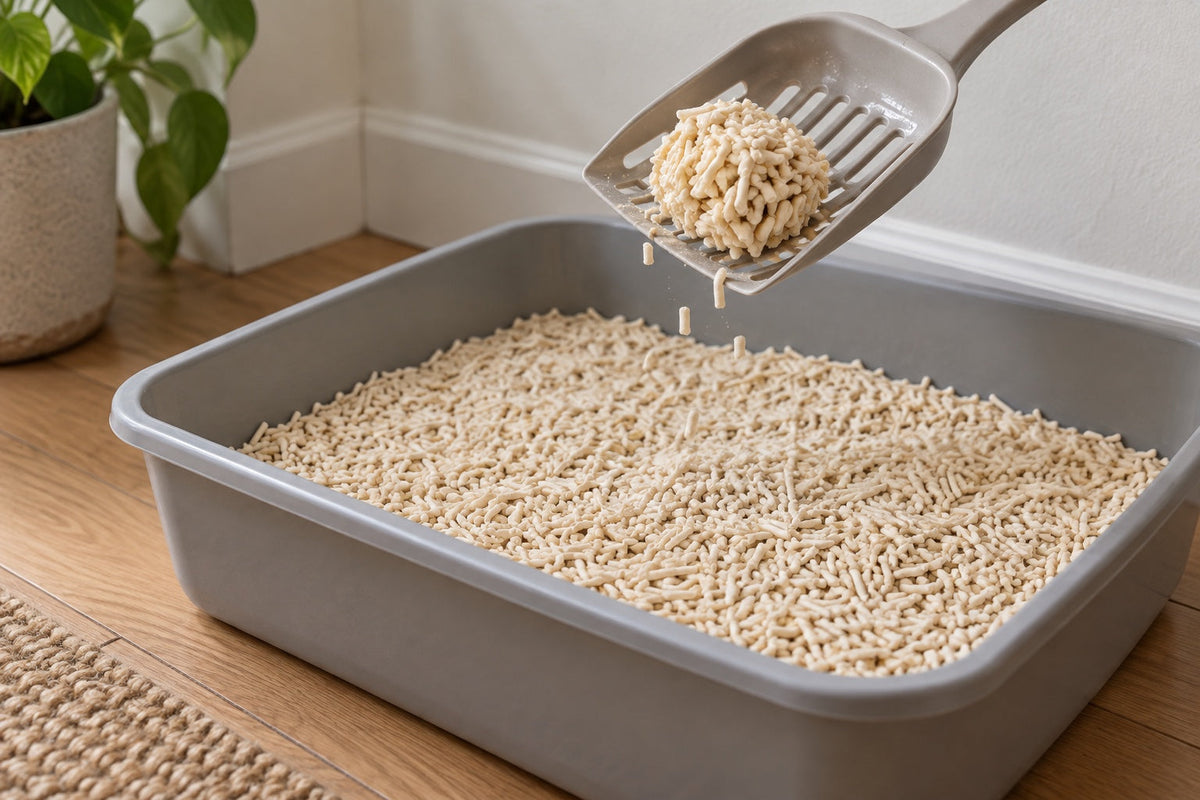
The best litter for a kitten is fine-grained, unscented, low in dust, and made of something that will not swell and set hard if a curious kitten swallows a little, which means a plant litter or a non-clumping one rather than clumping clay, filled about 3cm deep in a tray with low sides. For the first one to two weeks at home it should be whatever the kitten used before, because a familiar smell and texture underfoot is what tells an eight-week-old kitten where the toilet is in a house it has never seen. Kittens form their litter preferences early and keep them, so the second bag, bought once the kitten has settled, is the one that decides what the adult cat will accept.

Fine grain, because cats dig like the desert animal they came from. In a study of 18 cats in their own homes, the cats picked fine clay and silica over wood pellets. No scent, because a kitten finds its tray by smell, and a fragrance that seems light to you can be enough to keep a cat out. Low dust, because a kitten's face is a few centimetres from the surface every time it digs, and clay litters are among the dustier ones. And nothing that sets hard in the gut, which is the next question.
Depth catches people out in both directions. For a kitten's low tray I fill to about 3cm. Deeper spills over the lip, and a 900g kitten does not need more to dig in. For an adult tray on a clumping litter I fill to 5 to 7cm, so urine clumps on the way down instead of reaching the base and drying there. As the tray grows, the depth grows with it.
Do kittens need special kitty litter?
No. A kitten does not need a litter made for kittens. It needs the four things above, and a bag with "kitten" on the front is not a different material, it is a label the maker chose. As far as I can find, no UK body defines the word. So check a kitten bag the same way you would any other: fine, unscented, low dust, and nothing that sets hard if swallowed. A kitten can go straight onto a plain adult litter that passes that check and stay on it for life, which saves it a second change of texture later.
Can kittens use clumping litter?
Kittens can use a clumping litter made from plants. The rule to avoid clumping litter while a kitten is young is about clumping clay. Bentonite clay swells to about 15 times its size when it gets wet, and a kitten that swallows a lot of it can end up with a blockage in its gut. Kittens are the worry because they taste and mouth things while they play and groom, and they are small. Plant litters such as CocoCat's tofu litter and cassava litter clump too, but they are made from pea fibre and cassava starch. Those soften and pass through in the small amount a curious kitten swallows, and they do not set hard the way clay does. A kitten that keeps going back to eat litter, whatever it is made of, needs a vet.

The strictest version of the advice is Cats Protection's, and its litter guide is the first result for this question: it is usually best to avoid clumping litter for kittens and to choose a non-clumping one while the kitten is young, in case a kitten investigating with its mouth swallows enough to block its gut. The page does not separate clay from plant litters, and the reason it gives is the clay one. So I went back to what each litter is made of.
Clay does the swelling. Nobody has run a controlled study on how often it hurts cats. Cornell's feline vets, asked directly, said they knew of none, that the risk is probably not high given how much of the stuff is in homes, and that the sensible thing is to watch the tray and call a vet if a cat is eating litter in any quantity. Pea fibre and cassava starch take up water and hold together loosely, which is what makes the clump, and they break apart again rather than setting. That is the difference that matters for a kitten, and it is why I am happy to put a kitten on either of our plant litters once the breeder's bag has run out. It is not a reason to let a kitten eat litter. A kitten that mouths a pellet once and drops it is doing what kittens do. One that goes back for more should see a vet, whatever is in the tray, because eating litter can be a sign of something else.
What not to put in a kitten's first tray
Four things, and each is a change that comes later if it comes at all. A scented litter: cats have a sense of smell that makes a "light" fragrance a strong one, and a kitten put off its first tray by the smell does not wait for a second option, it finds a corner of the carpet, and the carpet is then the place that smells right. A dusty litter, which in practice means the cheaper clays, because the kitten's nose is at the surface while it digs and a small room holds whatever comes off the bag. A large, hard pellet: thumbnail-sized wood pellets are the material cats chose against in the 18-cat study, and at 900g a kitten has little weight to press a hard pellet flat with. And a sudden change of any kind, because a kitten's tray should smell of the kitten, and a litter swapped overnight makes the tray a stranger's.
One more that is not a litter. The tray is washed with hot water and a mild, unscented washing-up liquid. Strongly fragranced cleaners put a smell on the tray the kitten will avoid, and disinfectants that turn cloudy in water are toxic to cats.
What kitty litter do vets recommend?
No UK veterinary body or animal charity recommends a brand of litter, for kittens or for adult cats. What the vet-approved guidance recommends is a description: a fine, sand-like texture, no added fragrance, low dust, about 3cm deep, in a tray one and a half times the cat's length with low sides, one tray per cat plus a spare, and no clumping clay while a kitten is young. A litter that fits that description is what a vet's advice comes to. The cat's behaviour in the first week is the test of whether it met it: a cat that hesitates at the edge, does not dig or cover, spends less time in the tray than before, or shakes its paws on leaving is telling you the litter is wrong.
Outright refusal is rarer than the worry suggests. Across 369 UK reviews of plant litters in our own customer survey, seven describe a cat turning the tray down, under two per cent, and four of the seven name the smell as the reason. A kitten has the advantage of no incumbent: it has one litter to learn, and if that litter fits the description above, refusal is the exception.
Under eight weeks: the tray before the kitten comes home
A kitten should stay with its mother until at least eight weeks old, so the first four or five weeks of tray use happen in someone else's house, and the person choosing that first litter is a breeder, a fosterer or a rescue. The timeline is short. Kittens cannot toilet unaided until about three weeks; at three weeks the tray is introduced; from about four weeks, placing the kitten in the tray after it wakes and eats is enough to start it going on its own; by five to six weeks it is learning the tray by itself; at eight weeks it is weaned, vaccinated and ready to move.
For that first tray the advice is a shallow tray the kitten can step into and a litter with a sandy texture, unscented, and not clumping clay. If you are hand-rearing an orphan, the reflex is triggered with damp cotton wool from birth, and from three weeks it is triggered with the kitten standing on the litter, so that litter underfoot becomes the feeling it associates with going. The one thing a new owner needs from the breeder at eight weeks is the name of the bag, so the same litter is in the tray on the first night.
Where should a kitten sleep the first night?
A kitten sleeps its first night in the one room it will live in for the first days, in a bed placed away from the litter tray and away from the food and water, with the carrier left open in the room as somewhere to retreat to. The tray goes in a discreet corner, the food bowl on the opposite side of the room, and the water a few feet from the food. A kitten that hides on the first night and uses the tray only after dark is behaving normally; the tray is checked and the food replaced in the morning, and the kitten is left to decide when the room is safe.

A spare bedroom does this well. In a one-bedroom flat the bathroom does it too, with the toilet lid down and the washing machine door shut, both of which are on the charities' kitten-proofing lists for the same reason: a kitten investigates everything, including water and drums.
When can a kitten move to adult litter?
There is no published age for moving a kitten onto clumping clay. The advice says non-clumping "while your kitten is young" and leaves young undefined. What it comes down to is tasting. A kitten swallows litter while it is exploring everything with its mouth, and that phase runs with teething: baby teeth come in from two weeks, and by about six months all 26 are gone and the 30 adult teeth are through. So my rule of thumb for clumping clay is six months, or earlier once you can watch the kitten dig and cover without tasting. A plant litter that clumps does not need the wait, because it does not set hard if swallowed, so the tofu or cassava litter can be the second bag at eight weeks. Whatever you move to, do it over a week or more, mixing the new litter into the old a little more each day.
At four months a kitten is halfway through teething, has the run of the house and is heavy enough to dig properly. It is a fine moment to move from a non-clumping first bag to a plant litter that clumps, and an early one for clumping clay. What is never worth doing is swapping the whole tray in one go. A cat that has used one litter since it was three weeks old reads a new texture as a different toilet, and a cat that has found a different toilet means a long week with the enzymatic cleaner.
Two kittens, one tray?
Two kittens need two trays plus a third, even when they are littermates, and each kitten needs its own bowls and its own bed. The rule for every key resource is one per cat plus one extra, spaced apart, and the charities apply it to kittens from the same litter because cats that share a bed at ten weeks may choose separate lives at two years. Two trays side by side count as one location; the second tray goes in a second room, or at the other end of the same one. Two kittens on one tray tells you nothing until one of them starts using the bath mat, and the tray looks fine because the other is still using it.
A kitten in a flat
In a flat three things change, and none of them is the litter. The sanctuary room is the bathroom, so the tray shares a wall with the washing machine and goes in the corner furthest from the drum. The tray is nearer to where you sit than it would be in a house, which is the argument for low dust and for no fragrance made above: a scent that is faint in a hallway is not faint in a studio. And the second tray, once the kitten has the run of the flat, goes in a second room, which in a one-bed means the hallway or the end of the living room. Where the tray physically goes and what happens to the waste with no garden is written up separately.
What this means for the tray
A kitten's first bag is the breeder's bag, whatever it is, so the same litter is in the tray on the first night. The bag that matters is the second one, bought when the kitten has settled and the first has run out, because that is the litter the cat keeps for life. Both litters we make are plant litters that clump, so either can be that second bag, and I would choose between them on the scent.

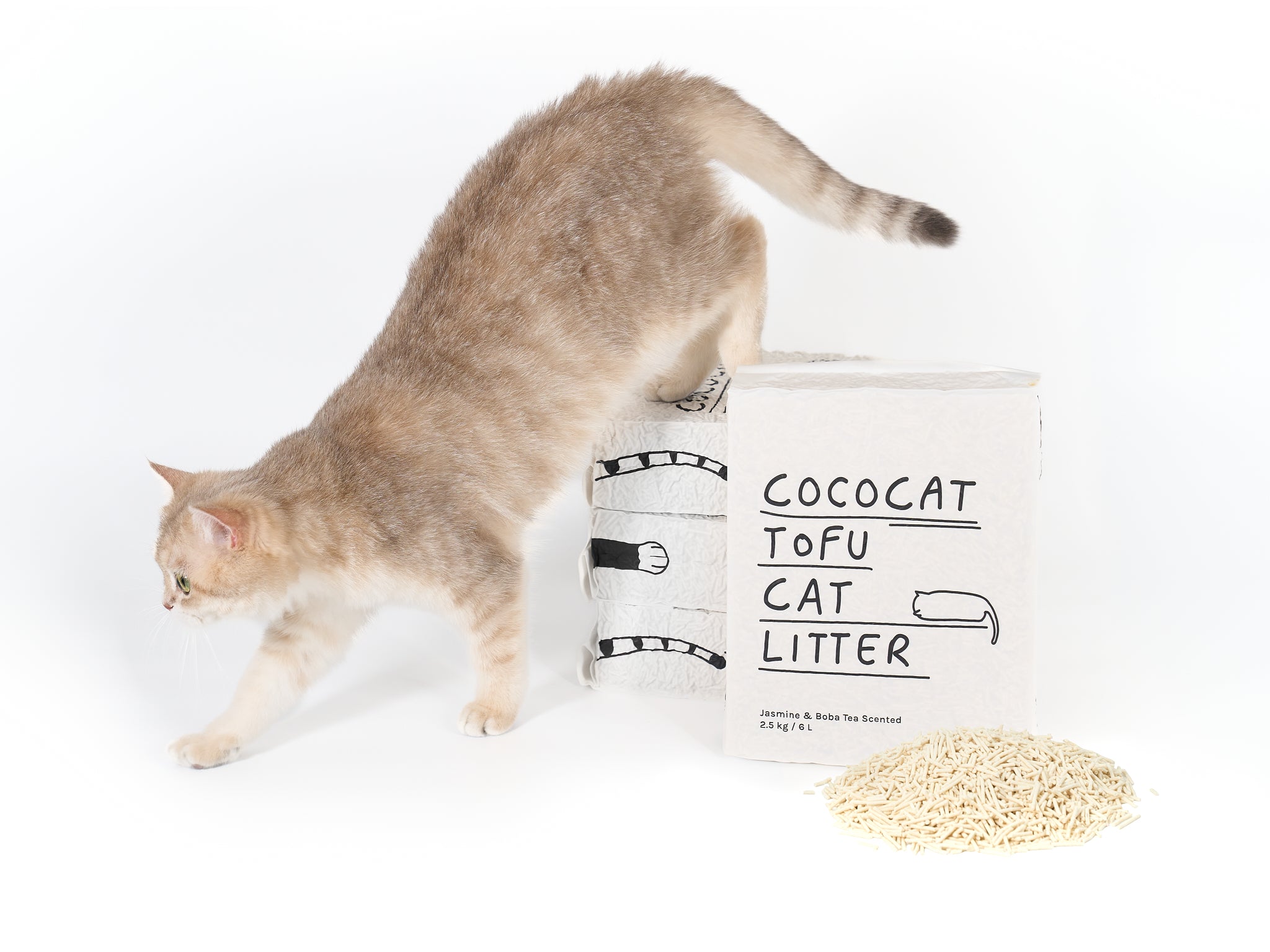
CocoCat's tofu litter is pea fibre pressed into a pellet of roughly 1.5mm, close to the fine grain cats chose in the 18-cat study, and despite the name there is no tofu in it; "tofu litter" is the name for the pellet shape. It clumps on plant starch, so you scoop and top up rather than empty the tray, and the pellet softens rather than setting if a kitten swallows a little. The bags go through a 99.9 per cent dust-filtration process on the line, a figure that rates the equipment rather than your air. What customers describe is no cloud when the bag goes in and no film on the skirting board, and in a small room with a kitten in it that is worth having. There is a short section on tofu litter and kittens in the litter-training piece. The one thing to weigh is the scent. It has a light milk-tea note and there is no unscented version. Unscented is the kitten default, so for a kitten I would decide on that alone.
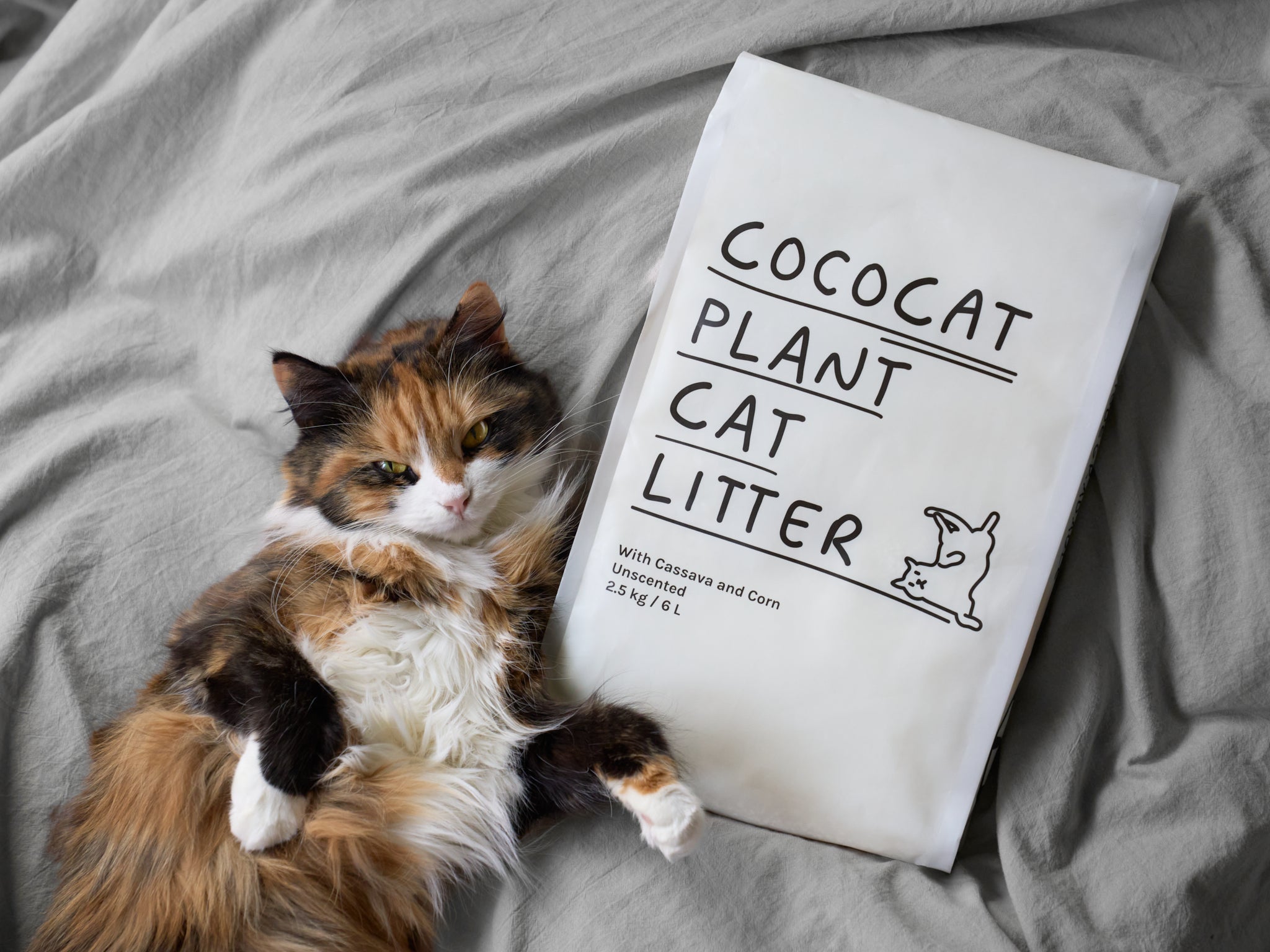
Which is why, for a kitten's second bag, the cassava litter is the one I would reach for. It is cassava flour with corn starch, corn flour and guar gum, unscented because cassava starch has nothing to cover, a fine rounded granule that clumps on its own starch, and it goes in the bin. It softens if swallowed the same way the tofu does. A 6-litre bag is £12.95 against £9.99 for the tofu, and for a kitten the difference buys the absence of a smell, which is the thing the charities ask for.
On depth, start a low kitten tray at 3cm with either bag, scoop twice a day so it does not saturate, and deepen towards 5 to 7cm as the tray grows. The tray itself is not something we sell for a kitten: a plain low-sided tray from any pet shop is the right first buy, and the litter box collection is for the cat the kitten becomes. Both litters are in the cat litter collection, and the tofu guide has the fill and change notes in one place.
If the kitten arrives on Saturday
Ask the breeder for the name of the bag, buy that bag, and put the kitten's tray in the corner of one room with the food on the other side. The second bag is the cassava if you want no scent in the room, and the tofu if you do not mind one. The first week itself, the timing, the accidents and the tray size, is its own piece. If the kitten is arriving in a flat, the flat has its own page, and if you have not settled on a material, tofu, cassava, wood, corn and paper are compared in one place, with the drawbacks of tofu litter written up honestly and what cassava is beside them. If you would like the next piece when it is written, the newsletter box is at the foot of this page.
Related posts
- How to litter train a kitten: the tray, the litter and the first week
- Tofu, cassava, wood, corn or paper: which plant litter suits which household
- Keeping a cat in a flat: the tray, the smell and the space
Sources
- How to choose the best cat litter for your cat, Cats Protection
- Does Clumping Kitty Litter Pose a Risk to Cats?, Cornell Feline Health Center, CatWatch, September 2024
- Villeneuve-Beugnet, V. and Beugnet, F., Field assessment of cats' litter box substrate preferences, Journal of Veterinary Behavior 25 (2018)
- Choosing a litter tray for your cat, International Cat Care
- Hand-rearing, Cats Protection

Leave a comment
This site is protected by hCaptcha and the hCaptcha Privacy Policy and Terms of Service apply.