Wood pellets as cat litter: how they work and where they fail
A wood pellet is sawdust and nothing else. At the mill the sawdust is dried until less than a tenth of its weight is water, then forced hot through a die about six millimetres across, and the wood's own resin sets as the pellet cools and holds it together. The same pellet goes into stove hoppers, stable floors and cat trays, sometimes from the same plant. Wet it and it takes the water back, swells to roughly three times its size by the makers' own figure, and falls apart into damp sawdust. Everything a wood pellet does in a litter tray, good and bad, follows from that one reaction.
What is wood pellet cat litter made of?
Wood pellet cat litter is compressed softwood sawdust, usually pine and spruce left over from sawmilling, pressed into cylinders about six millimetres across with nothing added; the bags sold in Britain list wood as the only ingredient. It does not clump. Urine soaks into the pellet, which swells and crumbles into sawdust, and the sawdust is removed by sifting it away from the dry pellets that are still whole. Two other products are sold under the same name in Britain, a fine clumping wood fibre and a larger clumping wood pellet, and both run on a scoop-the-clump routine instead. If the bag does not say clumping, it is the sifting kind.
UK owners use "wood pellets" for all three products and argue with each other about what the stuff does. In one forum thread on sieve trays, a poster explains that the pellets turn to sawdust when wet, the next replies that hers form big clumps, then comes back to apologise: she had been using the clumping fibre, and "all my opinion above is worthless". The rest of this page is about the non-clumping pellet, the one most people mean. The clumping wood fibres behave more like a clay or a tofu litter and belong with the plant litters compared side by side.
How do you use wood pellet cat litter?
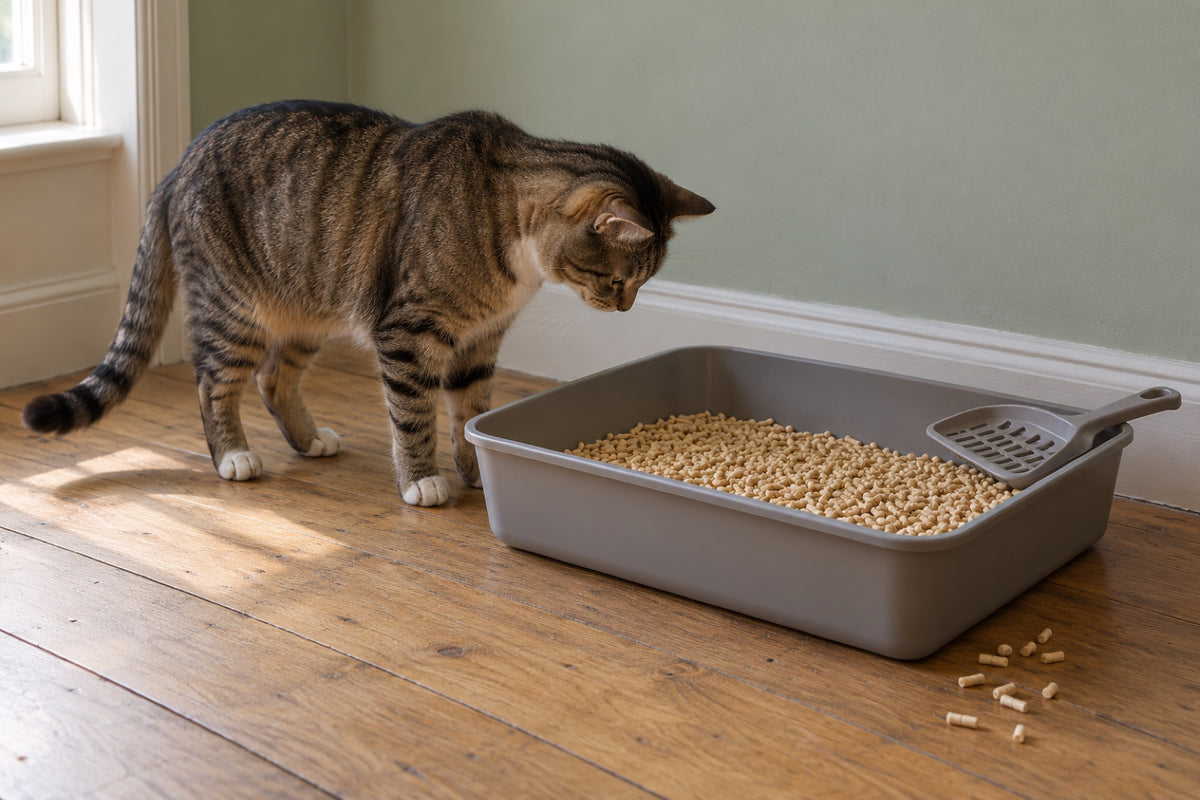
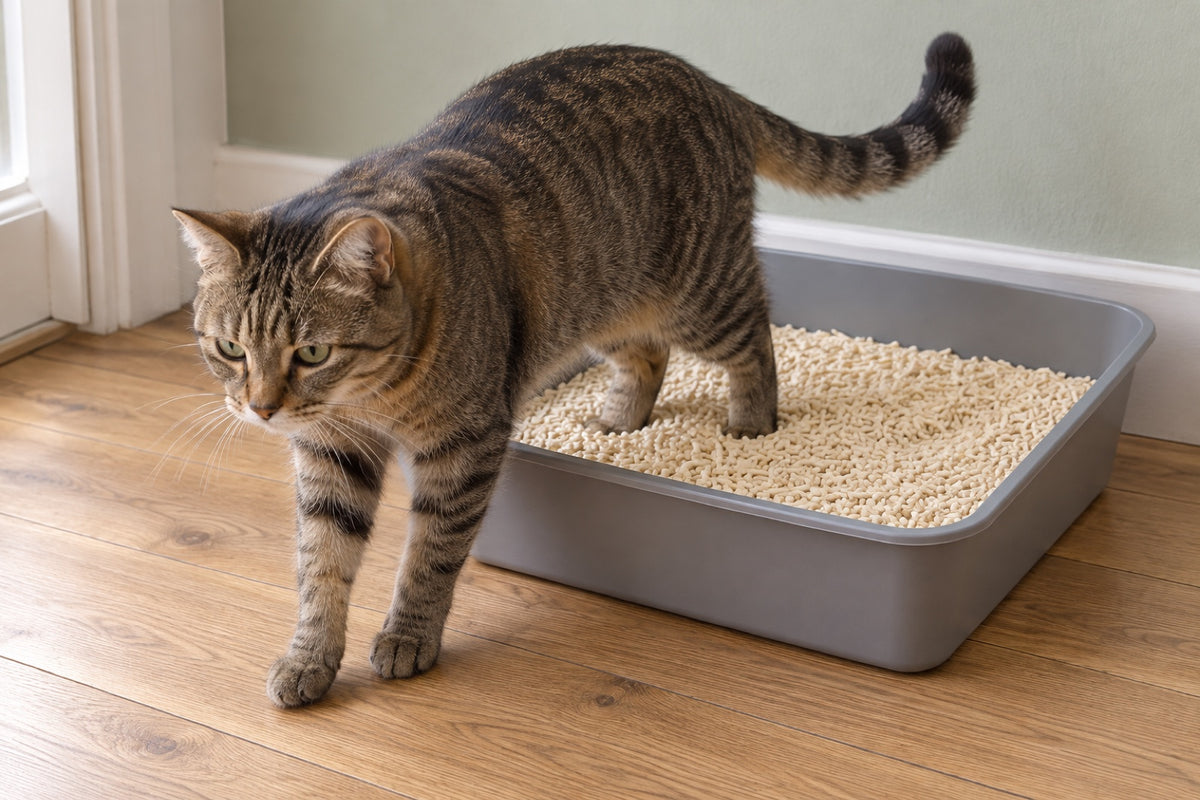
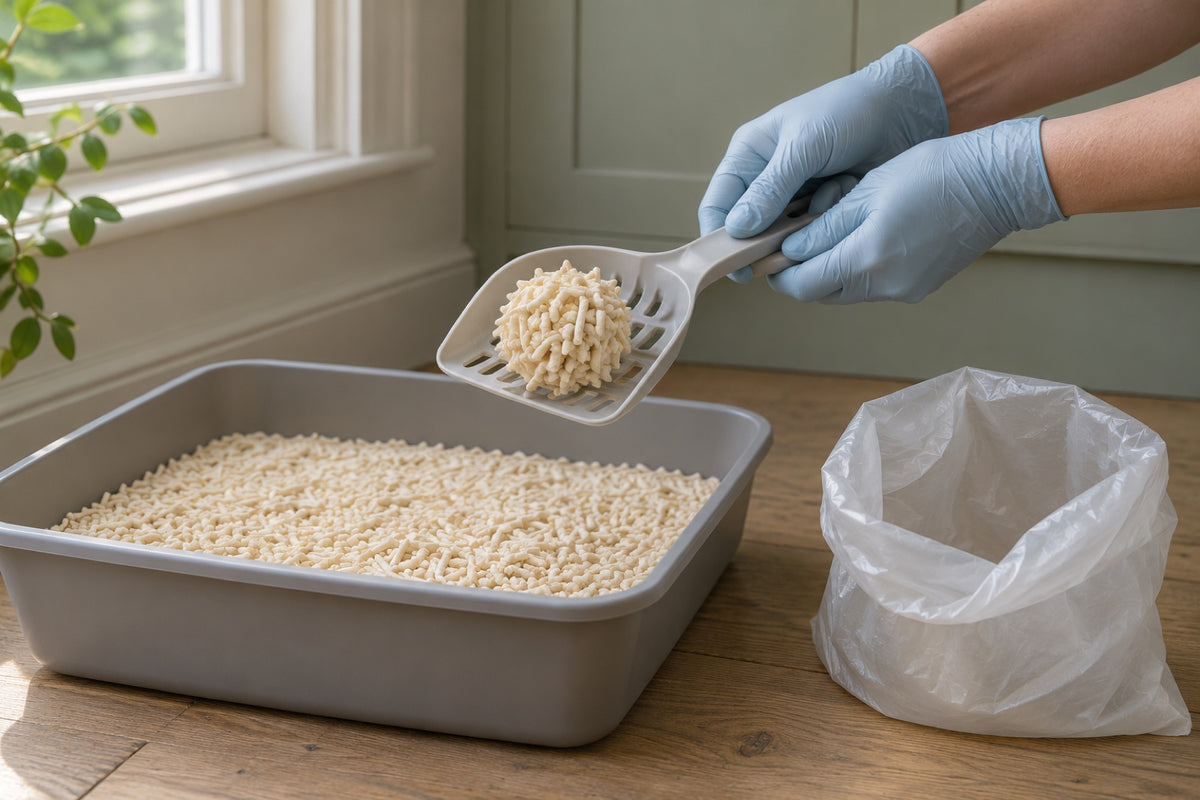
To use wood pellet cat litter, fill a plain tray to 2 to 4 centimetres and no deeper, because the pellets expand as they wet. Lift solids out daily with a scoop. Wet pellets break down into sawdust that sinks beneath the dry pellets; shake or stir the tray so it falls, or use a two-part sieve tray that drops it into a lower chamber, and tip the sawdust into the bin. Top up with fresh pellets, and change the whole tray at least once a week, which is the instruction printed on the own-brand 30-litre bags. Owners who sift every day report going ten days to a fortnight between full changes, and a few report much longer.

The sieve tray is the piece of kit the material was designed around: two trays, one slotted and sitting inside the other, pellets in the top, sawdust falling through to the bottom. The slots have to pass sawdust and hold a pellet, so when a bag's pellets come out a different size the system jams; of 14 reviews of the best-known purpose-built sieve tray, five are one to three stars and two say the sift function clogs. So a lot of households improvise with a dustpan held over the tray and shaken, a garden sieve into a bin bag, or a colander, and 23 of 171 forum posts describe a method in enough detail to copy.
Three settings matter more than the brand. Keep the fill shallow, because a wet layer under a deep bed of dry pellets is exactly what the next section is about. Leave the lid off, because a hooded tray holds the ammonia in at the cat's head height. And sift daily rather than at the weekend, whatever the bag's economy suggests.
The tray runs on a system, and the system is what you are buying
Read 448 reviews of the best-selling own-brand pellet in Britain and the product is not what is being reviewed. The system is. Of the 298 favourable reviews, 103 praise the price, 56 the odour control and 56 the satisfaction of sifting the used from the fresh: pellets crumbling at the right speed, sawdust separating cleanly, a tray staying dry on top. Of the 150 critical reviews, 104 say the litter is no longer the litter they had used for years, 85 describe the tray smelling, and 22 say they now change the whole tray every two or three days where they used to go a week: the same system with one part slipped.
Those 448 reviews were written in the six months after one reformulation, so the 104 figure measures one event, and I would rather say so than hide it. What makes it a category finding is that the same complaint turns up, independently, in the reviews of a different manufacturer's clumping wood fibre in seven of the last eight years, and on the forums as two bags of the same product arriving "one very dark and one light". A pressed sawdust pellet is made from whatever the sawmill produced that month, and its crumble rate, colour and size move with the feedstock. The people who stay with wood for a decade are the people whose bag has stayed the same. The ones who leave are mostly leaving a bag that stopped behaving like the last one.
So buy one bag of a new batch before you buy three, judge it on the tray after a week rather than on the pellet in your hand, and if a routine that worked for years stops working, suspect the bag before you suspect your cat.
Why does a wood pellet tray smell of ammonia?
A wood pellet tray smells of ammonia when urine sits wet under the surface instead of being turned into dry sawdust and removed. Working as designed, a wet pellet crumbles within hours, the sawdust drops below the dry pellets and the surface stays dry. When a pellet swells instead of crumbling, or the sawdust is left in the tray, the wet layer builds and the bacteria in it turn urea into ammonia; 85 of 150 critical reviews of the best-selling own-brand pellet describe that smell, and most say it arrived within a day or two. The fix is removal: sift daily, keep the fill shallow, change the whole tray weekly, and leave the lid off.

The working state is real, and 56 of 298 favourable reviews of the same pellet praise its odour control. The two camps are describing the same physics from either side. "The pellets on top trap the smell, the only smell is the wood smell", says one forum poster who has run wood for years; "a horrendous ammonia smell despite of cleaning 3x a day", says a reviewer whose new bag swelled instead of crumbling. Neither is wrong about her own tray. What separates them is the crumble, and the crumble is set by the bag. If you have the smell and you have been sifting, change the full tray now, refill shallower, and see whether the next bag behaves.
Will my cat use wood pellets?
Some cats will and some will not, and the pattern is texture. In a field study of 18 cats offered several litters side by side, the cats showed a significant preference for fine clay or silica granules over wood pellets; the RSPCA found wood pellets performed best in its own litter trials and adds that some cats prefer a fine sandy litter. Among 448 reviews of one own-brand pellet, 48 say the cat took to it and 24 describe refusal or pellets too hard or sharp to stand on. To try wood, mix the pellets into the old litter over about a week, or set a second tray beside the first and let the cat choose.
Cats that arrive from a rescue already trained on wood usually carry on with it, and the hard-or-soft question is really a question of when. A dry wood pellet is hard by design, pressed to survive pouring, bagging and shipping, and it only softens once it is wet, by which point it is on its way to being sawdust. A kitten or a cat with sore paws meets the hard version every time it steps in. One more cat is worth naming, the fastidious one: a non-clumping tray cannot be returned to clean after a single wee the way a clumping one can, and one owner's kitten, having used the tray once, "won't go in again and has taken to weeing in my bath". If that is your cat, wood is the wrong material whatever the bag, and the first-tray piece has the alternatives.
Can you use stove pellets or horse bedding pellets as cat litter?
You can, and plenty of owners do: a 15-kilogram sack of heating pellets or horse-bedding pellets is the same pressed softwood as a litter pellet, and it costs less partly because of tax, since wood sold solely as fuel for home heating carries 5 per cent VAT and sawdust, chips or shavings sold as animal litter carry 20. What you give up is the specification. A heating pellet is made to a fuel standard that fixes diameter, moisture and ash and permits up to 2 per cent additives such as starch, cornmeal, vegetable oil or lignin, declared by the maker and checked by the producer rather than a laboratory. A litter bag says 100 per cent wood and is sold for a cat to stand on.

Horse-bedding pellets sit between the two: usually 100 per cent virgin softwood, meant to be wetted before use, and written for a stable rather than a tray. The swap has a history. When wood litter was hard to find in 2022, the forum threads filled with people buying stove pellets and stable pellets instead, and some never went back, because the bag is bigger, the pellet is the same six millimetres and the saving is real. I would buy the litter bag, for the reason above and not because fuel pellets have been shown to hurt a cat: nobody has written a cat-contact specification for a fuel pellet, so when you use one, you are the quality control. If you do buy fuel, buy the top grade, which is stemwood without bark and with the lowest ash, read the bag for the additive line, and treat the first sack as a trial. Barbecue pellets are hardwood chosen for the smoke it makes, and nobody has tested them as litter; every wood litter sold in Britain is softwood.
Is pine litter safe for cats?
Pine pellet litter has not been shown to harm cats. The question exists because cats are deficient in a liver enzyme, UDP-glucuronosyl transferase, that other animals use to clear phenols, so phenol and cresol are highly toxic to them, and softwood resin carries aromatic compounds, phenols among them. The evidence of an effect is in rodents: mice and rats on cedar or pine shavings showed raised liver enzymes in studies from 1967 and 1988, heat-treated pine produced no rise in the 1988 study, and rabbits on pine shavings showed none in 2007. I have found no case report linking a dried, pressed pellet to illness in a cat. Drying and pressing is the step that matters: a reason to buy a pellet made as litter rather than loose raw shavings, not a reason to avoid wood.
The MSD Veterinary Manual's warning is about phenol-based disinfectants, not about wood, and the bedding studies are about shavings and rodents, not pellets and cats. The reviews add a little: 7 of 150 critical reviews of the own-brand pellet describe a reaction, among them a cat with weepy eyes that cleared when the litter changed and a forum poster who traced a month of skin irritation to the week she started wood, switched to a tofu litter and saw it ease, adding "might be in my head but I'll stick with it". The pine smell in a wood tray is the wood's own, with nothing added, and 39 of 298 favourable reviews name that as the reason they buy it. If anyone in the house has asthma, the piece on litter and asthma is the one to read before any bag, wood included.
Can you put wood pellet cat litter in the toilet?
No. Wood pellet litter must not go down a toilet. The water company rule is three things only, pee, poo and paper, and a wet wood pellet is the opposite of a flushable material: it swells to about three times its size and sets into sawdust in the pipe. The best-selling own-brand bag prints "do not dispose of in toilet" and "do not compost or dig into the garden". Used wood litter goes bagged into the general waste bin, and councils exclude it from garden and food waste collections because it carries urine and faeces. If you compost at home, remove the solids first, keep the quantities small and keep the result off anything you grow to eat.
The compost question is the one wood users most want a different answer to, and I understand why: it is pee-soaked sawdust, and landfill feels like the wrong place for it. Ten of the twelve reviews that mention disposal describe composting or burning it with some satisfaction, and the forum thread on the same question runs for days without anyone finding a route they trust. Wood pellets are still the litter that leaves the least behind when the system works, because only the sawdust is thrown and the dry pellets stay. That is a bin point in their favour, though, and neither a flushing nor a composting one.
Dust: none in the bag, some after
Wood pellet users are right that the bag is clean. Of 34 favourable reviews that mention dust, about 29 praise its absence, "even at the bottom of the bags", and the own-brand pack says virtually dust free with the caveat that handling may create some. A six-millimetre pellet does not hang in the air when you pour it, and against a fine clay that is a daily, visible difference.
The dust arrives later, because the product's whole method is to turn itself into sawdust. Among the 28 reviewers in our own corpus who had come from wood, five named dust as the reason, one of them "the amount of dust it creates is ridiculous", and they are talking about the sifting stage. Wood dust is a recognised cause of asthma among carpenters and joiners, who are four times more likely to develop it than other UK workers, and the safety guidance for their workshops says plainly that settled dust holds the fine particles most likely to reach the lungs. A litter tray is not a joinery shop and the exposures are nowhere near comparable; the mechanism is the same. So sift into a bag held low rather than shaking a sieve over the floor, keep the room ventilated, and if someone in the house is sensitive, read the asthma piece above first. Our tofu litter comes off the line through a dust-filtration process rated at 99.9 per cent, a figure that describes the equipment rather than your air, and it stays a pellet after use rather than becoming powder; the fair comparison is the whole month, not the bag.
What is the best wood pellet cat litter in the UK?
No wood pellet litter sold in Britain wins on a measured basis, because they are all the same material: 100 per cent softwood, mostly pine and spruce, mostly British, with nothing added. What differs is pellet size, how fast the pellet crumbles when wet, and whether the bag behaves the same way as the last one, and the reviews rate that last point above everything else; the single largest complaint across two manufacturers and seven of the last eight years of reviews is that the litter is no longer the litter it was. The best wood pellet litter is the one that behaved the same way in the last ten bags.
Buy a small bag before a sack, check that the word clumping is absent unless you want the clumping routine, and judge it on the tray after a week. A smaller pellet is easier to sift and loses less of the tray per wee; a bigger one soaks up more and is harder to separate, and reviewers notice a change in either direction within one bag. A bag that names British timber and a forestry certification is telling you where the sawdust came from this month, which is the closest thing to a consistency promise the category offers.
Who wood pellets suit, and who they don't
Wood pellets suit the household that wants the cheapest litter in the country that is not clay and is prepared to run the routine for it: a multi-cat house on a budget, a heavy-weeing cat that turns a clumping litter into sludge, a cat that came home from a rescue already trained on wood, a household that will not put up with litter on the floor, and anyone who wants a tray that smells of nothing but wood. Price per litre is wood's strongest fact and nothing on this page changes it.
They do not suit the owner who wants to see where the cat has been and lift it out, because a non-clumping pellet absorbs and darkens a little and that is all; a whole forum thread exists to ask how to tell where a cat has weed in it. They do not suit a flat where the tray's room cannot be ventilated, because when the wet layer turns, the ammonia has nowhere to go. They do not suit an automatic litter box, which needs a clump to sieve and gets nothing from sawdust; the litters that do work in one are a different list. And they will disappoint anyone who expected a bag to lift out in lumps, which the reviews say is the most common letdown in the category. It is a different job.
The kitten case cuts both ways. Some owners choose non-clumping wood for a kitten on purpose, because a pellet that does not clump cannot form a mass inside a kitten that eats it, and the veterinary concern on record is about swelling clumping clay. A plant-fibre clumping litter does not swell and set the way bentonite does either, so it is a choice between two materials that both avoid the clay problem, and a kitten that keeps eating any litter needs a vet before it needs a different bag.
What this means for the tray
If wood pellets are working for you, keep buying them, and keep them working: a plain uncovered tray, 2 to 4 centimetres, a daily sift into a bag held low, a weekly full change, and one bag of each new batch on trial before three. A household that runs that has a cheap, low-tracking, pine-smelling tray that leaves very little in the bin, and nothing I sell changes the arithmetic for that household.

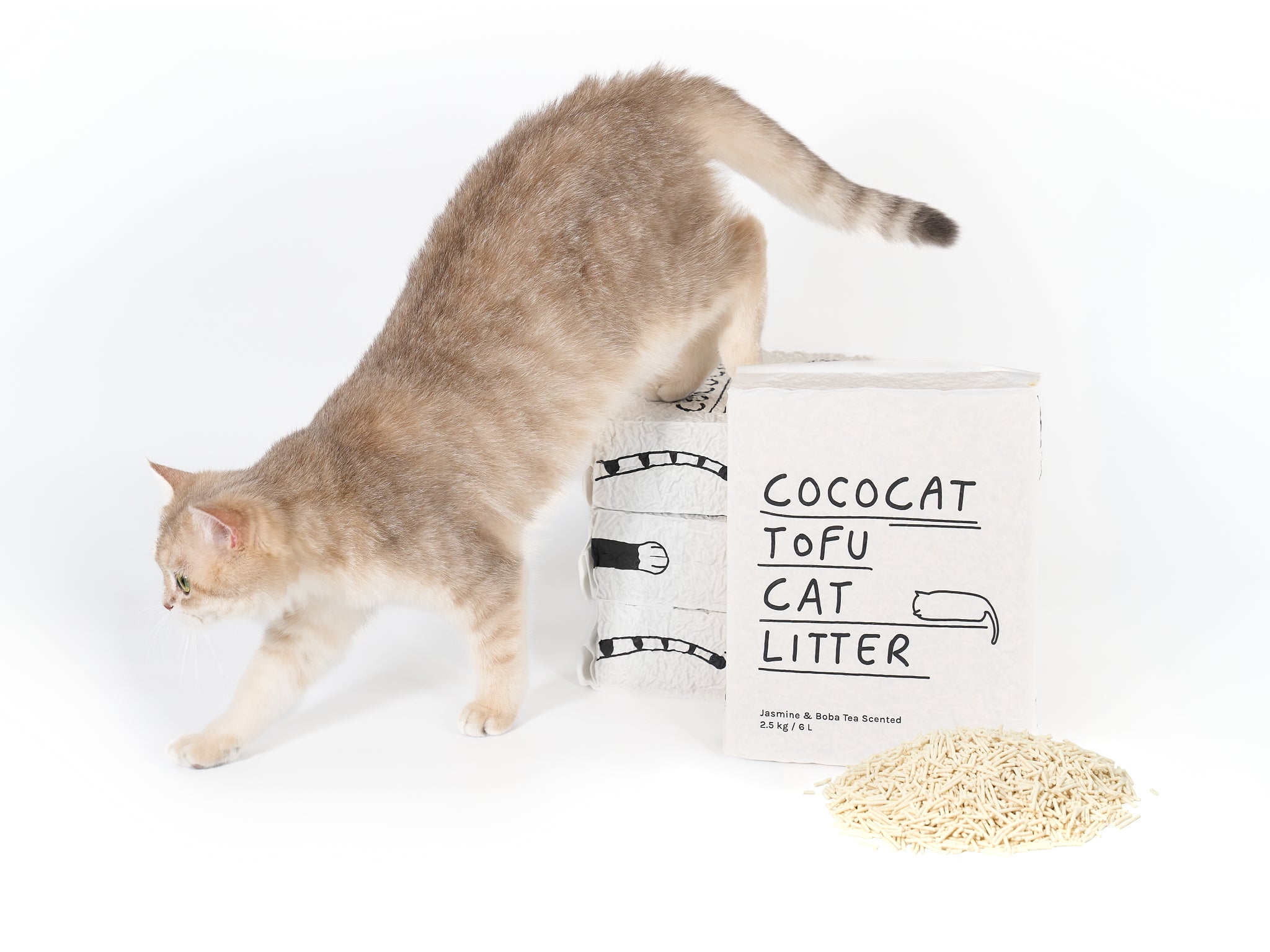
If what you want from the tray is to see where the cat went and remove that and nothing else, you want a clumping litter, and the two we make are the clumping kind. It is the same trade run the other way: you give up the price per litre and you sweep a mat, and in return the wet material leaves the tray the day it arrives and there is no sifting system to drift from one bag to the next. CocoCat's tofu litter is a pea-fibre pellet of roughly 1.5 millimetres, soft underfoot where a wood pellet is hard, filled to 5 to 7 centimetres rather than 2 to 4, scooped daily and fully changed every two to three weeks, with one cat getting through roughly one 6-litre bag a month on our sales data. It is lightly scented, jasmine milk tea, with no unscented version, and it tracks more than a dry wood pellet, so a mat at the exit goes in with the first bag. If what you valued in wood was that it smells of nothing added, the cassava litter is the bag instead: unscented, a fine rounded granule that clumps on its own starch, bin only, and the one for an automatic box. The full switch from a sieve to a scoop, routine by routine and with the places wood still wins, is written up on its own page.
And if your cat has voted for wood in the second tray, buy the wood pellets. The second tray is the only test that counts, and it does not care who wrote this page.
If you are weighing wood pellets
Both of our litters are in the cat litter collection, and the tofu guide has the fill and change notes in one place. If wood is one of several materials on your list, the five plant litters are compared in one place; if you want the tofu category's drawbacks before its case, they are written up honestly. The change interval for every litter type, wood included, is its own page, and if the tray lives in a flat, so does that. If you would like the next piece when it is written, the newsletter box is at the foot of this page.
Related posts
- Tofu litter vs wood pellet litter: what changes and what doesn't
- Tofu, cassava, wood, corn or paper: which plant litter suits which household
- How often to change cat litter
Sources
- Cat litter and litter trays, RSPCA
- Villeneuve-Beugnet, V. and Beugnet, F., Field assessment of cats' litter box substrate preferences, Journal of Veterinary Behavior 25 (2018)
- Fuel and power (VAT Notice 701/19), HM Revenue & Customs
- Phenols and Related Compounds as Antiseptics and Disinfectants for Use With Animals, MSD Veterinary Manual
- Cat litter, North London Waste Authority

Leave a comment
This site is protected by hCaptcha and the hCaptcha Privacy Policy and Terms of Service apply.