
How to litter train a kitten: the tray, the litter and the first week
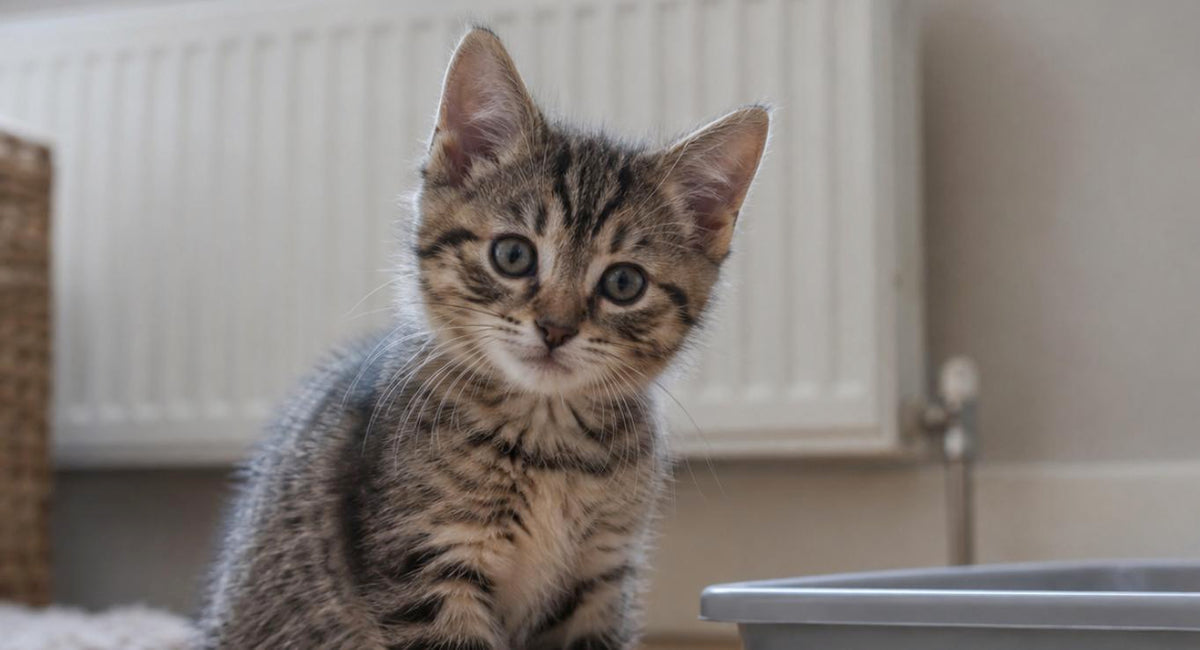
By the time a kitten comes home at eight weeks old, it has usually been using a litter tray for about half its life. A kitten raised with its mother should stay with her until at least eight weeks, and kittens start toileting on their own, copying their mother at the tray, from around four weeks. So the job is smaller than the phrase "litter training" suggests. Nobody has to teach a kitten to dig and cover. What has to be taught is where: in a home it has never seen, with a tray it can climb into and a litter it recognises.
I make cat litter for a living and have brought kittens home myself, so I have an interest in one part of this answer, and I will say where that part is. The rest is what the UK charities and the behaviour research agree on, with the numbers attached.
What is the fastest way to litter train a kitten?
The fastest way to litter train a kitten is to shrink its world for the first few days: one quiet room, a low-sided tray in a corner away from food and water, and the kitten placed in the tray after it wakes and after it eats. Kittens have tiny bladders and get caught short when they are given too much of the house too quickly. Many get the hang of the tray in a few days. Accidents are never punished; telling a kitten off makes the situation worse.
The room comes first: one room to begin with, the tray in a discreet corner, the food bowl on the opposite side and the water away from both; the carrier stays in the room with its door open as somewhere to retreat to, and a small scratching post goes in beside the bed. A spare bedroom does this well; in a one-bedroom flat, the bathroom does it too.
Then the timing. The moments a kitten is likely to need the tray are after meals, after waking, and whenever it starts sniffing the floor, scratching or beginning to crouch. At those moments the kitten is lifted into the tray and left alone; if it goes, quiet praise or a small treat. Between visits, take out only the soiled litter, so the tray goes on smelling familiar, and mix a little of the old litter into the fresh at each change for the same reason. A tray that smells of nothing is, to a kitten, a tray nobody has claimed yet.
The tray a kitten can actually climb into
Two UK charities give two answers on tray size. One would start a kitten on a small, low-entry tray and move it to a full-sized tray once it can climb in easily; the other prefers a large, adult-sized tray from the start. The fact that decides between them is the height of the lip, not the length of the tray. A long tray with low sides satisfies both at once, and the kitten grows into the length.

How long is long enough? One and a half times the cat's length from nose to the base of the tail, rectangular rather than corner or oval, and standard trays are commonly too small for an adult cat. Covered trays with a flap can put a cat off, and self-cleaning boxes move and make noise at unpredictable moments, a poor introduction in the first fortnight.
Which litter should a kitten start on?
A kitten should start on the litter it was using before it came home, then move to a fine, unscented litter at about 3cm deep if that is not the litter it is staying on. Cats prefer about 3cm of litter, a fine, sand-like texture, and no added scent. Litter preferences form early in kittenhood, which is why the first bag matters more than any later one.
The preference for fine grain is inherited: the domestic cat's ancestor is a desert wildcat. A 2018 field study of 18 adult cats in their own homes found a significant preference for clay or silica granules over wood pellets, which I read as evidence about grain size rather than any one material. The preference for no scent is about the nose. I sell a lightly scented litter, and I come back to what that means below.
The question people ask quietly is what happens if the kitten eats some. Cornell's Feline Health Center reports anecdotal accounts of gastrointestinal obstruction in cats that ingested large quantities of sodium bentonite clumping clay, calls it "a particular concern with kittens" because they ingest more while grooming and playing, and says plainly that it knows of no controlled study. So the risk is unquantified rather than zero, and it attaches to a specific mechanism: a clay that absorbs water, swells and sets. A plant fibre pellet does not set that way. That describes the material; it is not a licence to let a kitten eat it. A cat seen ingesting litter in any significant quantity is a conversation with the vet, and a kitten straining to go is a call the same day, because straining to pass urine can be an emergency. A kitten that mouths a pellet once and drops it is doing what kittens do.
Is tofu litter safe for kittens?
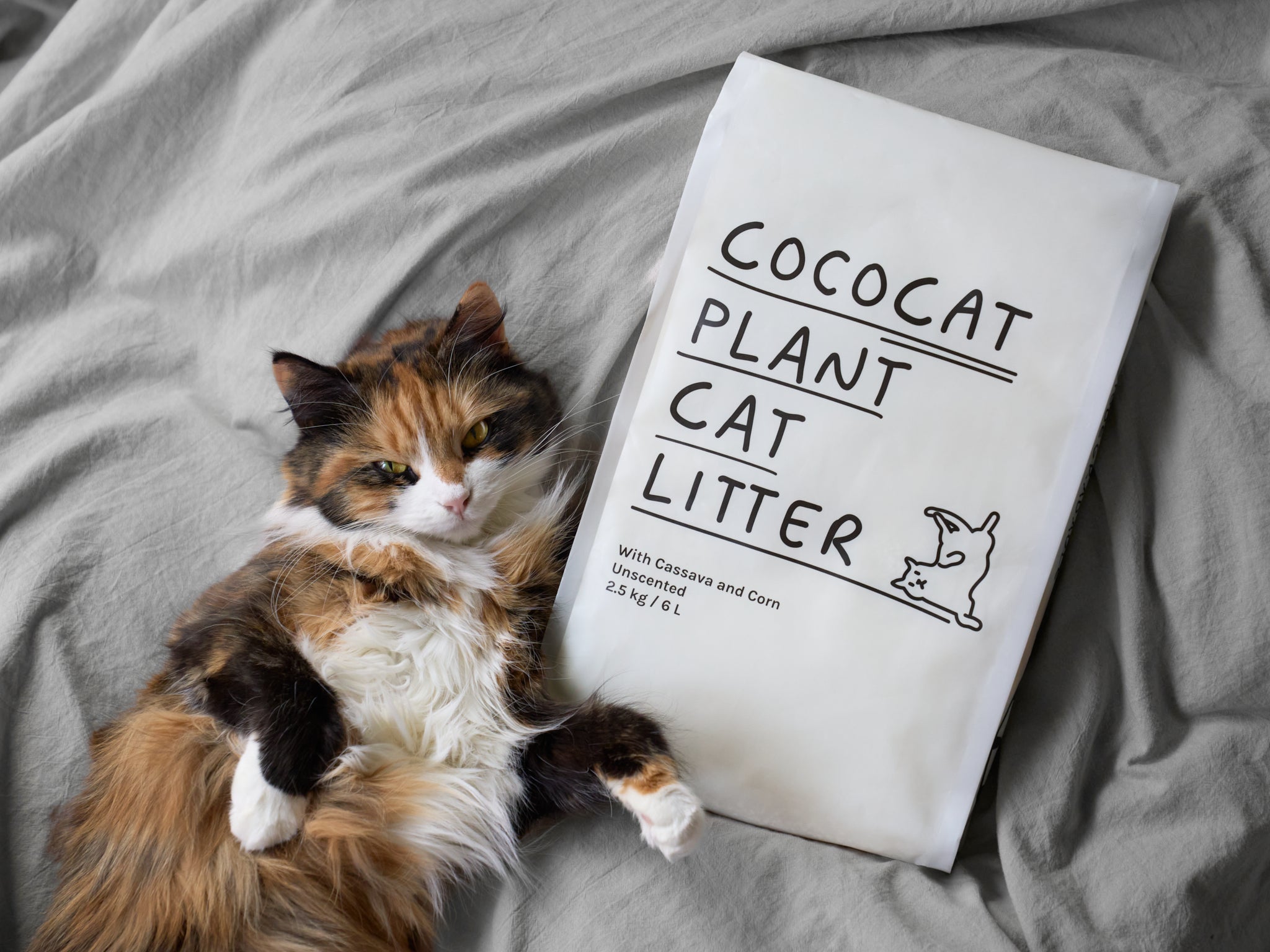
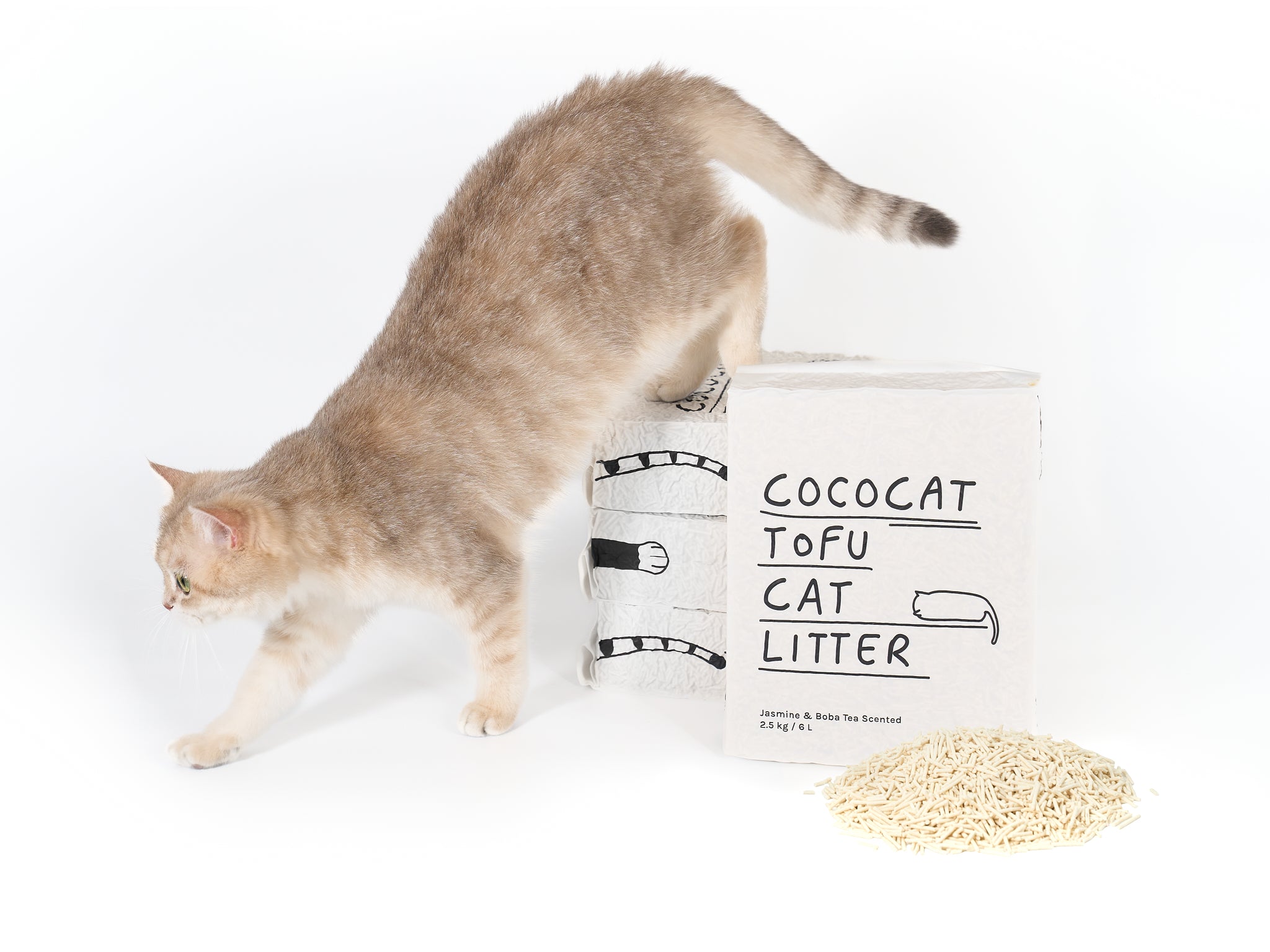
Tofu litter suits a kitten in the sense that matters: it is a pressed plant fibre pellet rather than a swelling mineral clay, so it does not carry the specific mechanism, sodium bentonite setting inside the gut, flagged above as a particular concern with kittens. CocoCat's tofu litter is pea fibre pressed into pellets of roughly 1.5mm, close to the fine grain cats prefer. It is not food: a kitten that keeps eating any litter, this one included, needs a vet's opinion. It is lightly scented, so if the tray needs an unscented plant litter, CocoCat's cassava litter is the one to choose instead.
Despite the name there is no tofu in it. "Tofu litter" names the pellet form, and CocoCat's is built on pea fibre and nothing else. Dust is the reason I would put a plant litter in a first tray before any other: the 99.9% figure we quote rates the dust-filtration process on our production line, not the air in your house, and the difference customers describe is a comfort one, no cloud when the bag goes in and no film on the skirting board. In a small room where a kitten and a tray share the air for a fortnight, that is worth having.
Where the tray goes, and how many
One tray per cat plus one spare is the rule every UK charity gives, and it applies to a single cat too: at least two trays. One tray is enough while the kitten is in one room. Once it has the run of a flat, put a couple of trays in key areas while it is young. Two trays in a two-room flat is not excess; it is the distance a kitten's bladder can cover.

A tray belongs somewhere quiet, away from food, water and the bed, and away from doorways, corridors, cat flaps and washing machines. In a flat where the quiet corner and the washing machine share the bathroom, the tray goes in the corner furthest from it, or in the hallway cupboard with the door wedged open. Scooping is twice a day, and a full change is weekly on non-clumping litter and every two to four weeks on clumping. Wash the tray with hot water and a mild detergent: disinfectants that turn cloudy in water, Dettol among them, are toxic to cats. Used litter goes bagged into the general waste bin; on CocoCat's tofu litter, solids can be scooped to the toilet only where your water company permits it, and several do not: United Utilities' rule is pee, poo and toilet paper only.
How long does it take to litterbox train a kitten?
A kitten that arrives at eight weeks having watched its mother use a tray is usually reliable within a few days; one weaned early and never shown takes longer. It may take a few attempts to grasp the idea, and settling in as a whole takes some kittens a few weeks. Accidents still happening after the first fortnight trace to the tray: too dirty, too small, washed with something strong-smelling, too near the bed or the food, or the wrong texture. Each is a change to the tray, not to the kitten.
What is the 3-3-3 rule for kittens?
The 3-3-3 rule is a rescue rule of thumb, not a research finding: three days to decompress, three weeks to learn the household routine, three months to feel at home. It was written for rehomed dogs and has been borrowed by cat shelters. The shelter that wrote the dog version calls it a helpful guideline that not every dog follows, and the cat version expects a newly adopted cat to miss the litterbox in the first three days and to be using it consistently by three weeks, for adults. What it tells you about a kitten's tray is the direction: early misses are the move, not the kitten. What it does not tell you is a date, because it was never measured on kittens.
How do I stop my kitten from peeing and pooping in the house?
Stop a kitten toileting in the house by bringing the tray closer, not by correcting the kitten. The first explanation for accidents is too much house too soon: shrink the space back to one room, or add a second tray where the accidents happen. Clean the spot with an enzymatic cleaner so the smell does not mark it as a toilet, scoop twice a day, and never punish, which makes it worse. If the kitten was reliable and has suddenly stopped, a vet comes first, because a sudden change in toileting can be medical.
A kitten that squats on the rug is not making a point. It has run out of bladder before it ran out of corridor, or it has decided the tray is worse than the rug, and both are fixable in an afternoon: move the tray to where the accidents are, walk it back a metre a day, and if you changed the litter early, go back to what the kitten knew and change again later, over a week.
What this means for the tray
A kitten's first set-up is a long, low-sided, rectangular tray it can step into, a second tray once it has more than one room, and about 3cm of a fine litter with no added scent, starting with whatever it used before it came home. None of that needs a brand. Where a brand enters is the second bag, bought once the kitten has settled and the litter it came with runs out, because preferences fixed in kittenhood are the ones the cat keeps.

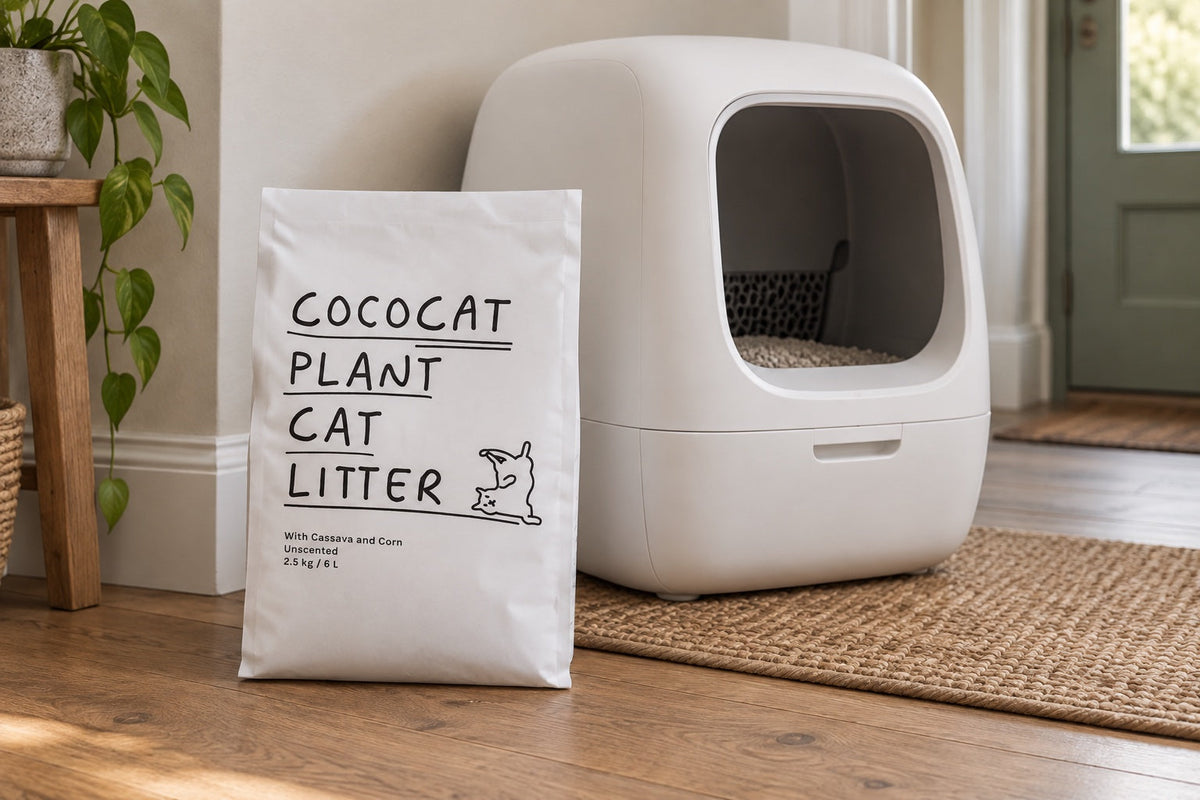
For that second bag I would use CocoCat's tofu litter, for reasons that are all about the material. The pellet is pea fibre at roughly 1.5mm, near the grain size cats are known to prefer, and it is plant fibre rather than a swelling clay, which removes the one ingestion mechanism a kitten's vet would worry about. It clumps, so the tray is scooped rather than sieved, and it comes off the line through a 99.9% dust-filtration process. The honest note is the scent. It carries a light milk-tea note and there is no unscented version of it; unscented is the kitten default, and where that matters to you or to the cat, the cassava litter is unscented, because cassava starch has no base note to cover, and it is the right choice there, not a second-best. For a kitten I would choose between the two on the scent question alone.
One note on depth, where my number and the charities' differ. In an adult tray I fill the tofu litter to 5 to 7cm, so that urine clumps on the way down rather than reaching the base and drying there, against the 3cm above. A low-sided kitten tray will not always take 5cm without spilling, so my reading is to start at 3cm, scoop twice a day so it does not saturate, and deepen as the tray grows.

The tray we sell is not the first tray. The pidan Snow Dome is a covered box 54.8cm wide with a grated doorway that knocks tracked litter off paws, and a kitten of eight weeks needs low sides and an open top, not a dome. It becomes the answer later: an adult cat, a dog in the house that has learned where the snacks are, a hallway where the trail of pellets is the daily irritation. Until then a plain low tray from any pet shop is the right purchase, and the litter box collection is for the cat the kitten becomes.
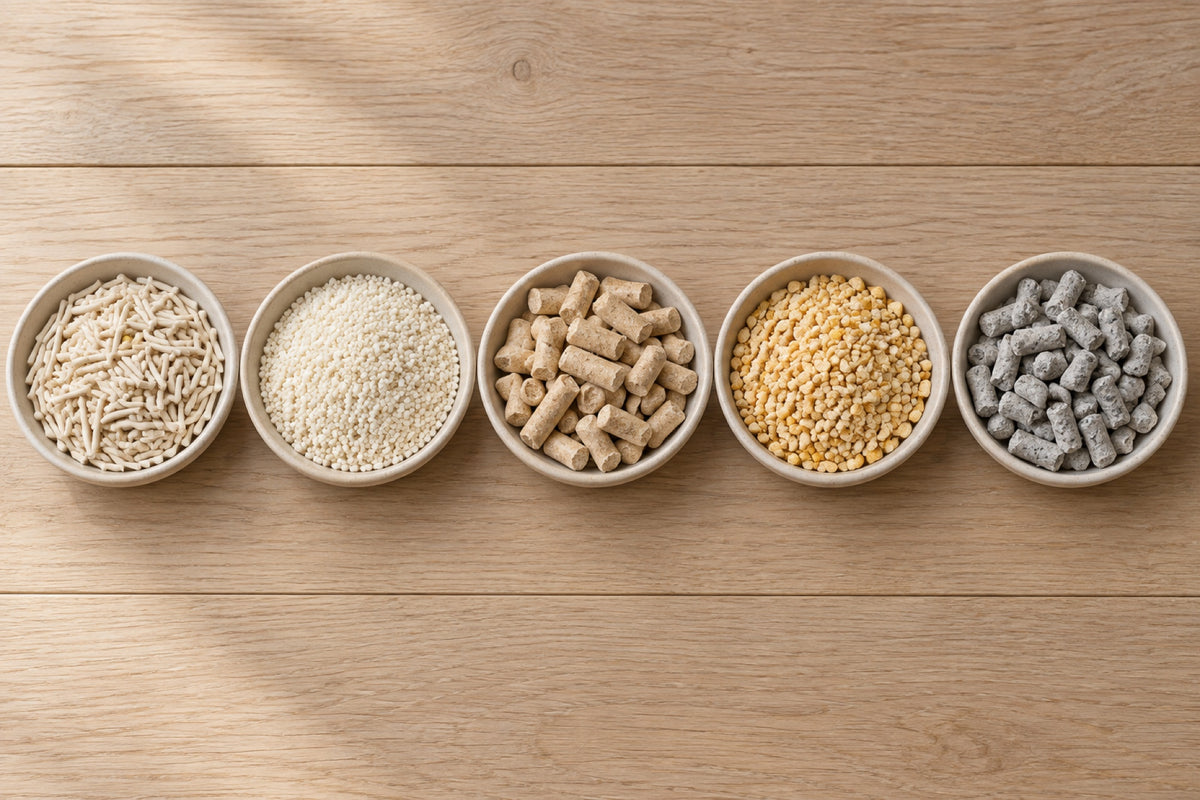
The next question, once the tray is working, is which plant litter suits which household: tofu, cassava, wood, corn or paper, compared. Pack sizes and the full usage notes are in the tofu cat litter guide. If you would like the next piece when it is written, the newsletter box is at the foot of this page.
Related posts
- Tofu, cassava, wood, corn or paper: which plant litter suits which household
- The disadvantages of tofu cat litter, from people who sell it
- What is cassava cat litter, and why is it a greener choice?
Sources
- Blue Cross: How to litter train a kitten
- International Cat Care: Choosing a litter tray for your cat
- Villeneuve-Beugnet and Beugnet, Field assessment of cats' litter box substrate preferences, Journal of Veterinary Behavior, 2018
- Cornell Feline Health Center: Does clumping kitty litter pose a risk to cats?
- United Utilities: Stop the block

Leave a comment
This site is protected by hCaptcha and the hCaptcha Privacy Policy and Terms of Service apply.