
Which Litters Work in an Automatic Litter Box | CocoCat
Every self-cleaning litter box that takes an ordinary clumping litter works on the same principle. A few minutes after the cat steps out, the machine turns or rakes the whole bed of litter through a screen. Loose granules fall through and are kept; anything that stays on the screen goes into a drawer underneath. Everything you need to know about which litter to buy follows from that one motion.
I make a litter for exactly this job, so the interest is declared up front. CocoCat's cassava litter was built for automatic boxes, and most of this piece is about why it suits the machine and how to run it. The short part comes first, the litters that jam a machine, because once you can see what the screen is doing you will not buy the wrong bag again.
What litter can you use in an automatic litter box?
An automatic litter box needs a clumping litter with a granule fine enough to fall through its screen and a clump firm enough to stay whole while the bed is turned. Non-clumping litters, wood and paper pellets and loosely clumping litters fail for one of two reasons: either nothing separates, so waste stays in the bed, or the pellet is too large to pass the screen and jams it. Litter-Robot's own list of what will not work in its machine is strictly absorbent non-clumping litters, loose-clumping litters, newspaper-based litters and absorbent wood pellet litter, and that list transfers to every other raking or rotating machine, because they all sift. The one exception is the crystal-tray machine, which rakes solids off a bed of silica crystals in a disposable tray and takes nothing but its own crystals; the rest of this piece is about the sifting kind.
Three parts of the machine set the three properties the litter needs. The screen sets the granule size: whatever is bigger than its holes ends up in the drawer whether it is waste or not, which is how a bag of wood pellets empties itself into the bin. The rotation or rake sets the clump strength: a clump that would lift whole on a scoop is tumbled as the globe turns or dragged across the bed, and a soft one breaks into damp crumbs that fall back through the screen into the clean litter. The sensors set the dust limit: a weight sensor decides when the cat has left, and a level or drawer-full indicator decides when to stop, and both read less accurately under a film of fine dust. Clumping, fine and low in dust is not a brand. It is a specification, and any bag that meets it will run.

That rules out most of the litters sold as gentle or natural: wood pellets, paper pellets, non-clumping clay and any plant litter pressed into a pellet rather than a granule. We sell none of those, and I would not put any of them in a machine. Clumping clay is the default the manufacturers test on, and it works; what it costs is a drawer that is heavy to lift, a material dug from a pit that does not break down, and a fine mineral dust that settles on the inside of the globe and on the sensor. A plant litter that meets the same specification takes that dust away without adding a new problem, and that is the whole case for choosing one.
What type of litter is best for a robot litter box?
The best litter for a robot litter box is a fine, even, fast-clumping granule with low dust. Among plant litters that specification is met by a starch-clumping fine granule, which is what cassava litter is, and not by wood or paper pellets, which do not clump or do not fit the screen. "Plant-based" on its own is not an answer. The category contains the best and the worst litters you could put in a machine, and the difference is decided by what the granule is made of and how it clumps, not by the word on the front of the bag.
Hand-scooping is gentle: the clump only has to hold together for the two seconds between the tray and the bag. A machine gives it a harder test. In a rotating globe the clump rolls; in a raking box it is dragged the length of the bed; and either way it happens against dry granules that abrade its surface. A soft clump arrives at the screen in pieces, and the pieces are the problem. A fragment that falls back through the screen dries in the clean bed and starts to smell and to stick. A fragment that reaches the drawer carries moisture with it, which is what the manufacturers mean when they warn that looser clumps "can cause condensation in the waste drawer". So the property you are shopping for is not whether a litter clumps but how fast and how hard it sets.
One setting helps here and costs nothing. If your machine has a wait time between the cat leaving and the cycle starting, lengthen it. A starch clump given a few extra minutes to set is a different object from one that is sifted while still wet.
What this means for the tray
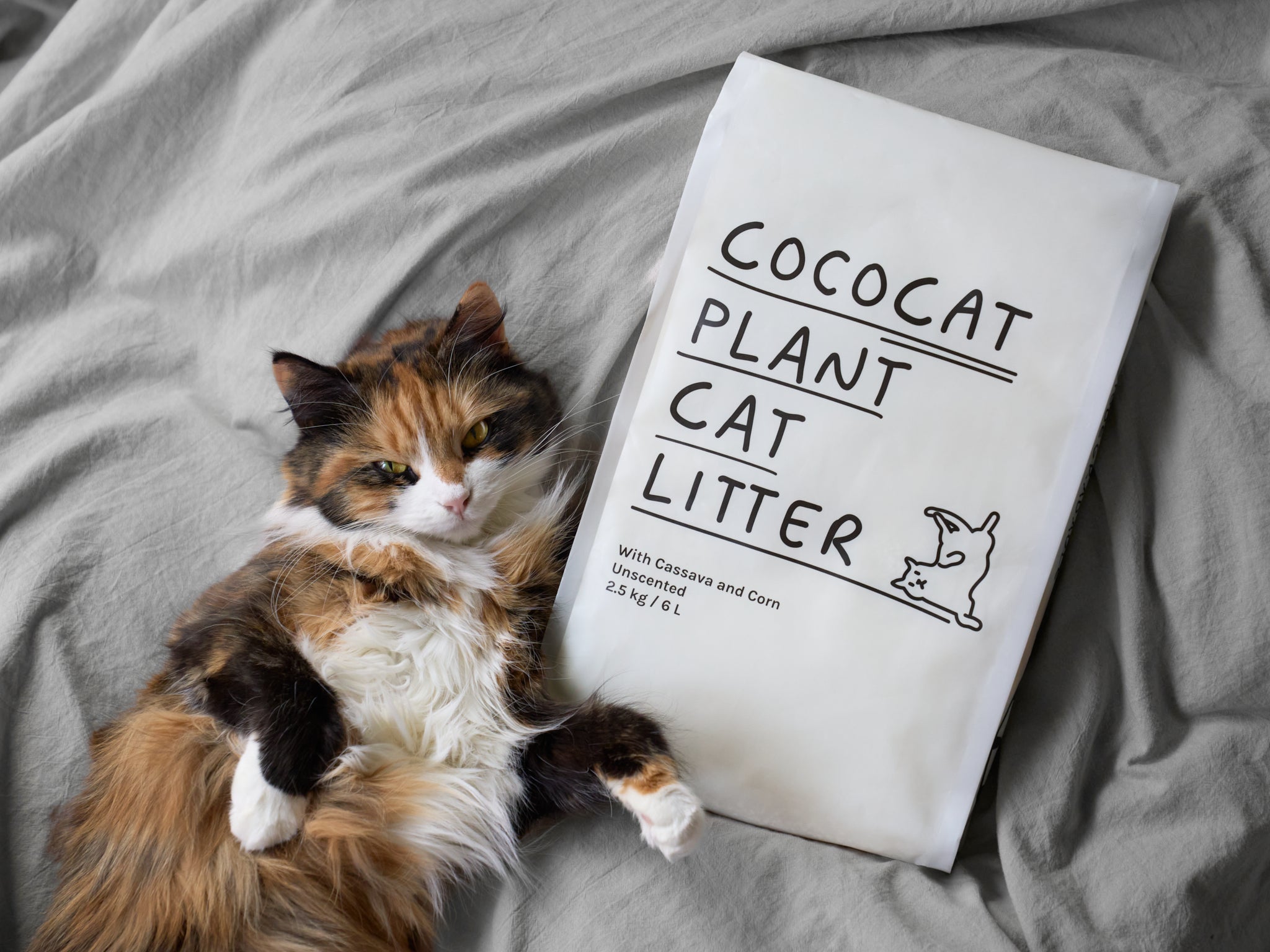
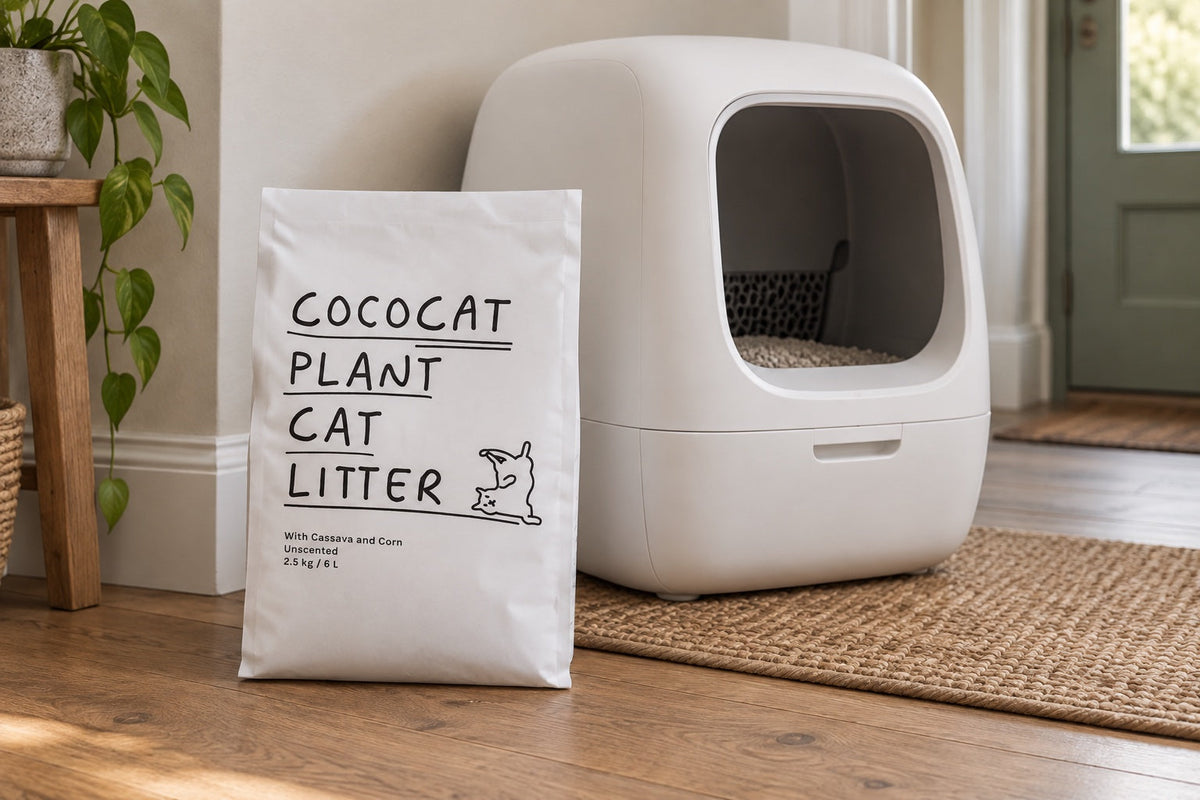
CocoCat's cassava litter is the one I put in a machine. It is cassava flour blended with corn starch, corn flour and guar gum, and it clumps on the cassava's own starch, with no calcium carbonate or mineral filler in the bag to grind against a mechanism or to fall through the screen as grit. The granule is fine and rounded, which is the shape a screen wants and the texture a cat's paw expects. It is unscented, because cassava starch has no base note to cover. And the clump sets fast, within 10 seconds of contact on our own measurement, which matters more in a machine than anywhere else, because the clump is sifted, not lifted. Cassava raises one question of its own, about cyanide, and that question is answered separately with the same standard of evidence.

What the machine sees in practice is a clump that reaches the drawer in one piece and a bed that stays dry. The litter does not stick to the base of a plastic box, so the screen turns through clean granules rather than scraping at a crust. Dust runs below 0.5 per cent after the dust-removal stages on the line, which is the figure a weight sensor and a clear globe want. Two honest notes belong here. The clump is dense, and on a stainless steel liner it can grip and leave a residue, so if your machine is steel, check the maker's advice before you fill it. And a fine granule tracks further than a wood pellet does; the step at the machine's exit knocks the worst of it off, and a mat under the exit catches the rest.

Two things it will not do. It will not go down the toilet: a clump dense enough to survive a rake is too dense for plumbing, so the drawer bag goes in the general waste bin, and several UK water companies advise against flushing any cat waste at all. And it will not persuade a cat that has decided against the machine, which is the question below, not a question of litter.
Fill to the machine's line rather than to the 5 to 7cm we give for an open tray, because the screen and the level sensor are calibrated to that line. Keep the bag sealed between fills: starch takes moisture from the air, and a bag left open beside a bathroom machine is absorbing water before the litter ever reaches it. Of the ten reviews on the cassava product page as I write, two are from households running a litter robot, and I would rather you read those than take my word for it.
Do vets recommend auto cleaning litter boxes?
No UK animal charity or veterinary body recommends automatic litter boxes as a category, and the guidance that exists points the other way on acceptance: Battersea's litter tray advice notes that automated or self-cleaning trays can be off-putting to a cat because of the noise, the movement or the smell. The one veterinary recommendation the search returns sits on a manufacturer's own website. The practical answer is to run the machine beside the existing tray for a fortnight and let the cat choose, which settles the welfare question in the only place it can be settled, at home.
That does not make the machines bad. It means the question is about the cat's acceptance rather than the machine's hygiene, and the rule is the one the charities give for any change to a tray: keep the old tray where it was, put the machine beside it, and watch which one gets used. The number of trays does not change because one of them cleans itself. One per cat plus a spare, which for a single cat is the machine and the open tray it may prefer on a given day.

There is one number that does come from the manufacturers and matters for a young cat. The machines decide when a cat has left by weight, and Litter-Robot 4 sets its floor at 1.36kg for a kitten to use the automatic mode, with the older model at 2.25kg; below that, the advice is to run the machine in its semi-automatic mode, where you trigger the cycle yourself. A kitten's first tray is not a machine, and a kitten's first litter is a separate question with its own guidance.
If the machine is already in the hallway
The cassava litter is the bag to put in it, and the cassava guide has the fill and refill notes. If you are still choosing between materials, tofu, cassava, wood, corn and paper are compared in one place, and both of ours are in the cat litter collection. If you would like the next piece when it is written, the newsletter box is at the foot of this page.
Related posts
- What is cassava cat litter, and why is it a greener choice?
- Tofu, cassava, wood, corn or paper: which plant litter suits which household
- How to litter train a kitten: the tray, the litter and the first week

Leave a comment
This site is protected by hCaptcha and the hCaptcha Privacy Policy and Terms of Service apply.