
The disadvantages of tofu cat litter
Our team recently surveyed hundreds of UK customers across different tofu litter brands, our own among them. Three things came back praised across the board, with very little argument. The clumps lift out whole. There is almost no dust. Hardly anything gets walked through the house.
Then there are the drawbacks that brands talk about less: scent, odour control, cost per litre and cat rejection.
As a cat parent myself, I want to stay informed when choosing the litter for my little ones. And having created CocoCat's tofu litter, I happen to know a thing or two about how it is made. So I have gone through these four questions properly and answered them specifically, including the parts that are awkward for us.
What are the disadvantages of tofu cat litter?
Tofu cat litter has four real drawbacks, and each has a known answer. Most tofu litters are scented, because the plant base has a smell of its own, and a genuinely unscented plant litter means changing raw material rather than changing label. Odour control depends more on tray size and scooping routine than on brand. It costs more per litre than clay, though it clumps rather than being thrown out wholesale, which narrows the gap considerably over a month. And some cats refuse an unfamiliar substrate, which a slow transition over a week or two largely solves.
Why is tofu cat litter scented?

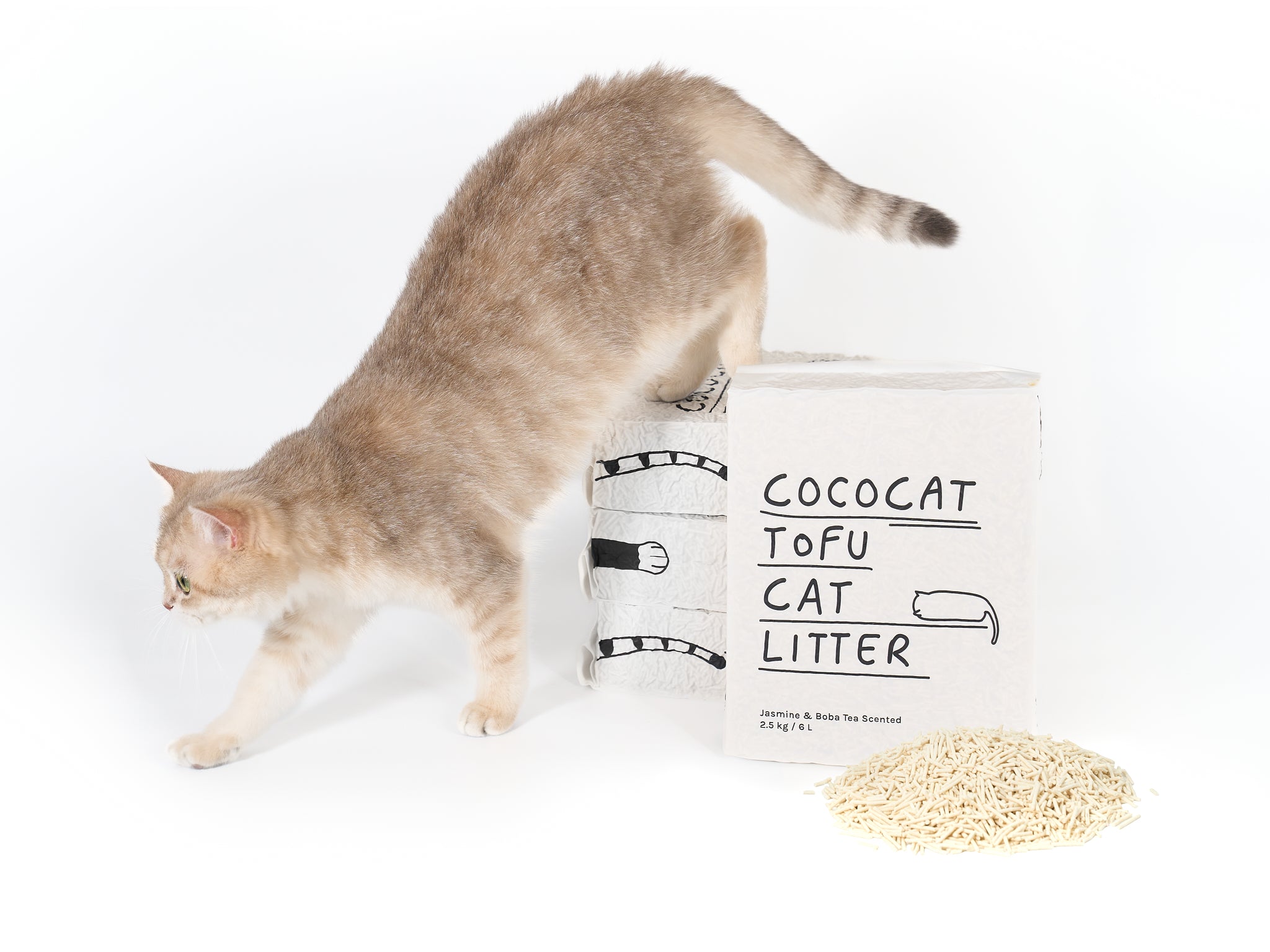
Because the raw material has a smell of its own. Tofu litter is made from legume fibre, soy okara in most brands and pea fibre in ours, and that base carries a mild beany note that becomes more noticeable in a warm room. A light fragrance is the category's standard answer to it. That is a deliberate formulation that divides people: in our customer survey, scent drew warmer feedback than any other single attribute, and also the firmest objections.
Both responses are reasonable. The same fragrance over ammonia reads as something being covered up. People who want fragrance-free litter are not being particular for the sake of it. Some are sensitive to added scent generally, and a litter tray is one of the few smells in a house you cannot walk away from.
Cats can object the scent too, but less often than I would have thought. Across the 400+ UK reviews of plant litters in our survey, six describe a cat refusing the tray and four of them name the smell as the reason. That is 1%.
The published work points the same way. A veterinary behaviourist's study of 35 cats over four days recorded 143 uses of unscented litter against 134 of scented, with 16 cats preferring unscented, 12 preferring scented and 7 showing no preference, a difference the author judged not statistically significant.1 So the honest position is that most cats are indifferent to fragrance, a small number are firmly not, and there is no way to know in advance which sort you have.
The obvious alternative is to buy an unscented tofu litter, and the label is less reliable than it looks. One of the competitor products in our survey is sold as unscented, and its most common complaint is that it is not: buyers describe a clear vanilla or chemical note, and they say so plainly, because the absence of scent was the reason they chose it in the first place. If you need fragrance-free, the word on the bag is not enough to go on.
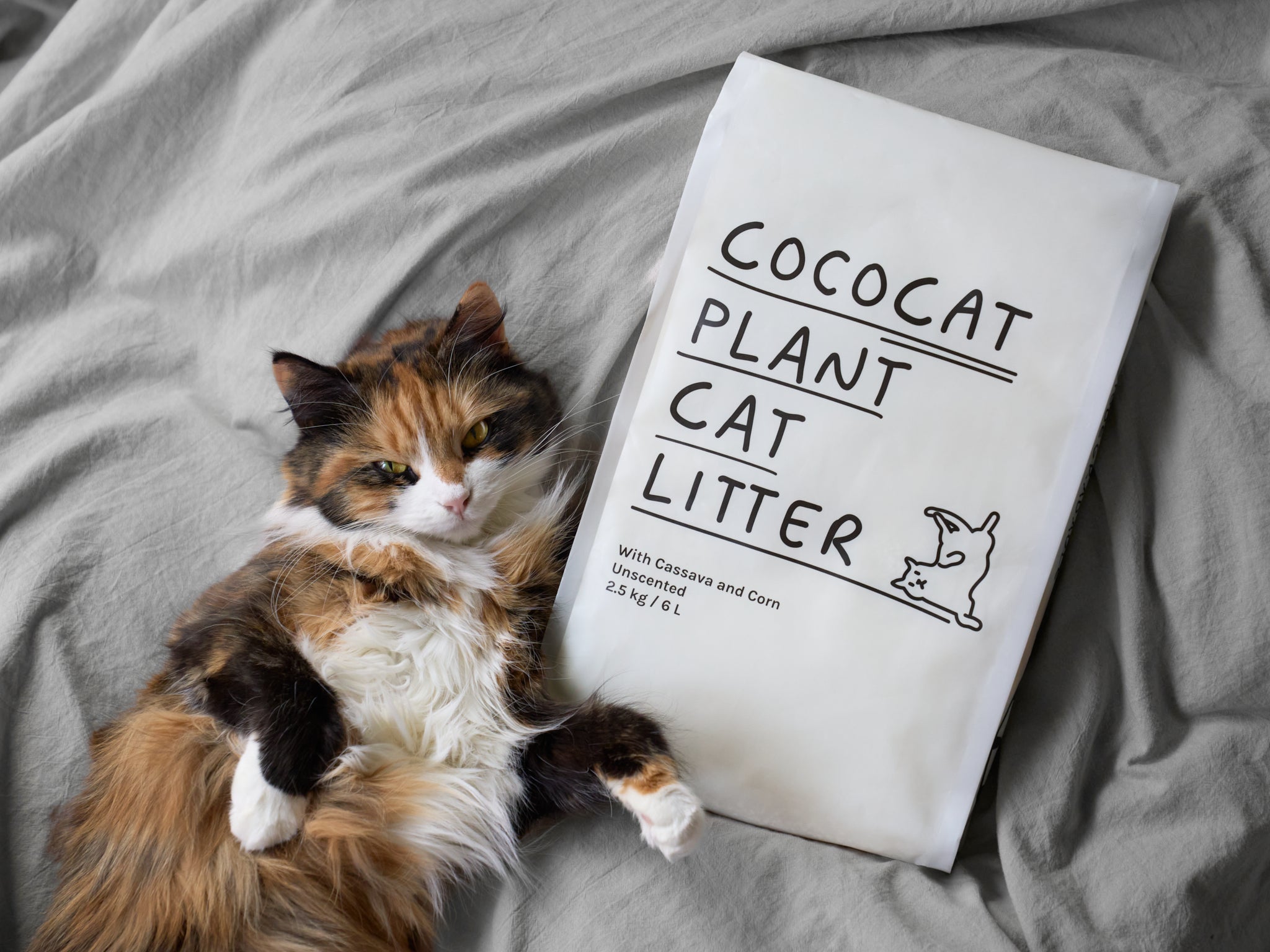
Ours carries a mild milk-tea note, and there is no unscented version of it. So if fragrance is what stands between you and a plant litter, the answer is a different raw material rather than a different label. Our cassava litter is genuinely unscented, and it can be, because it is not a legume at all: cassava and corn starch, with no beany note underneath that needs covering. It is still a plant litter, so it keeps the low dust and the biodegradability, but it is a different product with different properties, and unlike the tofu litter it is not for flushing.
Does tofu litter control odour as well as clay?
It depends more on how the tray is run than on which bag it came out of. In our survey the same tofu litters drew both praise for odour control and complaints that the tray smelled after days of use, and the complaints share a pattern: a saturated tray rather than a litter failing on contact. Filling to a depth of 5 to 7cm, scooping daily, and giving each cat its own tray plus a spare resolves most of it.
There is a material difference underneath the category average, though, and it is worth naming. Most tofu litter is made from okara, the wet residue left over from producing tofu, which is a by-product being put to good use. Ours is pea fibre, milled and processed as an ingredient in its own right. Absorption is what decides whether urine is captured and locked into a clump before it spreads across the tray and starts turning to ammonia, and that is the property we selected the material for.
What does tofu cat litter actually cost per month?
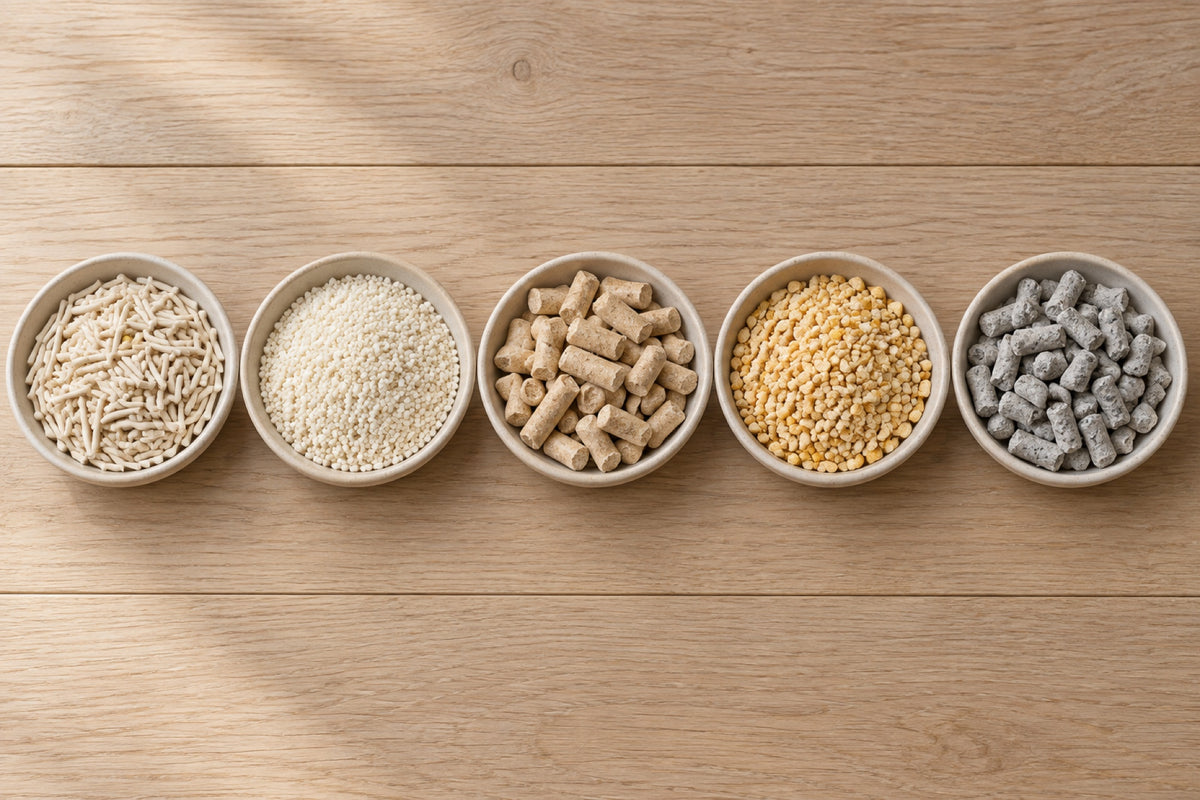
Per litre it sits near the top of the category: above both kinds of clay and wood pellets, and about level with silica crystals. Per month the answer turns on how often the litter is thrown away, which varies far more between types than the shelf price does. Tofu clumps, so it is scooped and topped up. Non-clumping clay is replaced completely every week on the manufacturer's own printed instructions,2 and silica is usually replaced wholesale too. That is why the per-litre ranking and the per-month ranking are not the same ranking.
| Litter | How it is replaced | Litres a month, one cat |
|---|---|---|
| CocoCat tofu | scooped and topped up | 6 to 12 |
| Clumping clay | scooped and topped up | about 10 |
| Non-clumping clay | replaced whole, weekly | 14 to 20 |
| Wood pellets | sifted, topped up | about 7 |
| Silica crystals | stirred, replaced monthly | about 10 |
The per-litre comparison rests on UK retail listings retrieved 2 August 2026.3 Monthly volumes are a published UK estimate4 cross-checked, for our own row, against a year of our sales data. Treat them as a guide rather than a measurement: tray size, fill depth and how often you replace the lot move them more than anything else on this page.
Money is only one axis, though, and the two cheapest litters, wood pellets and clay, carry the trade-offs you would expect. Wood pellets do not clump. They break down into wet sawdust instead, which means a sifting tray or a second scoop to separate the soiled material from the clean pellets still sitting on top, and it is that sawdust rather than the pellets themselves that travels through the house. The pellets are also considerably larger than the fine substrates cats went for in both studies above, and where cats were given the choice they took clay and silica granules over wood.5 Clay is cheaper again at the budget end, and it brings the dust this whole category exists to get away from, along with the fact that it is strip-mined and does not break down. Every bag of it anyone has ever scooped is still somewhere.
One thing worth knowing before you compare: how often the lot gets replaced moves the monthly figure more than the choice of brand does, and published advice varies. Purina UK advises a full change weekly for clumping litter with one cat, while a vet-authored guide puts it at every two to four weeks.6 For our own tofu litter, with solids scooped out daily, we suggest a full change every two to three weeks. Four weeks is workable in a single-cat household that keeps up with the daily scoop, and that is what the lower end of the range in the table assumes.
What the extra buys, on the evidence we have, is the handling. The three attributes praised consistently across every brand in the survey were firm clumps that lift out whole instead of crumbling, low dust, and low tracking. Pack size is the other lever: our 60L pack works out cheaper per litre than single bags, and it puts a good deal less packaging into the world per litre of litter.
Will your cat use it?

Most will, and refusal is uncommon: 6 of the 400+ UK reviews in our survey describe a cat turning down the tray, under two per cent. Where it does happen it comes down to one of two things, an unfamiliar texture or an unwanted smell, and they have different answers. Texture is solved by going slowly. Smell is not, and means changing to a litter with no fragrance in it.
On texture, two published studies point the same way. Offered seven litters side by side, nine cats put 147 of their 186 deposits in the clay tray and split the remaining 39 between all six alternatives, tofu among them.7 A larger field study of eighteen cats found the same preference for clay and silica granules over wood pellets.5
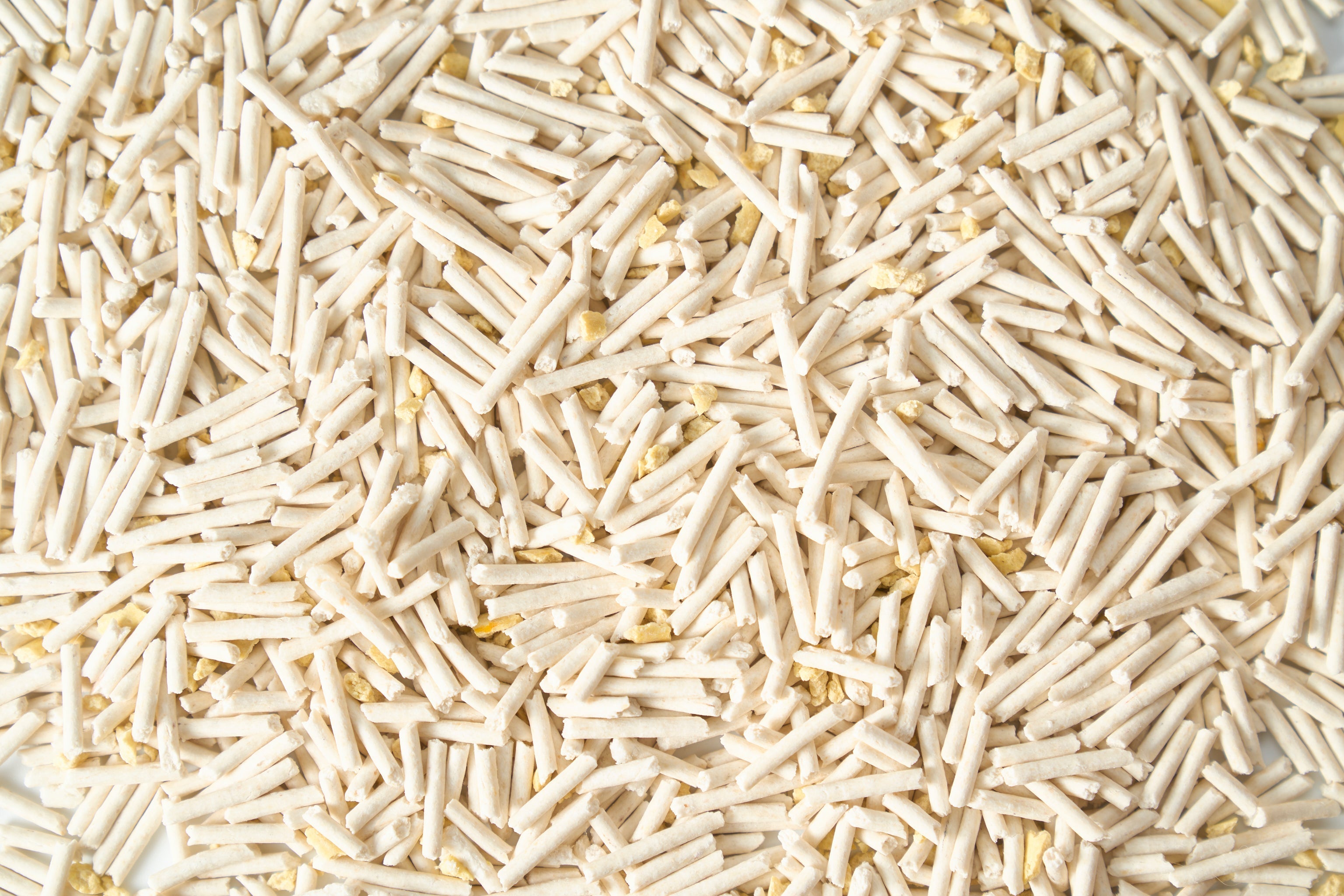
Neither result is as damning as it first looks, and both sets of researchers said so. The samples are small, and most of the cats had been raised on clay, so what the studies mostly measure is familiarity. The first study also found that texture made no detectable difference to which tray a cat chose, which undercuts the usual explanation that cats object to pellets. Ours are around 1.5mm, inside the range cats are generally said to prefer. This is the best direct evidence anyone has on the question and it is thin, which is worth saying plainly before anyone treats it as settled.
Familiarity being the driver is also the useful part, because familiarity can be built. Mix the new litter into the old and raise the proportion over a week or two rather than changing the tray in one go, and keep a tray of the old litter available while you do. A cat will usually accept gradually what it would refuse overnight.
Does tofu cat litter track?
Less than clay, on the evidence we have. Across our survey, low tracking was among the three most-praised attributes, named explicitly against clay, wood and sand. Where customers did raise it, they hedged. This is not zero, because any litter a cat digs in will leave the tray. But if you are switching specifically to cut the trail across the floor, this is the drawback least worth worrying about.
What "dust-free" does and does not mean

Low dust is the best thing about plant litters and the most consistently praised property in our survey. It is also the property most loudly claimed and least reliably delivered across the cat litter category as a whole, so it is worth knowing what the numbers on a bag actually describe. The 99.9% we quote rates the dust-filtration equipment on our production line. It describes how the litter is made, not how much dust ends up in your house.
The good news is that the health question turns out to be smaller than the internet suggests. The most specific assessment we could find, presented at the Society of Toxicology in March 2025, estimated airborne silica exposure from ordinary domestic use of even bentonite clay litter at a small fraction of the ambient levels people already live with in cities, which are not associated with harm.8
What the research does not do is make the difference imaginary, because customers describe it consistently and specifically. No cloud when the bag goes into the tray. No fine film along the skirting board. No grey prints on a windowsill. That is a comfort difference rather than a medical one, and comfort is a perfectly good reason to buy something: it is the difference between a chore you do without thinking and one you brace for. For a household with an asthmatic person in it, or a cat recovering from a respiratory infection, less airborne dust is a sensible precaution whether or not the population-level case is ever proven.
Damp is the condition it likes least
This is the real material difference between a plant litter and a mined one, and it is rarely mentioned anywhere. Starch and plant fibre take up moisture from the air. Clay, in the way that matters here, does not. A bag left open in a humid room is absorbing water before the litter ever reaches the tray, and pellets that have done so soften and clump poorly.
The handling that prevents it is simple enough: reseal the bag after opening and keep it somewhere dry, for example, inside a cupboard. Unopened, the shelf life is two years.
The related complaint, that tofu litter sets like cement on the base of a tray, recurs across brands in our survey, and the answer customers themselves report is fill depth. Urine that reaches the bottom has nothing to clump around, so it dries there instead. At 5 to 7cm it clumps on the way down and lifts out clean.
Can you flush it?

In small amounts, where your local rules allow it, and with solids scooped to the bin first. UK water companies advise against flushing cat litter, and their position is a sound one: most cat litter is clay or silica, which does not break down in water and does exactly what they warn about. Anglian Water clears over 40,000 blockages a year.9 That guidance is written for litter as a category, and tofu litter behaves differently in water from the material the guidance has in mind, which is why the blanket reading of it is worth unpicking rather than either ignoring or repeating.
The part that does apply regardless of material is the waste rather than the litter. Cat faeces can carry Toxoplasma gondii, and a 2007 study found that neither chlorine nor ozone at the concentrations tested inactivated its oocysts, though they are large enough that conventional filtration should remove them.10 That is a finding about disinfection chemistry rather than a measurement of risk from a British household toilet. It is still the reason our own guidance is narrower than our category's marketing: scoop solid waste to the bin, flush only small amounts of clumped litter where local rules permit, and do not flush at all on older or restricted plumbing. We make no septic-safe claim.
Treat flushing as an occasional convenience rather than the disposal plan. What holds everywhere is the bin volume: a clumping litter that is scooped rather than replaced whole puts a fraction of the material into your black bin that a weekly full change does.
Who tofu litter suits, and who it does not
It suits a household that scoops daily and wants the tray to be a small, quick, low-dust job: firm clumps that lift out whole, very little tracked across the floor, and a plant material rather than a strip-mined clay that never breaks down.
It suits some households less well. If you want fragrance-free, most tofu litters including ours are scented, and our cassava litter is the better route. If your cat is elderly and has used clay for a decade, expect a slow transition and be prepared for it not to take. And if price per litre is the binding constraint in your house, clumping clay might be a more economical choice.
Sources
- Scented versus unscented preference, 35 neutered cats over four days: Neilson, J., DVM DACVB, presented at the 2011 Veterinary Behavior Conference. A conference presentation rather than a peer-reviewed paper, reported here from consistent secondary accounts rather than a primary text we were able to obtain. A frequently quoted 1997 figure claiming 68 per cent of cats with toileting problems had scented litter at home is deliberately not used, because it circulates without the control-group comparison that would make it mean anything.
- Catsan Hygiene Plus manufacturer instructions, quoted on the product listing: "Fill the litter tray with min. 5cm... remove the solid faeces daily and replace the litter completely once a week for odour control." zooplus.co.uk
- UK clay litter retail listings used for the per-litre comparison, retrieved 2 August 2026: Catsan Hygiene 20L (Tesco, Sainsbury's, Morrisons), trolley.co.uk; Tesco Premium Ultra Clumping 5L and Sainsbury's clumping 10L, trolley.co.uk
- Monthly consumption per cat by litter type, and wood and silica price ranges: Cat Litter Cost Calculator, Pro Calculator UK, prices collected December 2025 from Tesco, Zooplus and Pets at Home. The site states its price sources but not the method behind its consumption figures, so those are treated here as a guide rather than a measurement. procalculator.co.uk
- Eighteen cats; significant preference for clay or silica granules over wood pellets: Villeneuve-Beugnet, V. and Beugnet, F., Field assessment of cats' litter box substrate preferences, Journal of Veterinary Behavior, 2018, vol. 25, pp. 65-70. doi.org
- Full-change intervals. Purina UK advises a full change weekly for clumping litter with one cat and twice weekly for non-clumping, purina.co.uk; cats.com, written by Dr Louise Barnes MRCVS, puts clumping litter at every two to four weeks and non-clumping at least weekly, cats.com. The two disagree on the clumping interval, and this article does not choose between them.
- Nine cats, seven substrates including a pelleted tofu litter; clay drew 147 of 186 deposits; the authors state their own limitations, including a convenience sample and low statistical power: Cassiday, L. and Cassiday, C. J., Evaluating Litter Substrate Preferences in a Population of Cats, IAABC Foundation Journal, Issue 31, July 2025. journal.iaabcfoundation.org
- Airborne silica exposure from domestic bentonite clay litter, estimated well below urban ambient levels. A conference abstract rather than a peer-reviewed paper, with no funding disclosure, and it compares against US rather than UK air: Bogar, L., Yale, K., Allen, L. and Burns, A., Society of Toxicology 64th Annual Meeting, Abstract 4760, March 2025. toxstrategies.com
- Anglian Water advice against flushing cat litter, and 40,000+ blockages cleared annually, May 2023: Water company issues warning about flushing cat litter, Pet Business World. petbusinessworld.co.uk
- Neither sodium hypochlorite at 100 mg/L nor ozone at 6 mg/L inactivated Toxoplasma gondii oocysts: Wainwright, K. E. et al., Chemical inactivation of Toxoplasma gondii oocysts in water, Journal of Parasitology, 2007, vol. 93(4), pp. 925-931. pubmed.ncbi.nlm.nih.gov


Leave a comment
This site is protected by hCaptcha and the hCaptcha Privacy Policy and Terms of Service apply.