
Article: How often should you change cat litter? The daily scoop, the full change and what sets the date
How often should you change cat litter? The daily scoop, the full change and what sets the date
Urine that reaches the base of a litter tray has nowhere left to go. It sits there under the clean litter, and within a day or two bacteria have turned it into ammonia, which is the smell everyone means when they say the tray needs changing. Everything on this page follows from that. The daily scoop exists to get urine out before it reaches the base, and the full change exists for the day it gets there anyway. How often that day comes depends on what is in the tray, and a litter that keeps the base dry for longer is a litter that is changed less often. That is the case I make for our own below, with the numbers.
How often should you change cat litter entirely?
With a clumping litter and one cat, empty the tray, wash it and refill it with fresh litter every two to four weeks, scooping clumps and solids out every day in between. With a non-clumping litter, which soaks up urine rather than isolating it, the whole tray is replaced weekly. Two cats sharing one tray roughly halve both intervals. For CocoCat's tofu litter, a pea-fibre pellet that clumps within seconds and lifts out whole, we suggest a full change every two to three weeks with daily scooping, and four weeks is workable for a cat that has the tray to itself.
If you have already looked this up, you will have found advice that does not agree with itself. Purina UK says a full change every week on clumping litter, and every three to five days if several cats share the tray. International Cat Care says every two to four weeks for clumping litter, scooped at least twice a day, and weekly for non-clumping. One welfare charity's page gives at least once a week, another's gives "regularly", and the forum threads that fill the rest of the search results run from every few days to once a month. None of that is careless. Each figure is written for a tray the author cannot see, and, more than anything else, for a litter the author is not naming.
The interval is set by the litter type before it is set by anything else. A non-clumping litter, whether clay, wood pellet or paper, absorbs urine into itself, so the wet layer builds at the base from the first day and the whole tray is replaced weekly or sifted by the layer. A clumping clay is scooped and topped up, and the weekly figure in the mainstream guidance is written with that clay in mind. Silica crystals are stirred daily and replaced whole every few weeks. A clumping plant pellet is scooped and topped up like clay, and how long it then goes between full changes comes down to how well it clumps and how much of each wee it takes with it.
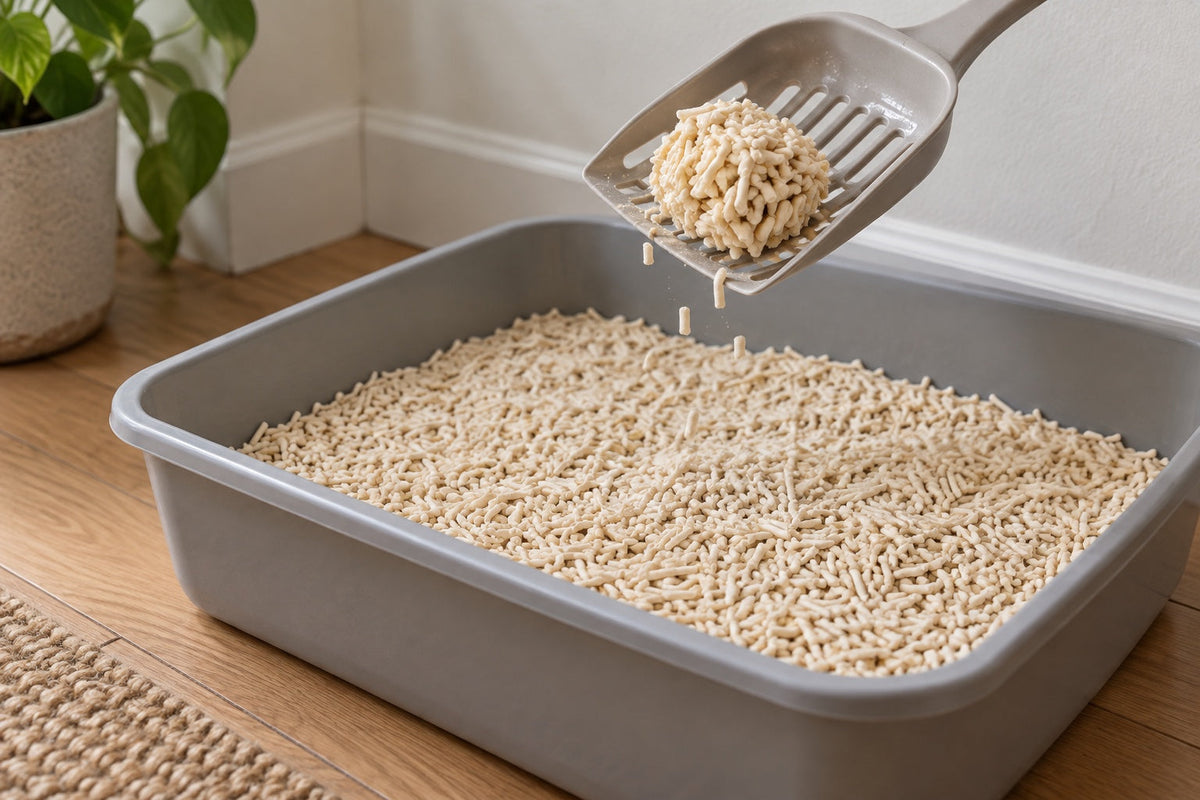
That is where our tofu litter earns its two to three weeks, and I will be specific about why. The pellet is pea fibre, chosen for how much it absorbs, so a wee soaks into the pellets it lands on rather than running between them. It clumps within seconds, so the wet pellets lock into one tight lump before the urine can spread down towards the base. The lump holds its shape on the scoop rather than crumbling, which means it leaves the tray whole and leaves very little behind. And at the fill depth we give, 5 to 7cm, the clump forms above the base rather than on it, so the plastic underneath stays dry and nothing sets there. Put those together and nearly all of each day's urine is out of the tray by the evening, and what remains to build up between full changes is small. That is the mechanism behind the two-to-three-week figure, and a year of our customers' reorder data shows the routine holds in practice: one 6-litre bag a month for one cat.
The number I most want to get right on this page is the one that sells the least litter. A tray emptied every week is refilled four times as often as one emptied monthly, so the weekly answer would sell more litter than the one I give. Two to three weeks is where the data and my own trays land, and it is the figure to read the rest of this page against.
What sets the date
Scooping only removes urine if the litter has caught it. In a clumping litter each wee sets into one firm lump, and when that lump is lifted out whole the tray is very nearly back to the state it was in before the cat walked in. What the daily scoop cannot remove is small: the crumbs from a clump that broke on the scoop, whatever urine reached the base because the layer was too thin to catch it, the fine material that builds up as pellets wear against each other, and what comes in on the cat's feet. The full change is for that residue, and every published interval is a guess at how fast it builds up.
Four things set the rate. Depth, because a shallow layer lets urine through to the base on the first day and a deep one catches it for weeks. Tray size, because a tray one and a half times the cat's length spreads the same wees over more litter. The number of cats, because two cats on one tray is twice the urine into the same volume. And humidity, because a tray in a steamy bathroom produces softer clumps that break on the scoop and leave more behind than the same tray in a dry hallway. Set all four well and a clumping tray runs a month between changes. Set them badly and a week is right.
A litter can move that rate too, and this is the quiet reason a good clumping litter costs less to run than its price per litre suggests. A clump that lifts out whole leaves no crumbs, so the first item on that list barely accrues. A pellet that clumps fast and is filled deep enough keeps the second item at nothing. And a bag that goes through a 99.9 per cent dust-filtration process on the line arrives with fewer fines in it to begin with, which slows the third. Our tofu litter does all three, and the practical result is a tray whose base stays dry and pale for the whole interval, so the full change is a tip and a rinse rather than a scrape. So a weekly rule and a monthly rule can both be right, for different trays and different litters. I would rather show you how to read yours than hand you a date.
How do you know when cat litter needs changing?
A litter tray needs a full change when the base is damp or smells of ammonia under the clean litter, when clumps come out in pieces because there is not enough depth left for them to form, or when the cat has started to perch on the rim, dig at the edges, or go beside the tray. With a clumping litter scooped daily those signs take two to four weeks to arrive for one cat. A tray that smells at nose height while you scoop has usually passed that point already.

The test I use takes ten seconds and I do it once a week. Push the litter to one side with the scoop and look at the base. If it is dry and the litter above it is the colour it was in the bag, top up and carry on. If the base is dark or damp, or the smell rises when the litter moves, the change is due today whatever the calendar says. Cats run the same test with their noses and usually reach the verdict before we do, which is why a cat that sniffs the tray and walks away, or leaves it faster than usual, is telling you something worth acting on.
With our tofu litter the hint tends to come late, and it comes as a smell rather than as a wet base. Because the clump forms above the base and leaves whole, the plastic stays dry, so the first sign that the interval is up is usually a faint ammonia note when you scoop, at two to three weeks with one cat. When it arrives, the change is a tip and a rinse. What I cannot promise is that the tray will never smell before then, because how a tray smells depends on how it is run more than on the bag in it: a shallow fill, a missed scoop or a second cat all bring the smell forward, and the sections below give the figures.
Can you put new litter on top of old litter?
Yes, with a clumping litter, topping up fresh litter onto what is already in the tray is how the tray is meant to run. The used material leaves every day as clumps and solids, and the top-up replaces the volume they took with them, keeping the depth at 5 to 7cm for a pellet litter such as tofu or about 3cm for a fine clay. With a non-clumping litter the answer is no once the lower layer is wet, because fresh litter on top only hides a saturated base that will keep making ammonia until the tray is emptied.

The difference is between topping up and burying. A top-up goes onto a tray that has just been scooped, so the fresh litter sits on clean material and the depth comes back to where it was. Burying is pouring new litter over a tray that has not been scooped, or over a non-clumping tray whose bottom layer has done all the absorbing it can, and it buys a day or two of quiet at the cost of a worse tray underneath. Topping up after each scoop is also the whole reason a 6-litre bag of a clumping pellet can last a month, because the only litter that leaves the tray is the litter the cat has used. A clump that comes out whole, with no clean pellets stuck to it, is the difference between a top-up of a handful and a top-up of a cupful, and over a month that is a good part of a bag.
How long can you leave cat poo in the litter tray?
Remove solids the same day, and within a few hours if you can. The charity guidance is at least once a day, and twice where the routine allows it. Smell is only part of the reason. The eggs of Toxoplasma gondii, a parasite some cats carry, are not infective when they are passed and become so after about 24 hours, so a tray scooped every day removes them before they can be. And a cat that finds yesterday's faeces in the tray will often go somewhere else, which is the most expensive thing that can happen to a carpet.
Wear gloves or wash your hands afterwards, either way. If you are pregnant or your immune system is compromised, the standing health advice is to avoid handling cat litter where you can and to wear gloves if you must, and mine is to hand the tray to someone else for the duration and mention it to your midwife or GP.
How deep should the litter be?
Research on cats' own preference puts the depth they like to dig in at about 3cm, and the charity floor is 3 to 4cm. For a clumping pellet litter such as tofu I fill deeper, to 5 to 7cm, because a clump forms around urine as it falls and needs pellets beneath it to form on. A layer that is too shallow lets urine reach the base, which is the one thing that brings the full change forward. A deeper tray therefore goes longer between full changes, provided it is scooped daily.

The two figures answer different questions. Three centimetres is what a cat prefers to stand in. Five to seven is what a pellet litter needs to keep the base dry for three weeks. If your cat digs to the bottom at 5cm and seems unhappy with it, come down towards 4cm and scoop twice a day instead, because the shallower tray will saturate sooner. The other lever is the tray itself: one that is one and a half times the cat's length from nose to tail base takes more litter to fill but spreads the same number of wees over a wider area, and it will go longer between changes than a small tray filled deep.
Depth is also the answer to the one complaint about tofu litters that comes up across every brand in our customer survey, which is a clump that has set hard on the base of the tray. A wee that reaches the plastic has nothing to clump around, so it dries there instead, and the scrape it takes to shift it is what people mean by a dirty tray bottom. At 5 to 7cm it does not reach the plastic. It clumps on the way down and lifts out clean, and the base stays as it was.
The daily job, the weekly job and the full change
Daily: lift clumps and solids out with a slotted scoop, once at the least, twice with two cats or in a warm room. Top up to depth. Close the bag.
Weekly: the base test above. Wipe the rim and the step, which is where paws leave what they carry.
Every two to three weeks, or sooner if the base test calls for it: empty the tray, wash it with hot water and unscented washing-up liquid, dry it, and refill to 5 to 7cm. Skip the bleach and the strong-smelling disinfectants. They put cats off the tray, the parasite eggs are resistant to most disinfectants in any case, and the disinfectants that go cloudy in water, Dettol among them, are toxic to cats. Scalding water and detergent are what deal with the eggs. Bin the old litter as described further down.
That is the whole routine, and it is deliberately dull. A clumping tray is not a project. It is three minutes a day and twenty minutes a fortnight, and the twenty minutes is the part that gets skipped, which is when the smell arrives and the search for a new litter begins. With a tray whose base has stayed dry, the twenty minutes is nearer ten.
When the interval changes
Two cats sharing one tray
Two cats on one tray put twice the urine into the same volume, so the full change comes at one to two weeks rather than two to four. The better fix is a second tray. The standard advice is one tray per cat plus one spare, and it is standard because a second tray puts each cat back on the single-cat interval and gives a cat that will not share somewhere to go. If two trays in a small home is the problem, the one thing that helps most is depth: fill the shared tray to the top of the range and scoop it twice a day.
A tray in the bathroom
A bathroom is where a flat usually puts the tray, and it is the most humid room in the home. A pellet litter clumps softer in damp air, soft clumps break on the scoop, and the crumbs shorten the interval. Two things put most of it back. Keep the bag sealed between fills, because a plant litter takes moisture from the air, and change at two weeks rather than three. Where the tray can live in a hallway or a spare room instead, the litter behaves as it does on this page, and the flat piece goes through where a tray can physically go in a one-bed.

A cat that has started drinking more
A clumping litter is a record. One firm lump per visit makes it obvious when a cat starts producing more or larger clumps than it did, and increased thirst and urination in a cat is a change worth a vet's opinion rather than a bigger bag of litter. In the tray it also means the base saturates sooner, so the interval shortens until the cause is found. If you are asked by the vet to watch how often the cat is urinating, a scooped clumping tray is the easiest way to count, and a non-clumping tray hides the number.
What to do when the cat has a medical or stress problem
A cat with a condition that sends it to the tray more often, such as chronic kidney disease, an overactive thyroid or stress-related cystitis, needs the tray scooped more often than the daily routine, at least twice a day, and the full change brought forward to whenever the base test fails rather than to a date. Keep the litter, the tray and its position exactly as they were, because a cat that is unwell or anxious is a cat that should not also be asked to accept a new material. And any sudden change in how a cat uses its tray, going more often, straining, crying in the tray, blood in the clumps or going beside it, is a reason to see a vet before it is a reason to change anything about the tray.
The vet comes first because the tray is where these conditions show up earliest. Kidney disease and thyroid disease both make a cat drink and urinate more, and cystitis makes it go often and produce little, sometimes with blood. Each of those is a change in the size, number or colour of the clumps, and a clumping litter scooped daily is the simplest way of seeing it. If the vet asks you to monitor, count clumps at each scoop and note anything unusual about them, and keep doing it after treatment starts, because the tray is also where improvement shows first.
Stress is the other cause, and stress-related cystitis in particular is made worse by a tray the cat does not want to use. The things that help are the ordinary ones done more carefully: a tray scooped twice a day, one tray per cat plus a spare so nobody has to queue, a quiet spot away from food, doors and the washing machine, and no change of litter while the cat is unwell. If a switch is needed later, do it over a week or more by mixing the new litter into the old, or offer it in a second tray and let the cat decide. I would also skip anything scented in the tray or near it for the duration, our tofu litter included; the cassava litter below is the unscented one we make.
How many days does a 5kg bag of cat litter last?
It depends on the litres in the bag, not the kilograms, and on whether the litter is scooped or replaced whole. A 5kg pack of CocoCat's tofu litter is two 6-litre bags, and our own sales data over a year puts one cat's use at roughly one 6-litre bag a month with daily scooping and topping up, so 5kg lasts one cat about two months. Clay is heavier for the same volume, so 5kg of clay is fewer litres; read the litres on the pack and set them against about 10 litres a month, which is the published UK estimate for clumping clay with one cat.
Two caveats on our figure. It comes from customers who buy the two-bag pack and reorder, with subscriptions left out because they arrive on a fixed date whether the tray needs them or not, so it measures what people actually use rather than what a label promises. And it is for one cat. By the same arithmetic, two cats on the routine above go through the two bags in about a month, which is where the 60-litre pack starts to make sense.
What should you do with old cat litter?
In the UK, used cat litter of any material goes bagged into the general waste bin, and that includes plant-based and biodegradable litter. It cannot go into council food or garden waste collections, because it may carry urine and faeces and fails the composting sites' acceptance rules. Home composting is for small quantities with the faeces removed, and I would keep the result away from anything you grow to eat. Flushing is for solids only, and only where your water company allows it; the rest goes in the bin.
The bin is where a clumping litter earns its keep. A tray scooped daily and changed every two to three weeks puts a fraction into the bin of what a tray emptied whole each week does, and the daily bag is a small one tied off rather than a full tray's worth. The full change is the one time the volume is real, which is another reason to make the interval as long as the base test allows rather than as short as a label suggests.
Do cats immediately know to use a litter tray?
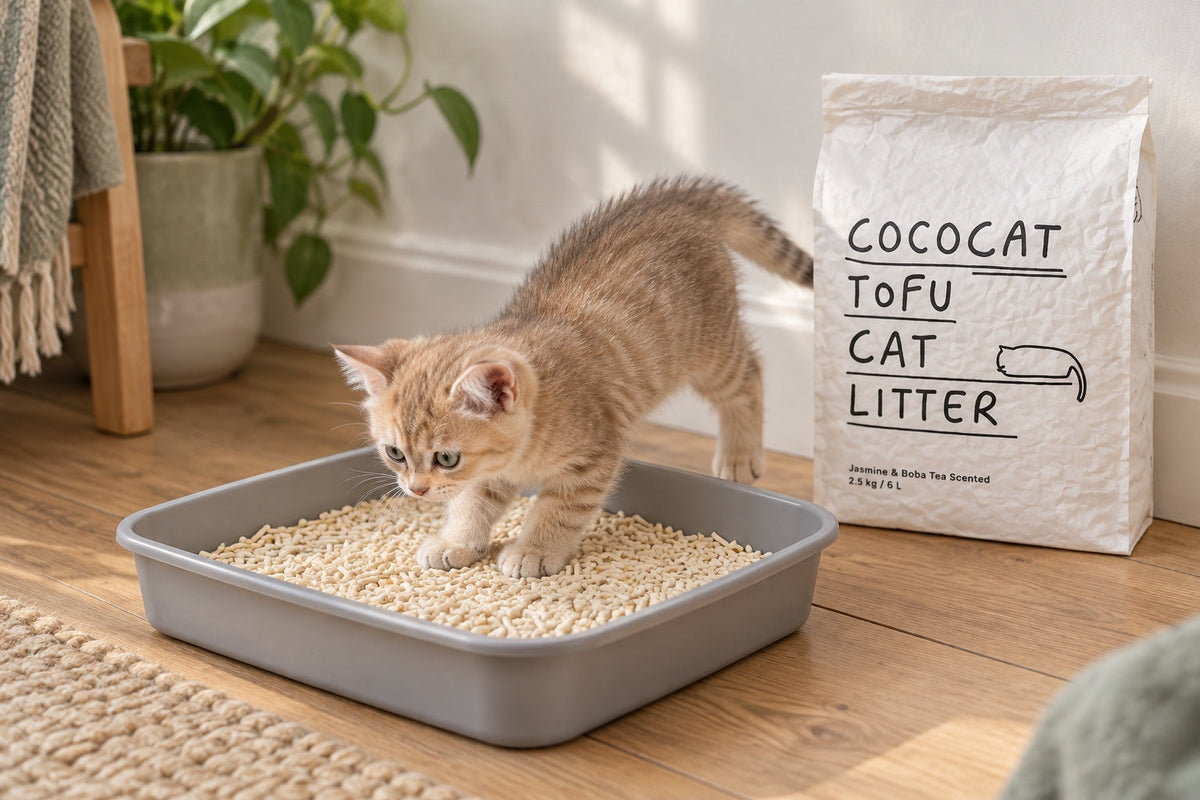
Kittens are not born knowing, but they learn from their mother by copying her, and a kitten placed in a tray when it wakes and after it eats from about four weeks old will usually start going on its own within days. An adult cat that already uses a tray needs a clean one in a quiet place and little else. A cat that suddenly stops using a tray it knew needs a vet before it needs a new litter. If the vet finds nothing, the tray is dirty or the tray has moved.
The first week with a kitten, the accidents and the tray size are their own piece, and what litter to put in a kitten's first tray is another.
What this means for the tray
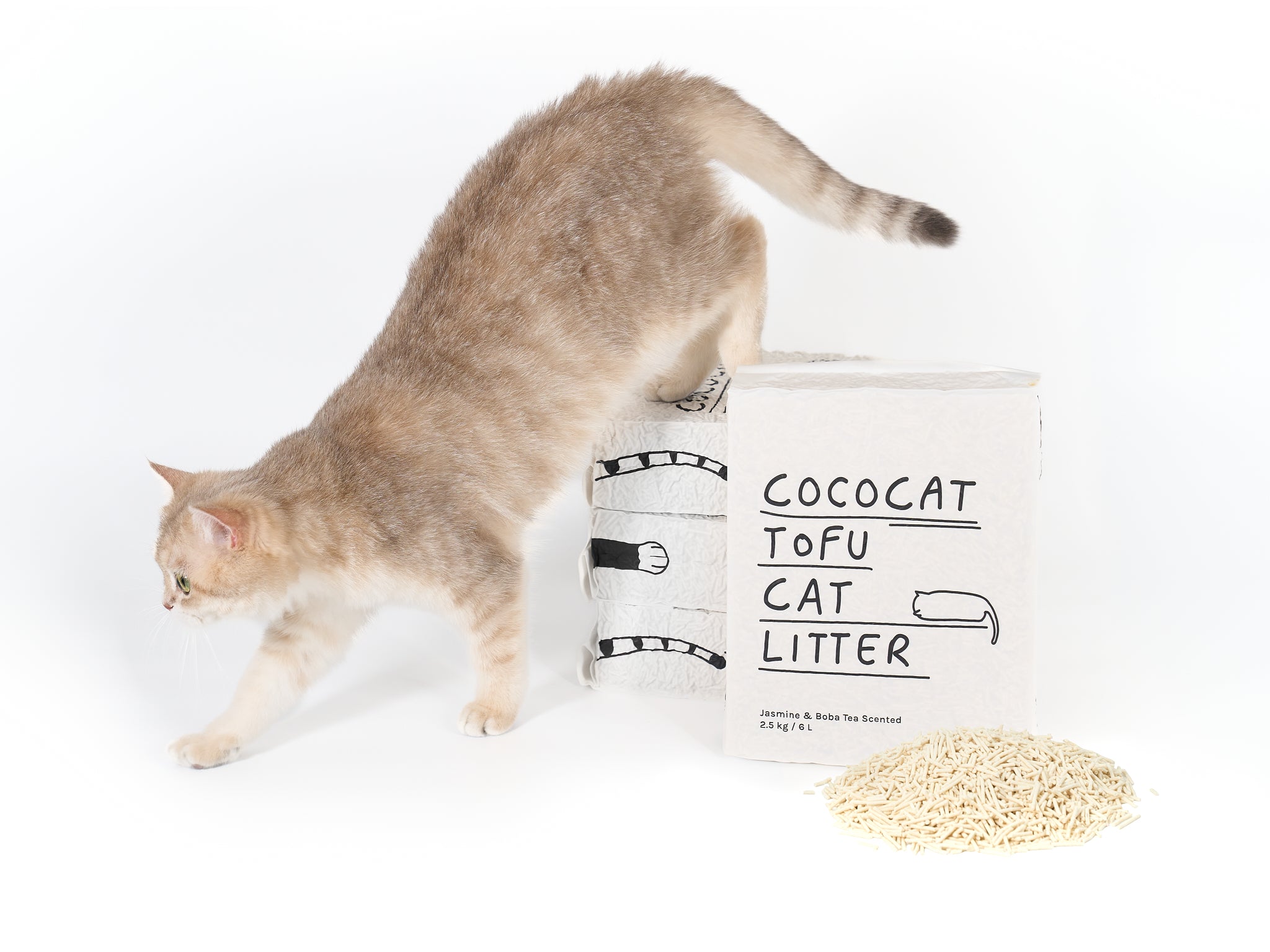
For an open tray and the routine on this page, CocoCat's tofu litter is the bag I fill it with, and the reason is the interval. It is pea fibre pressed into a pellet of roughly 1.5mm, and despite the name there is no tofu in it; tofu litter is the name for the pellet shape. It clumps on plant starch within seconds, the clump lifts out whole without crumbling, and filled to 5 to 7cm it forms above the base rather than on it, so the daily job is a scoop and a small top-up and the base stays dry until the full change at two to three weeks with one cat. That change is a tip and a rinse. The bags go through a 99.9 per cent dust-filtration process on the line, a figure that rates the equipment rather than your air, and every batch is sent for laboratory testing to EU standards, which is what lets me put a number on the interval at all. The thing to weigh is the scent: it has a light milk-tea note, and there is no unscented version. The fill and change notes are together on the tofu guide, and the drawbacks of tofu litter are written up honestly on their own page.

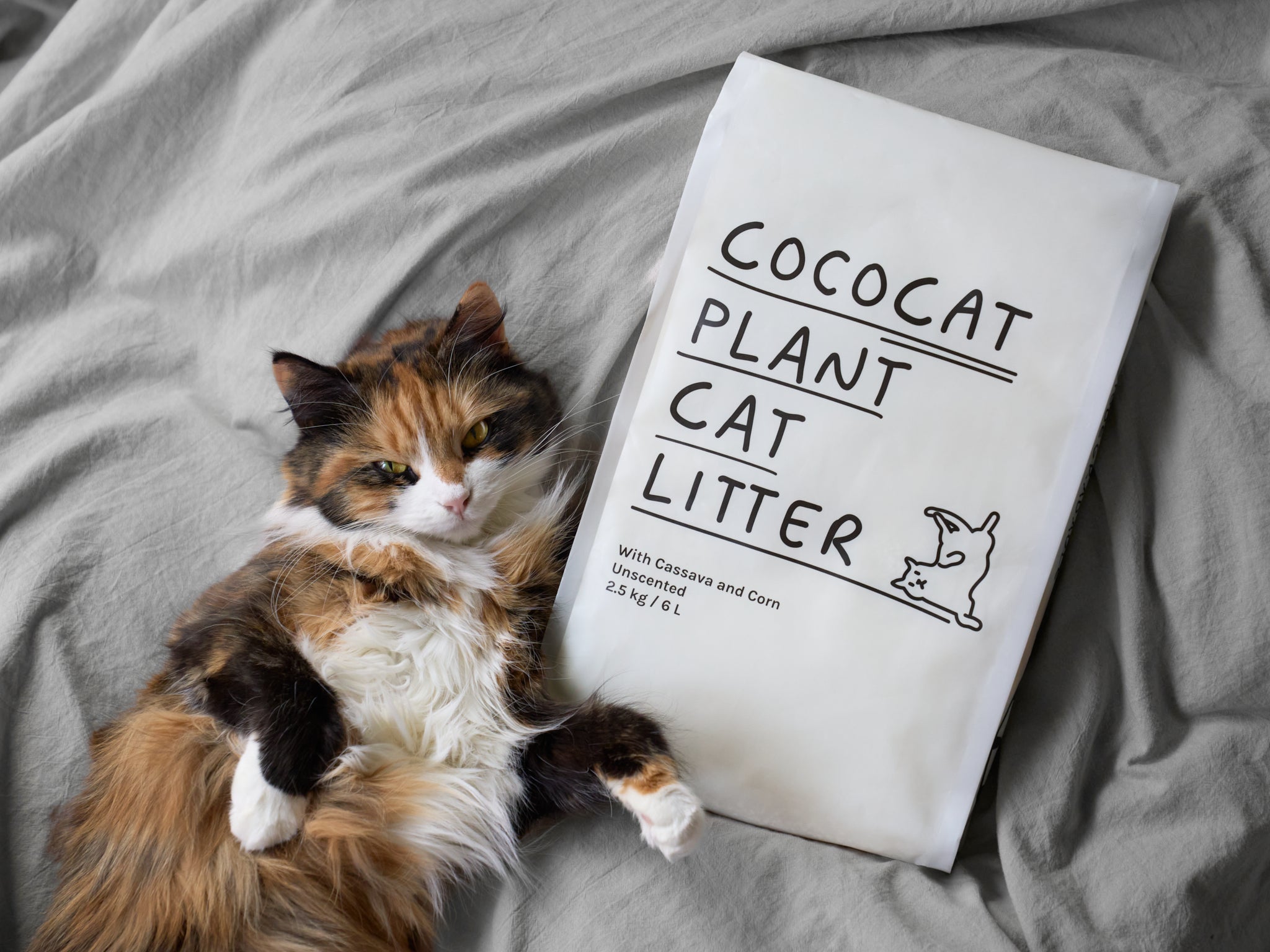
For an automatic litter box the interval is set differently, because the machine scoops after every visit and the drawer is the thing you empty. The cassava litter is the one we make for that job: cassava flour with corn starch, corn flour and guar gum, unscented, a finer rounded granule that clumps within 10 seconds and goes through dust-removal stages that bring the dust below 0.5 per cent. Fill it to the machine's line rather than to 5 to 7cm, and take the full change from the manufacturer's manual, which the automatic litter box piece goes through machine by machine. What cassava is and where it comes from is its own piece, and the usage notes are on the cassava guide.
Both are in the cat litter collection, and the trays are in the litter box collection.
If the tray smells today
Scoop it, push the litter aside and look at the base. If the base is dry, top up to 5 to 7cm and the smell was the scoop being late. If it is damp or dark, do the full change now rather than on the date: empty, hot water and unscented washing-up liquid, dry, refill. From there the daily scoop keeps you two to three weeks from the next one. If the smell is the reason you are thinking of leaving the litter you have, read what changes when you switch from clay and, if you are on wood pellets, what tofu does differently on the wet layer. If you would like the next piece when it is written, the newsletter box is at the foot of this page.
Related posts
- The disadvantages of tofu cat litter, honestly
- Keeping a cat in a flat: the tray, the smell and the space
- Tofu, cassava, wood, corn or paper: which plant litter suits which household

Leave a comment
This site is protected by hCaptcha and the hCaptcha Privacy Policy and Terms of Service apply.