
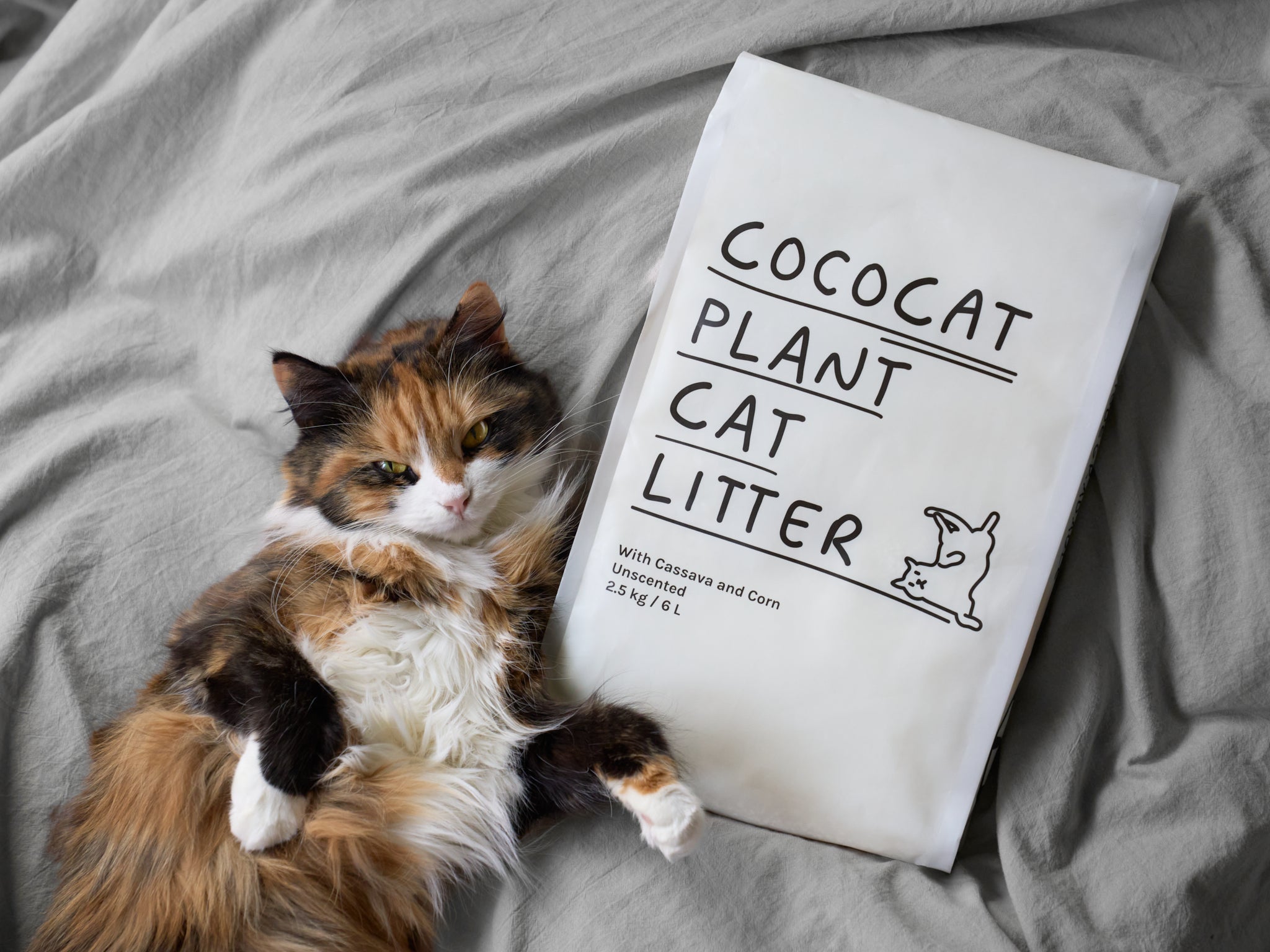
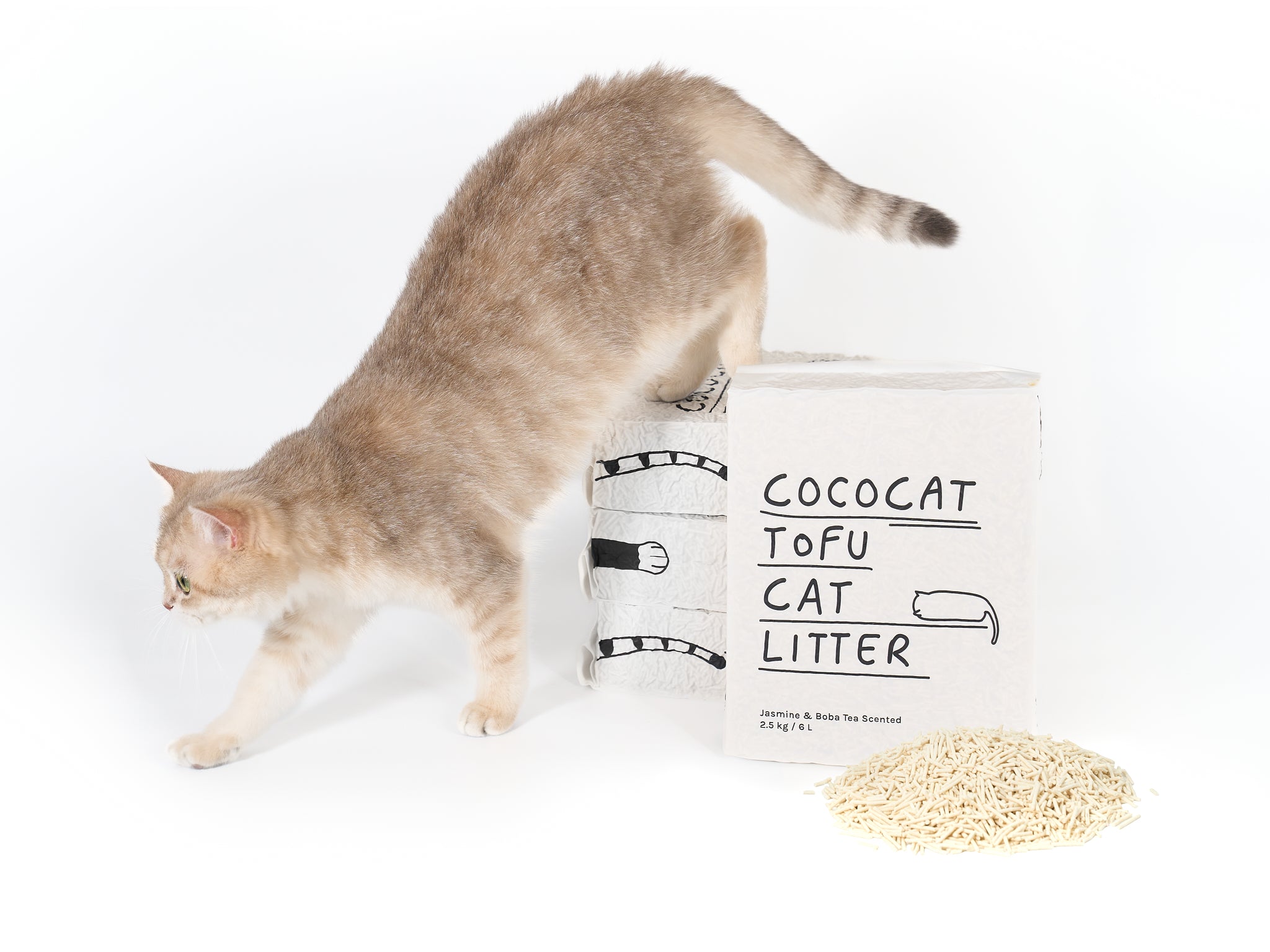

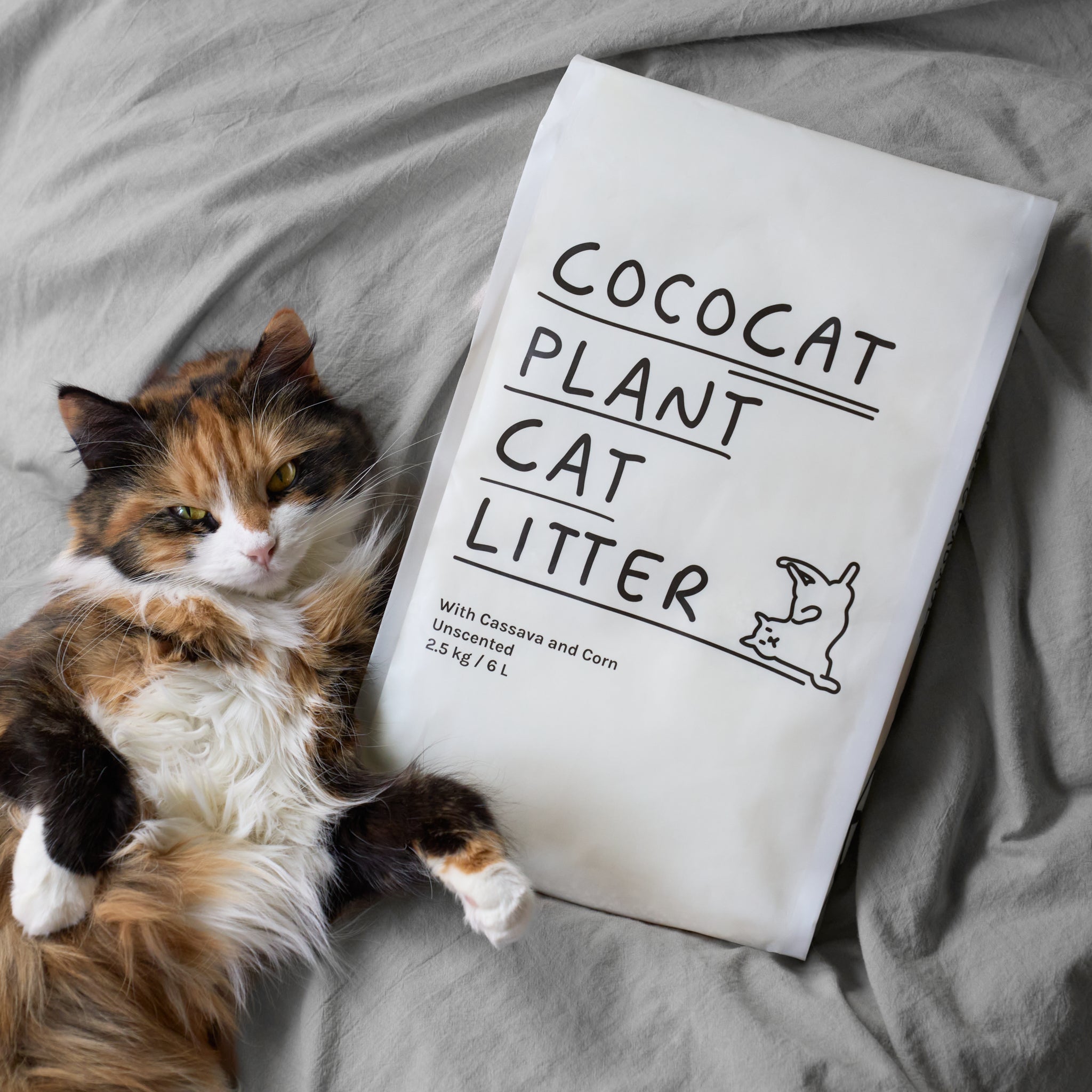
COCOCAT CASSAVA LITTER
Made to work smoothly with automatic litter boxes.
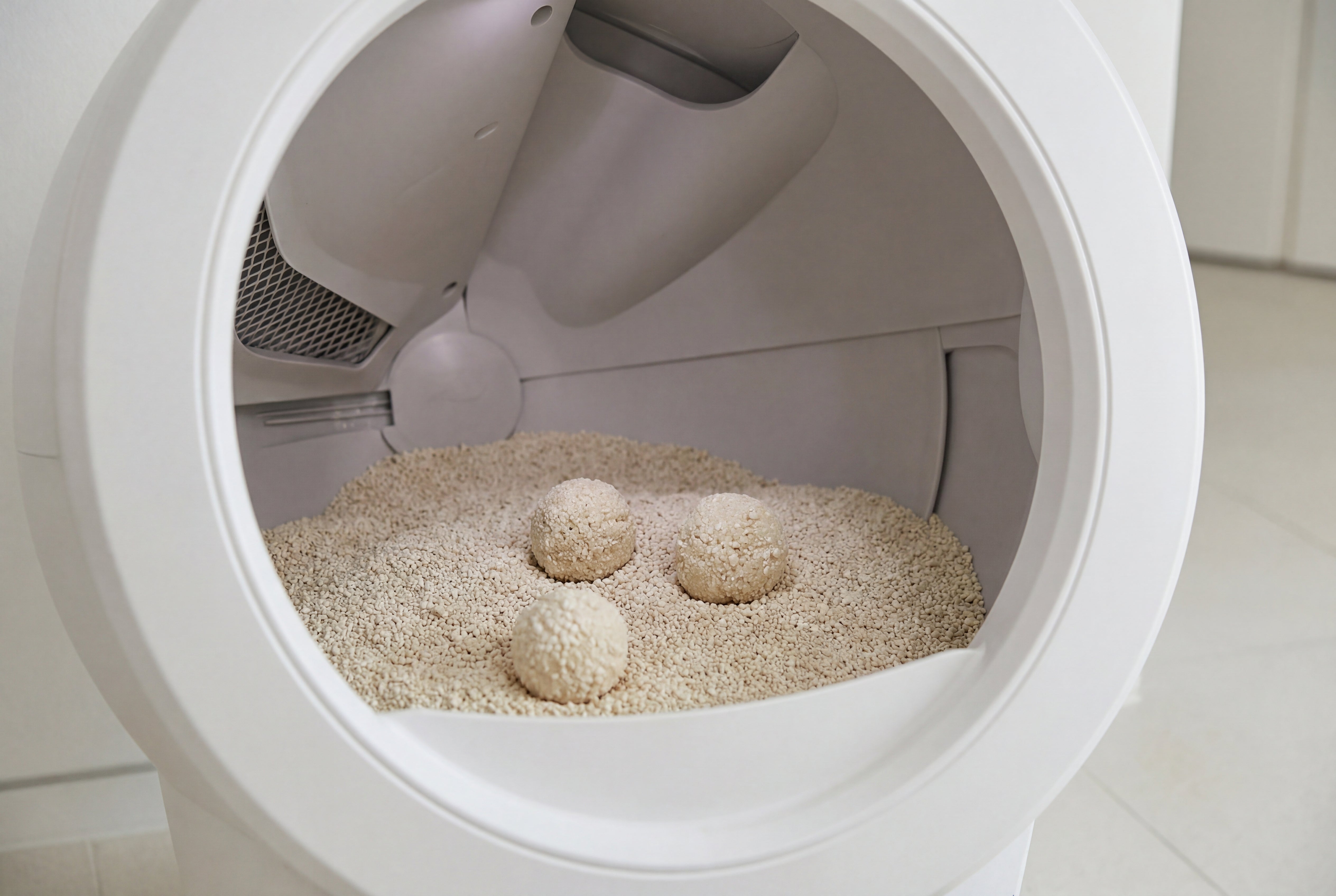
In an automatic litter box, clumping speed makes a real difference.
When a cat finishes using the tray, it wants to leave quickly. If clumping takes too long, or if loose particles scatter when the machine cycles, that rhythm gets interrupted.
The cat may hesitate, then adjust its posture or footing.
These are small moments, and they happen every day.
Cassava litter is built to remove that friction, so the system works at the pace a cat expects.
Why cassava, and why now?
Tofu litter works well for manual scooping. Its structure, absorption, and flushability make it a reliable everyday option for many households.
Automatic systems work under different conditions.
They rely on precision: clumps that form fast, hold their shape under mechanical movement, and lift cleanly without crumbling or sticking.
Cassava starch meets these requirements.
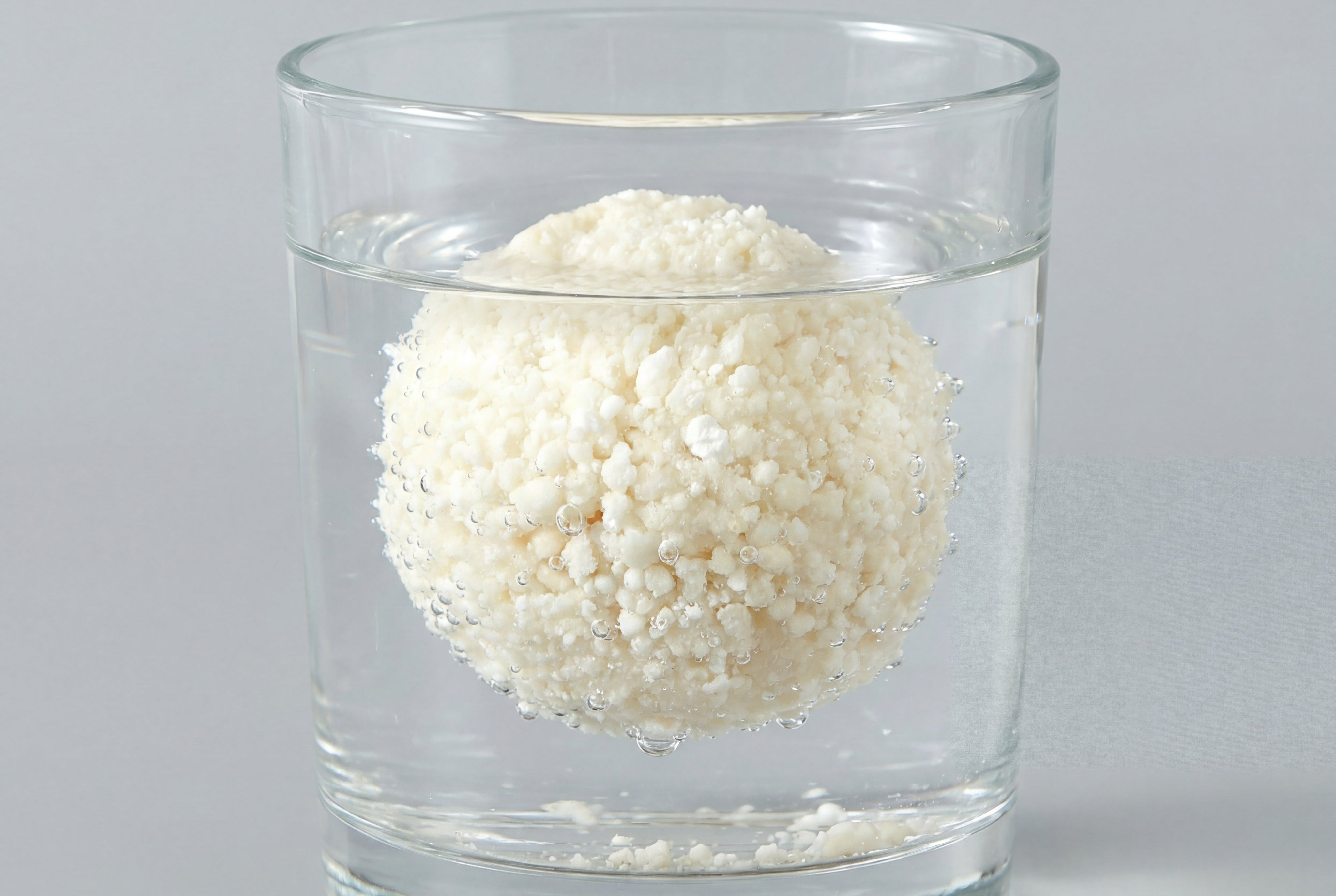
Within 10 seconds of contact, it wraps moisture into dense, rounded clumps. They are firm enough to be lifted by a mechanical rake in one smooth motion, yet soft enough to stay comfortable under paws.
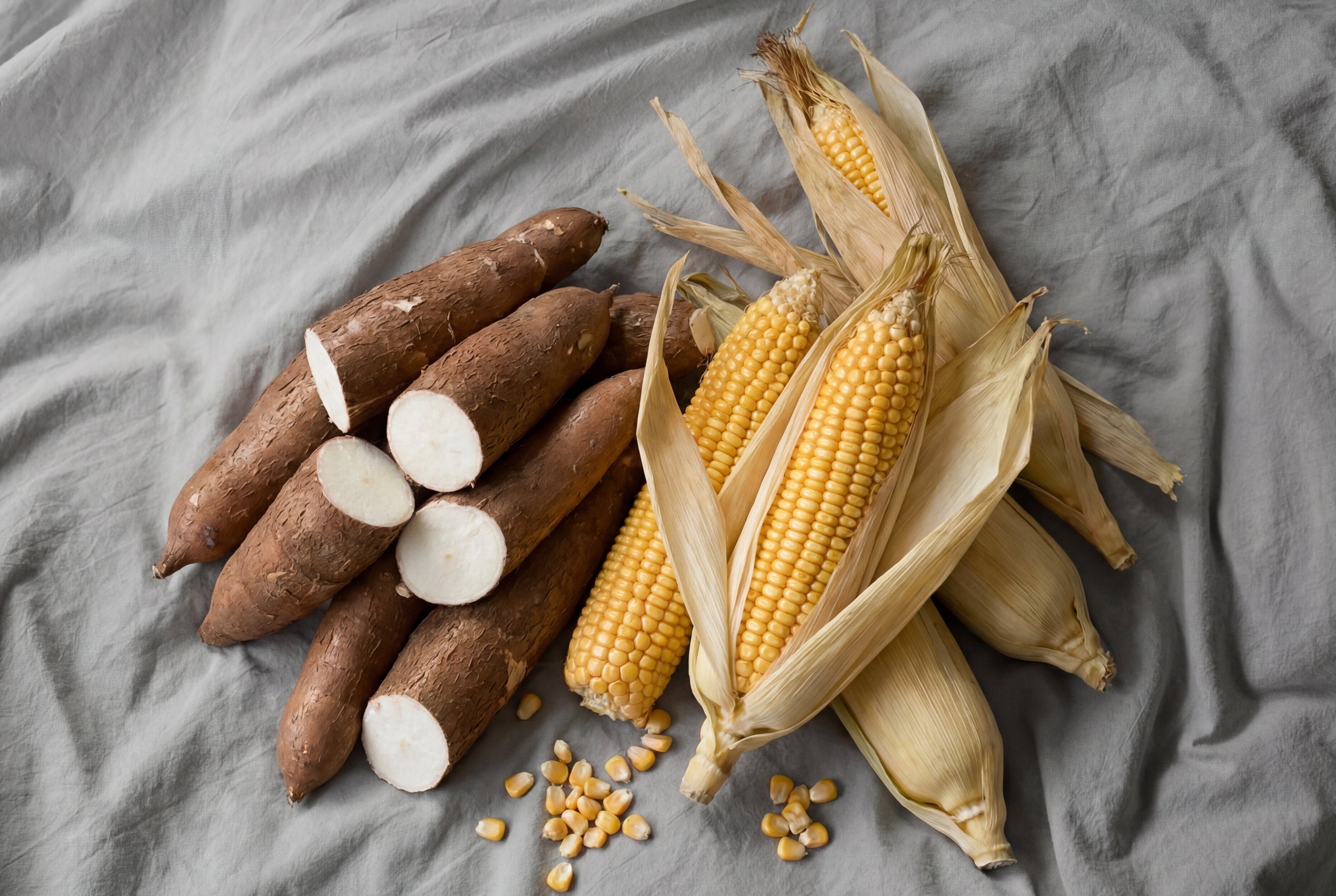
Made with four simple ingredients
- Cassava (tapioca) flour: A fast-absorbing plant starch that forms dry, stable clumps and helps keep residue from sticking to the tray.
- Corn starch: Takes up moisture at first contact, so clumps set quickly and evenly without becoming sticky.
- Corn flour: Adds body to the granule structure, which keeps clumps intact and consistent across repeated use.
- Food-grade guar gum: A food-grade plant binder used in small amounts to help clumps hold together during lifting, without hardening or leaving residue.
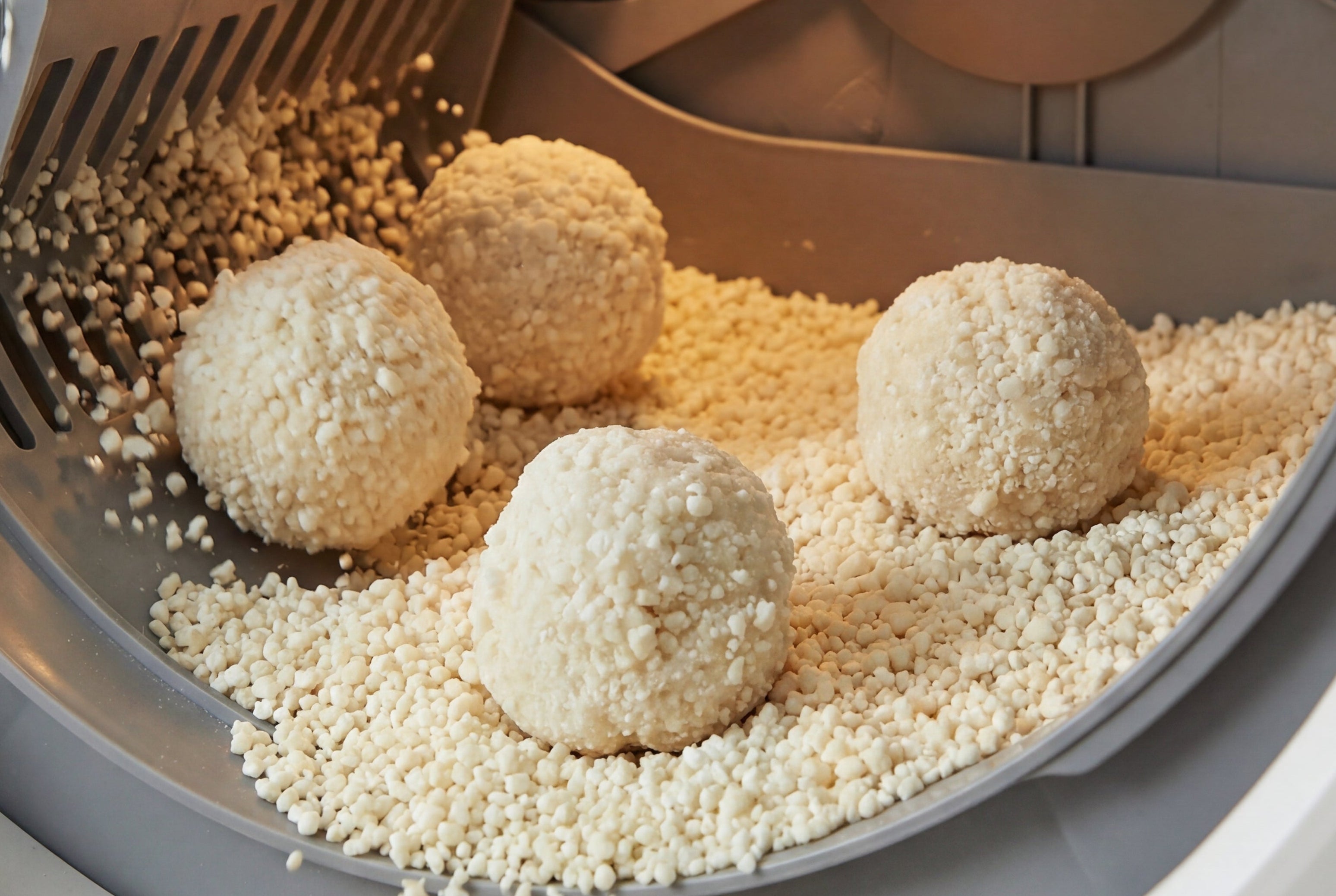
How it works with automatic trays
Clumping machines can trust
Many litters form clumps that look solid at rest but fracture under pressure. When an automatic mechanism lifts them, they break apart, dust scatters, and fragments get caught, so you end up clearing it by hand.
Cassava starch behaves differently
As it absorbs moisture, it forms a gel layer that wraps inward, creating a compact, cohesive mass rather than a loose cluster. The result is clumps that:
- Stay intact through the full cleaning cycle
- Lift cleanly without residue
- Reduce mechanical strain over time
That stability is what lets automatic systems run smoothly.
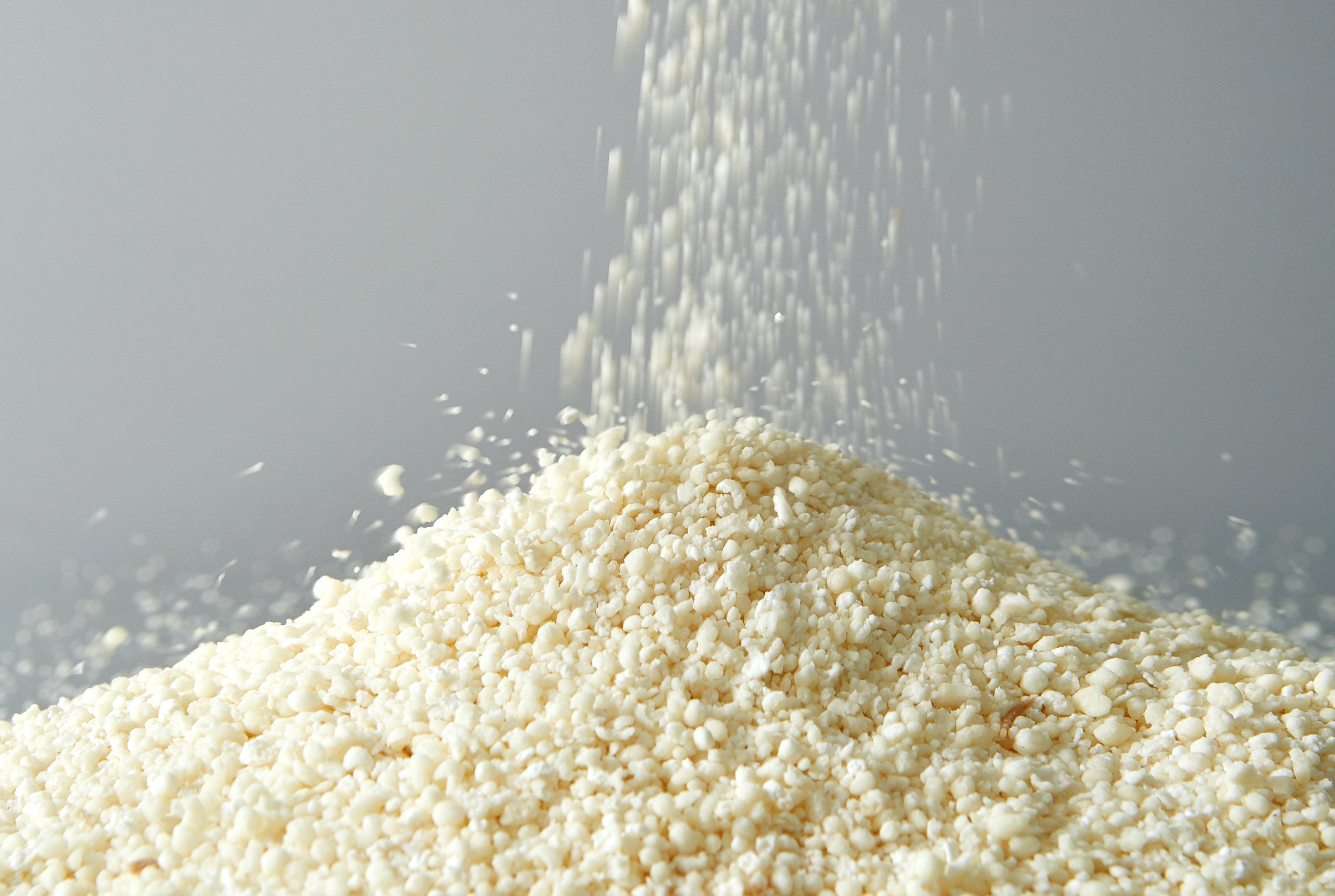
Low dust, unscented by design.
Cassava litter goes through several dust-removal stages, which brings dust content below 0.5%.
That means cleaner floors, and less for a cat to inhale and ingest over time.
Cats groom themselves throughout the day. Any dust that settles on their coat becomes part of that cycle.
Keeping airborne particles low helps keep that exposure low too.
We don't add fragrance to our cassava cat litter.
We leave it out because cassava already has a neutral scent.
Some plant fibres carry a more noticeable aroma. Cassava stays quiet, which suits cats that prefer a calm, neutral tray.
Its micro-porous structure traps ammonia inside the clump, neutralising odour at the source.
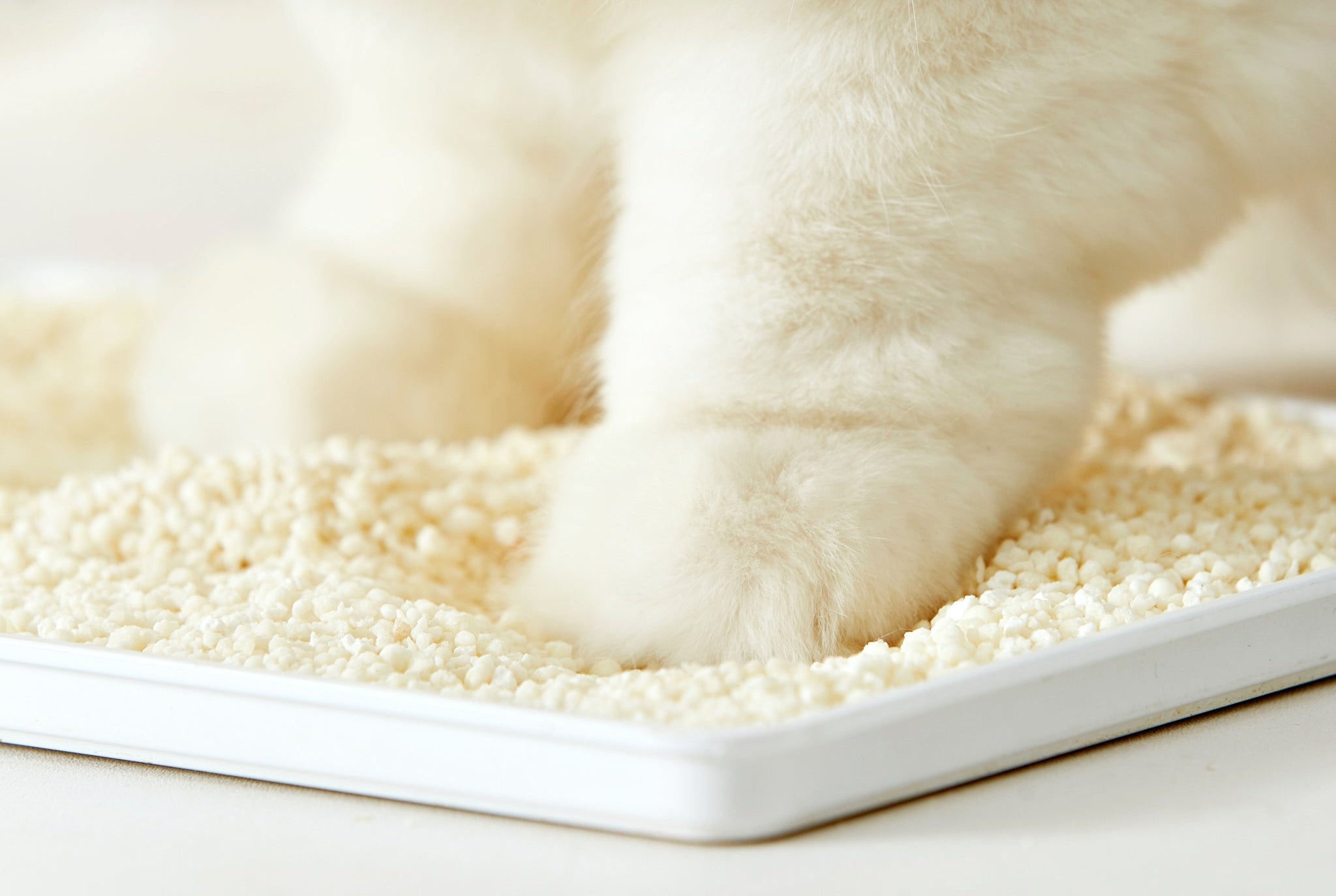
Texture cats accept instinctively.
A cat's paw pads are sensitive. They register texture, temperature, and moisture closely.
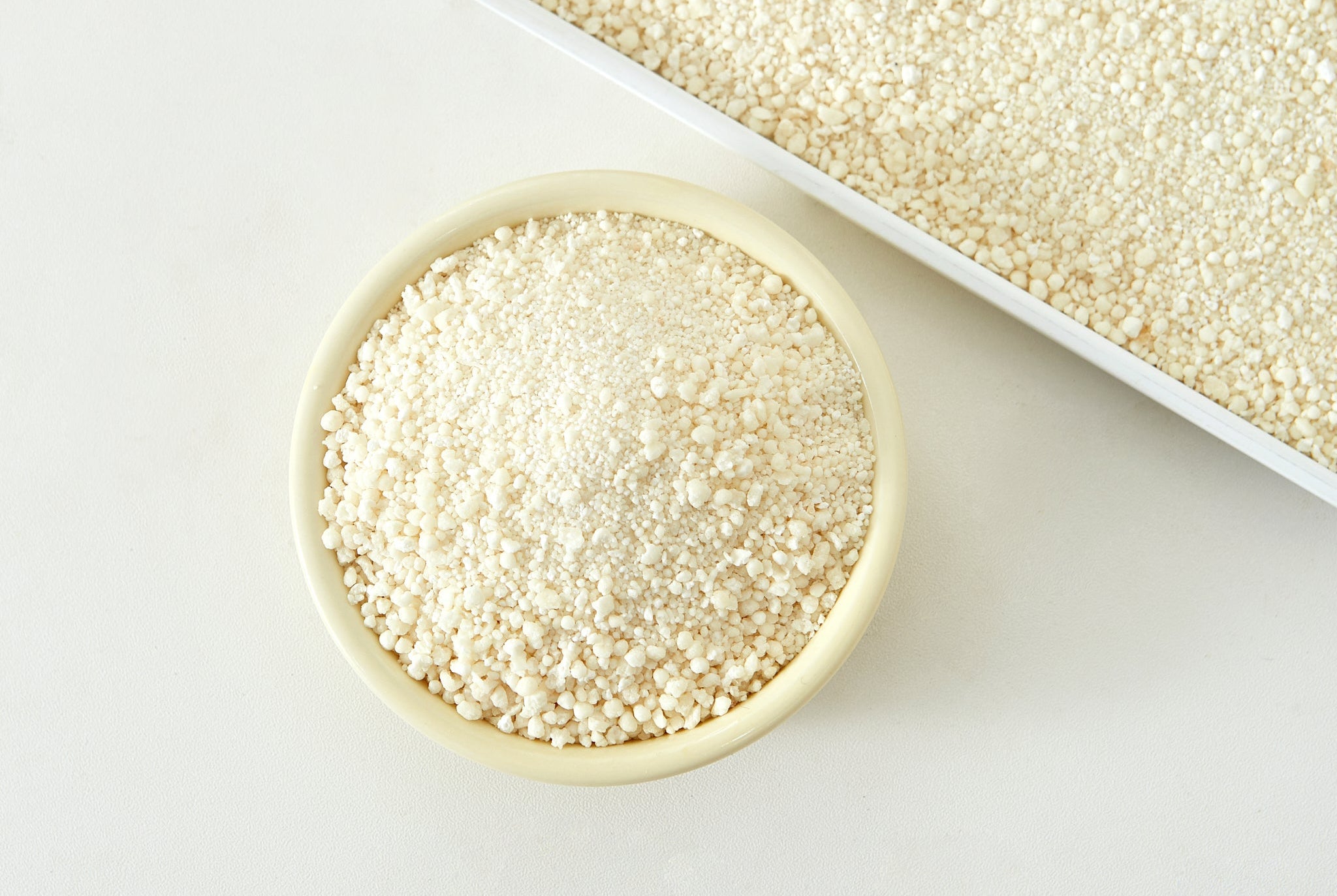
Cassava litter forms small, rounded granules that are soft enough not to scratch
and stable enough to feel secure underfoot.
The texture is close to fine sand or loose soil, a surface cats recognise straight away.
They can dig and cover without hesitation. There are no sharp edges and no slipping, so a cat doesn't need to test the surface first.
Low tracking helps keep litter where it belongs, without changing the feel under paws.
How it works alongside tofu litter
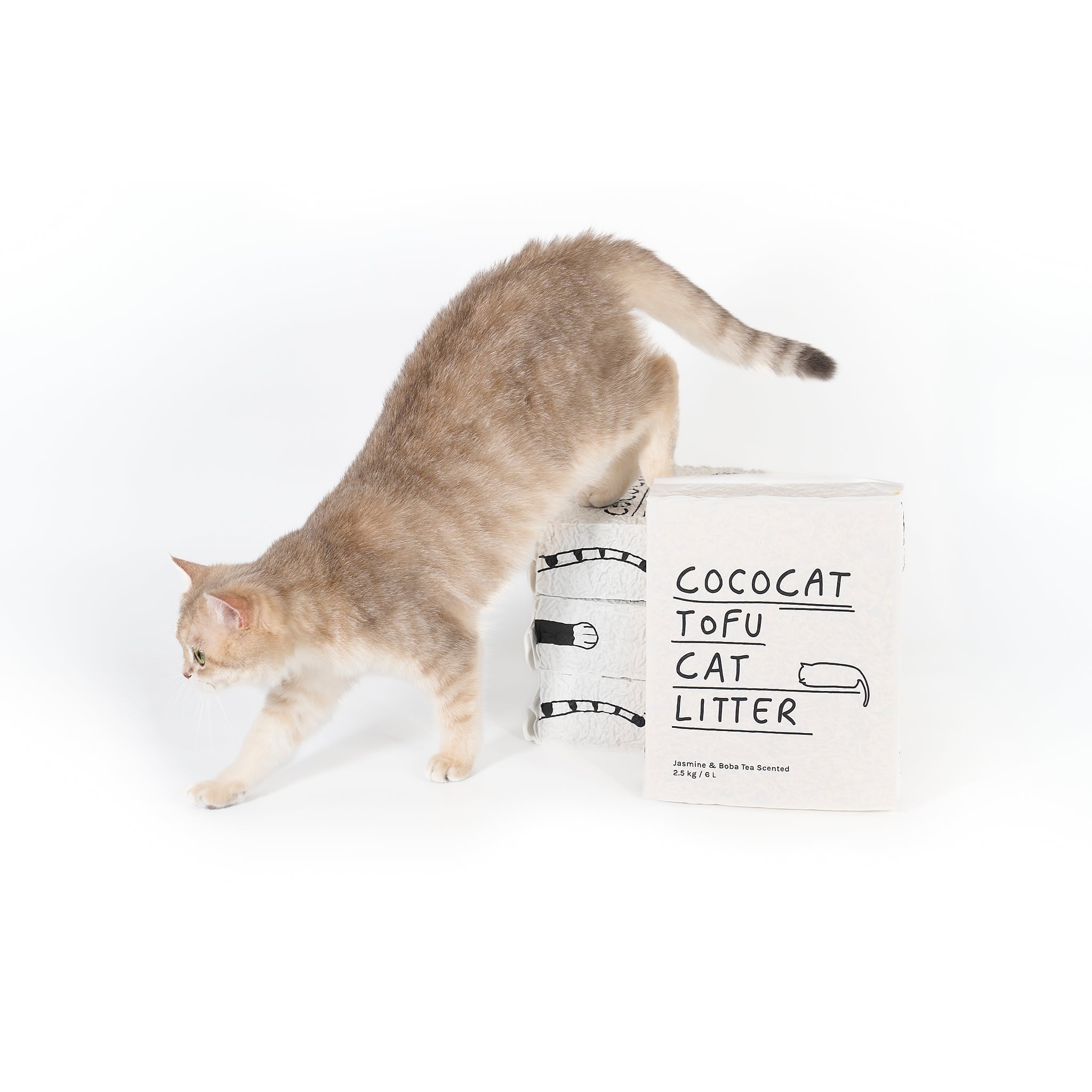
If you already use CocoCat tofu litter, cassava isn't a replacement. It's an adjustment to the setup.
Each material has a different strength:
- Tofu litter gives sustained absorption and flushable disposal
- Cassava litter gives fast clumping and stability for automation
Used together, they let the tray respond more smoothly,
especially in automatic setups.
Cassava also works on its own. Many households find that using the two together makes the routine easier to keep up.
About flushability, an honest explanation
Cassava litter is *NOT* flushable.
That comes down to how cassava behaves.
Its clumps are denser and slower to break down in water, which makes them ideal for mechanical lifting, but unsuitable for plumbing.
Compared to mineral-based litters, cassava still has a gentler lifecycle impact. It's plant-based, biodegradable, and made without mining non-renewable resources.
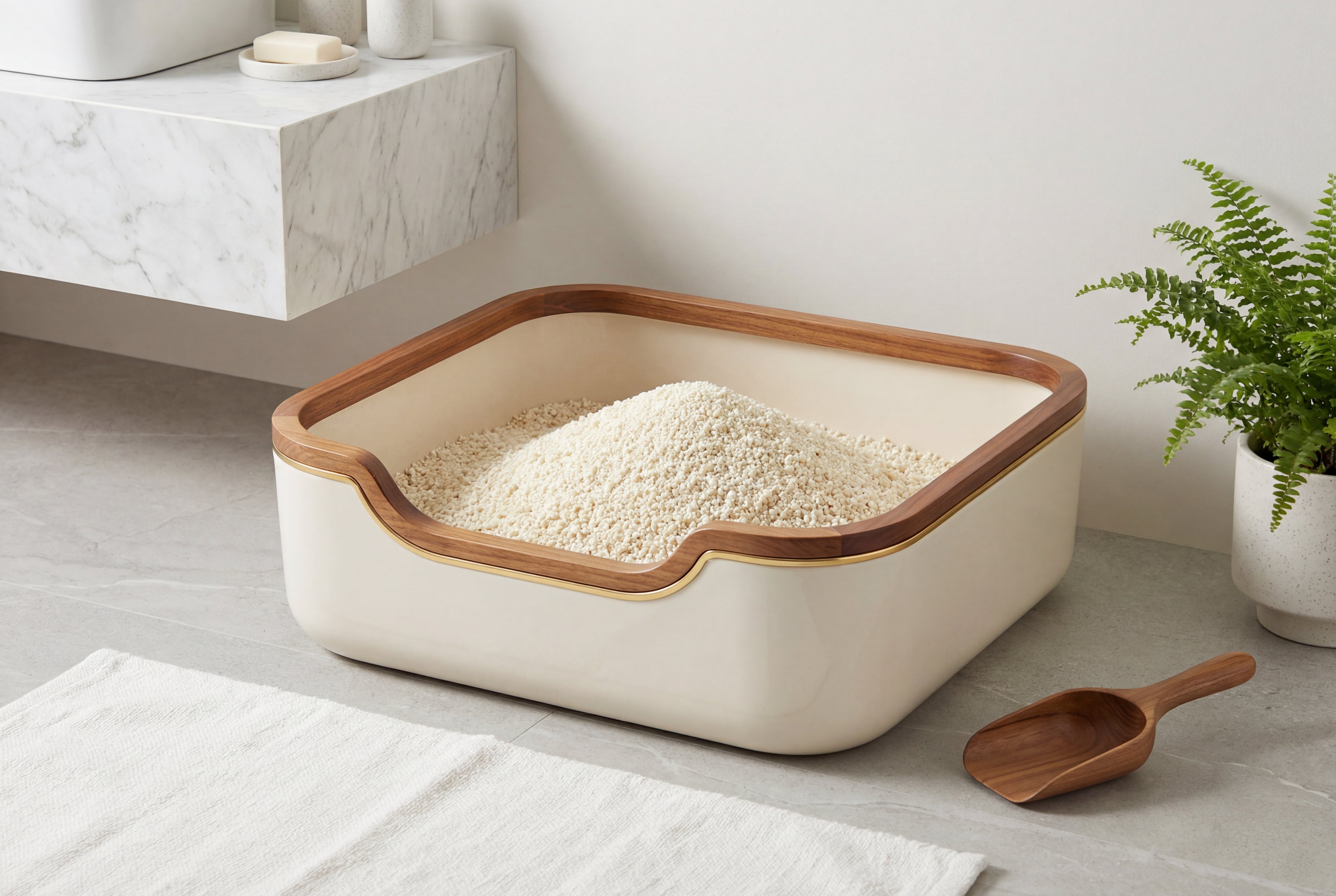
Can it be used in a regular litter tray?
Yes.
Cassava litter works just as well in standard litter trays. Its dry, stable clumps are easy to scoop by hand, and the low-dust formula helps keep the tray cleaner between changes.
It's built with automatic litter boxes in mind, and that same stability makes everyday scooping simple too.
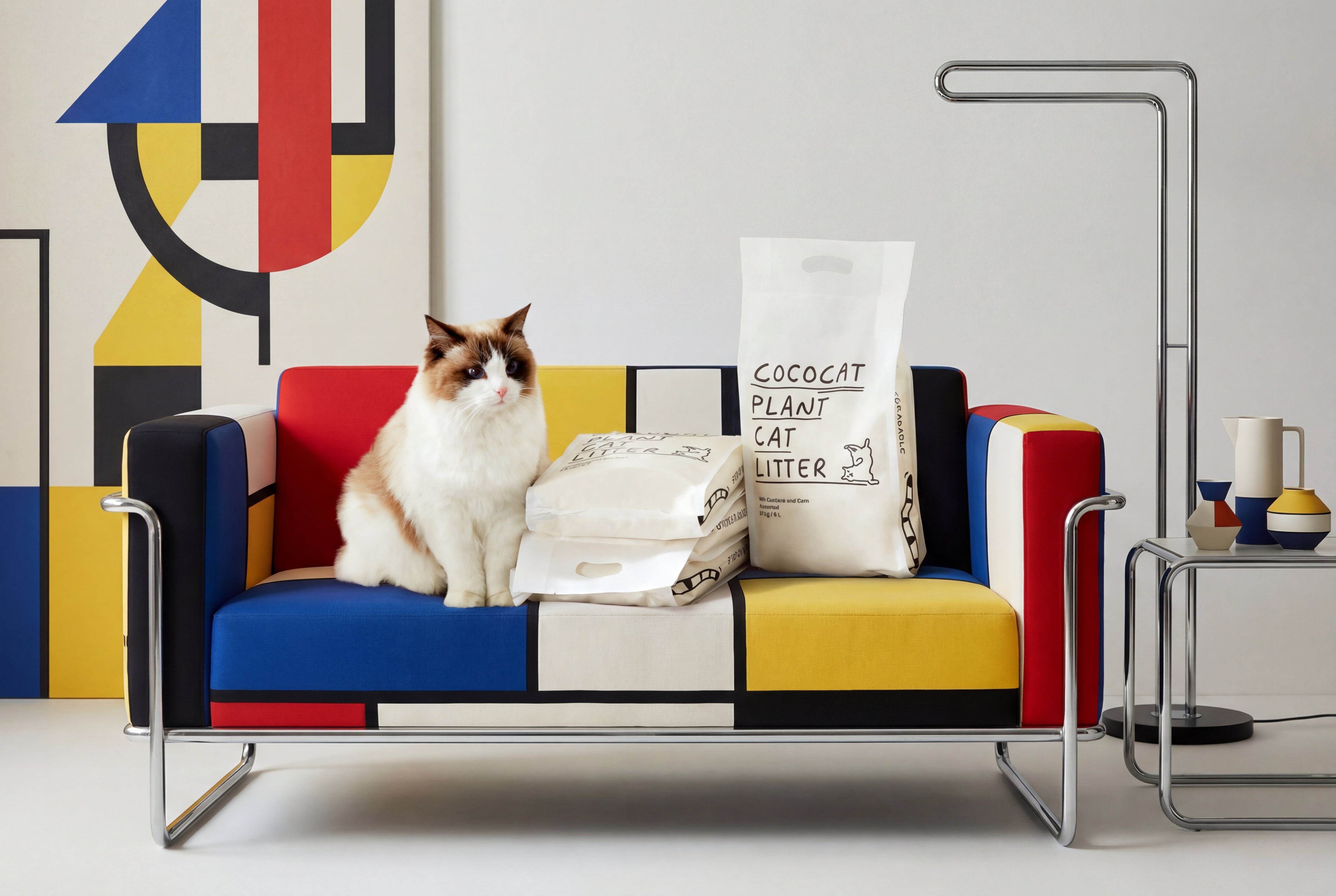
About usage and refill timing
Cassava litter usage is hard to measure precisely.
Most households use it with automatic litter boxes, where machine cycling and minimum fill levels affect how quickly litter is used up.
As a rough guide, two bags of cassava litter typically last at least one month in an automatic setup.
Actual usage varies with your tray size, settings, and cleaning frequency.
Who cassava litter is for
Cassava litter may suit you if:
- You use an automatic litter box, or simply want a more stable setup with a regular litter tray
- You need stable clumps that won't crumble or jam the mechanism
- You want minimal dust and a consistently dry tray surface
- You're setting up a tofu-based tray for automation
You may prefer tofu litter if:
- You scoop manually
- Flushability is a priority
- Clumping speed isn't a daily concern
We don't consider one better than the other. They're made for different systems and routines.