
What Is Cassava Cat Litter? Grown, Not Mined
Most of the cat litter sold in Britain began at the bottom of a pit. The clumping grey kind is bentonite, a clay dug out of the ground by strip mining, and a cassava litter is the opposite sort of material: a crop, grown in a field for a season, that returns to the ground once you have finished with it. Before it ever reaches the tray, cassava is worth knowing on its own terms, because it is one of the more quietly remarkable things a farmer can plant.
The crop that grows where others give up

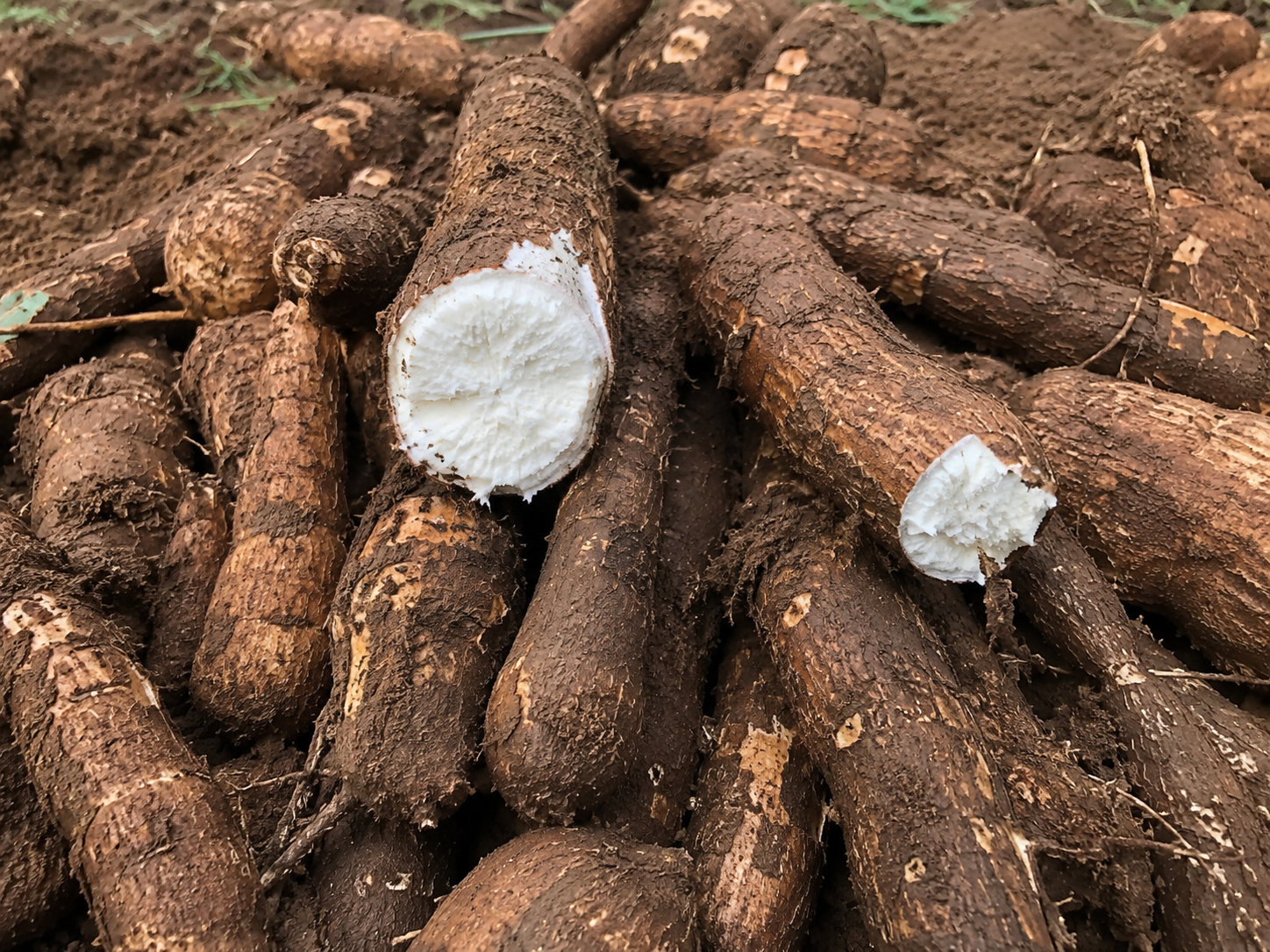
Cassava is Manihot esculenta, a woody shrub with thick, starchy roots grown across the warm parts of the world. Its defining quality is toughness. It shrugs off drought, and it produces a harvest on the poor, marginal, low-fertility soils where maize and rice simply fail, yielding roughly 8 to 10 tonnes of root per hectare with almost nothing added: no irrigation, and little or no fertiliser. That combination is why farmers with the least money to spend depend on it, and why governments across Africa and Asia now treat it as a strategic buffer against erratic rains and thinning soil. Across the tropics it feeds and provides income for hundreds of millions of people, and it does so on ground that would otherwise grow very little.1
The farmers behind a bag of it

Cassava is overwhelmingly a smallholder crop. Thailand, where CocoCat's cassava is grown, is the world's largest exporter of cassava products, and there the plant never reaches the family dinner table at all. It is a cash crop: more than nine in ten of the country's cassava fields are small family farms, worked by around 738,000 farming households, many of them in the poorer northeast, who sell their roots on to be processed. A crop grown for sale lives or dies by demand. When there is a steady, year-round market for what the roots become, the income reaching those farms is steadier too. Buying a cassava product is, in a small and literal sense, putting money towards those fields rather than a quarry.2
The waste it helps prevent
Demand matters more for this crop than for almost any other, because of a single awkward fact: a cassava root is one of the most perishable staples on earth. Lifted from the soil, it starts to spoil within 24 to 48 hours, and most varieties are unusable within three or four days, discolouring and rotting almost as fast as they are dug. Worldwide, losses of root crops like cassava run between 30 and 60 per cent of their value; in Africa alone, one assessment put the figure at around 19 million tonnes lost in a single year. The only way to rescue that value is to process the roots quickly into forms that keep, such as dried chips, starch and flour. A dependable market for those durable products is exactly what gets a harvest out of the ground and into use before it fails. Put plainly, every tonne of cassava turned into something lasting is a tonne that did not rot.3
Grown, not mined

Hold all of that against the litter most households actually buy. Bentonite clay is won by strip mining, clearing the vegetation and topsoil above it to reach a seam that can sit 30 to 40 feet down, and it is a finite mineral: once a deposit is worked out, it is gone. It does not break down, so after a single use it sits in landfill for what is effectively for ever. Nor is this a trickle. In the United States alone, by industry estimates, something over two million tonnes of cat litter are thrown away every year. Cassava inverts each of those facts. It is grown rather than extracted, it comes again every season rather than running out, and being plant matter it breaks down instead of outliving everyone who ever scooped it.4
Why it works in the tray, and whether it is safe for a cat
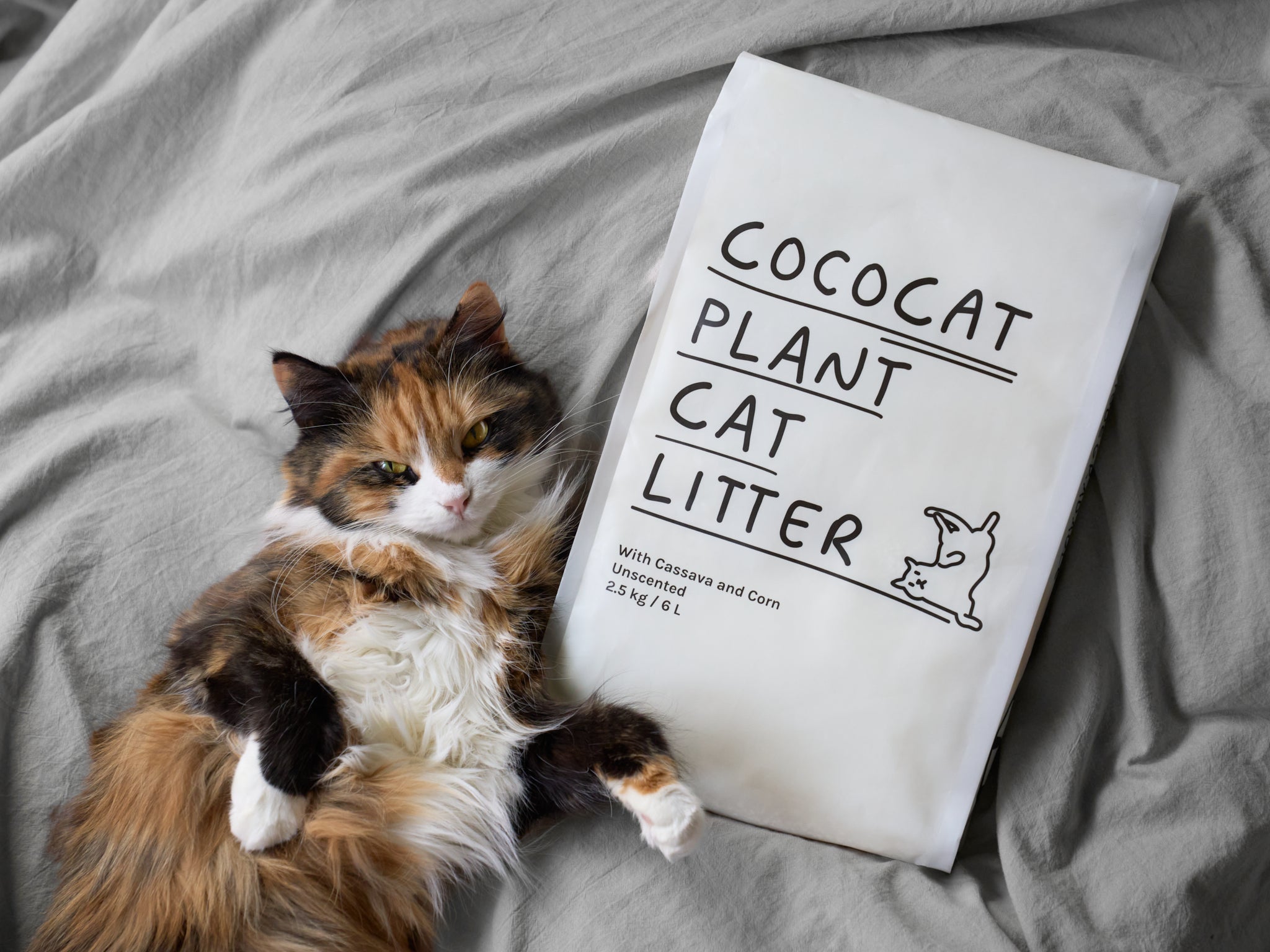
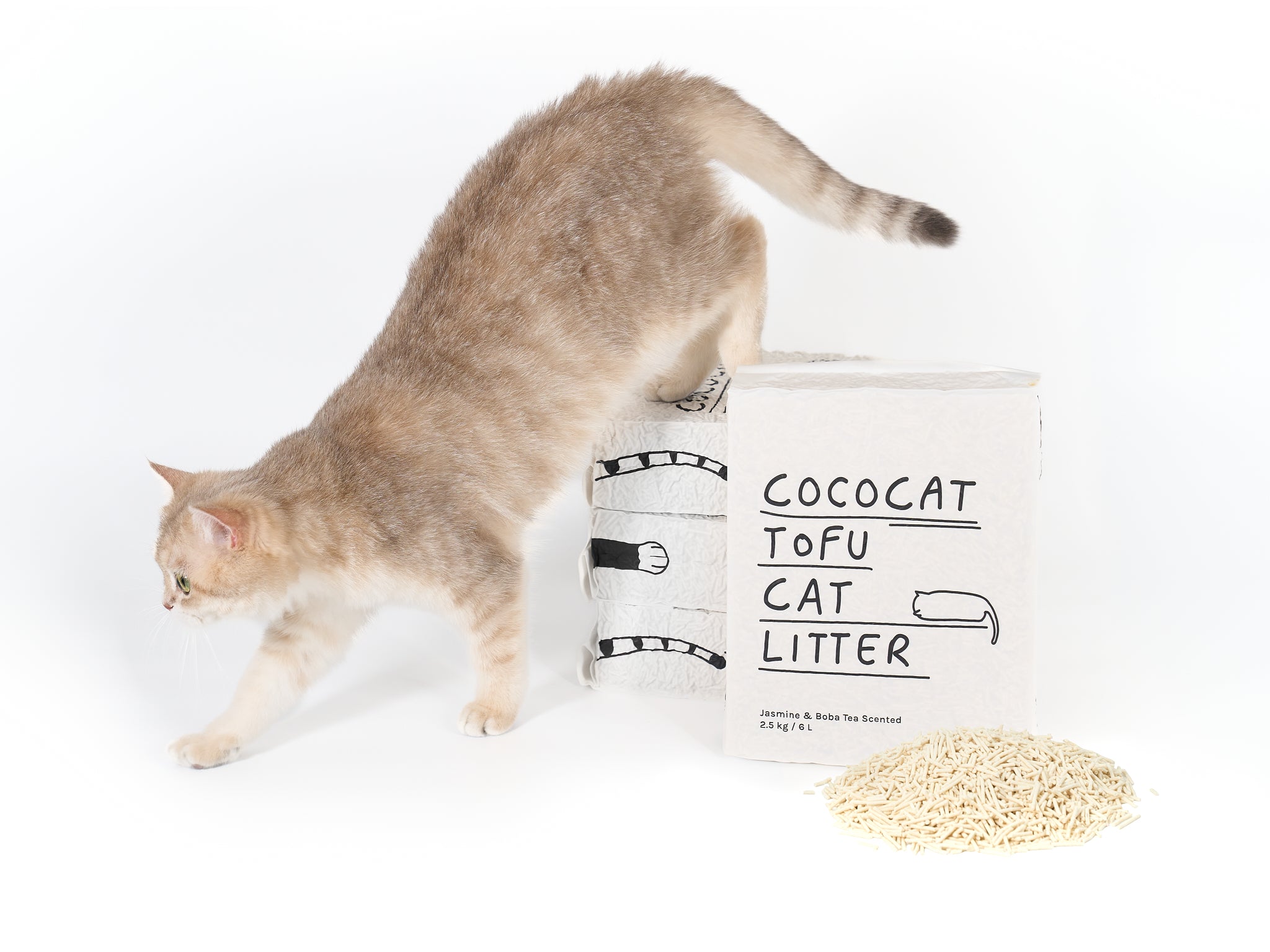
The starch that makes cassava a valuable crop is also what makes it a capable litter. Milled fine, it forms an even, small grain that clumps firmly around moisture and pours without scattering, which is precisely what the sensors and rakes inside an automatic litter box are built for. CocoCat's cassava litter is made from cassava flour blended with corn starch, corn flour and guar gum, all of it plant, unscented, and clumping on the cassava's own starch rather than on any mineral filler.
As for the cat itself, a dried plant granule is inert to paws and to the everyday work of digging and covering, and plant litters carry a lower ingestion risk than clumping mineral clay, which absorbs water and can swell and set inside the gut if a cat swallows a quantity of it. The one caution worth keeping is the very young kitten who tastes everything within reach, and who is worth an eye whatever the litter is made from.
That leaves the question people most often reach for: cassava root naturally holds a compound that can release cyanide, so is a litter made from it safe? It is a fair thing to ask, and the answer is exact rather than reassuring. We take it apart in full in the companion piece. Read: is cassava cat litter safe? The cyanide question, answered.
Sources
- Cassava's low-input resilience, drought tolerance, marginal-soil yields (~8 to 10 tonnes per hectare) and its role for resource-limited smallholders: Adoption and Promotion of Resilient Crops... Cassava for South African Agriculture, Frontiers in Sustainable Food Systems (2021). frontiersin.org
- Thailand as the world's largest cassava exporter; cassava as a cash crop rather than a staple food; more than 90% small family farms; roughly 738,000 farming households: Cassava Value Chain in Thailand, Encyclopedia MDPI, encyclopedia.pub; FAO, A review of cassava in Asia, fao.org
- Rapid post-harvest deterioration (spoilage within 24 to 48 hours, unusable within 3 to 4 days) and 30 to 60% loss of root-crop value, with ~19 million tonnes lost in Africa in one assessment: FAO, Socio-economic importance of rapid post-harvest deterioration of cassava. fao.org
- Bentonite clay litter as strip-mined, finite and non-biodegradable, and cat-litter landfill volumes (industry estimates): The Hidden Environmental Cost of Traditional Clay Cat Litter, Healthy Pet. healthy-pet.com


Leave a comment
This site is protected by hCaptcha and the hCaptcha Privacy Policy and Terms of Service apply.