Article: Cats and the Christmas tree: what actually stops the climbing
Cats and the Christmas tree: what actually stops the climbing
For eleven months of the year the tallest thing in a British sitting room is a bookcase, and the cat has been on it. Then one evening in December a six-foot tree comes through the front door with the bark still on, is set down in the cat's favourite window, and is hung from top to bottom with small shiny things on strings. From the cat's side of the room, nobody has ever brought home a better present.
When 2,000 British pet owners were surveyed in 2018, 31 per cent of the cat owners said they had had the Christmas tree pulled down, and 40 per cent had had decorations knocked over. A tree coming down is the part everyone pictures. It is a nuisance and it can hurt the cat, and it is the easiest part to fix. The part worth an hour of your time is smaller and hangs lower: tinsel, ribbon, a chewed cable, a bunch of lilies somebody brings on Christmas Eve. Here is what stops the climbing, in the order I would do it, and which of the popular tricks you can skip.
Why are cats so obsessed with Christmas trees?
Cats go for Christmas trees because a tree is everything a cat looks for indoors, delivered in one go: height to watch the room from, a trunk to climb and scratch, branches to hide in, and small objects that swing when they are touched. It is also new, and it is standing in the cat's territory, so it has to be inspected. None of that is bad behaviour. A cat that climbs the Christmas tree is doing what the same cat does on a fence or an apple tree, and the fix is to make the Christmas tree harder and duller to climb while something else in the room is easier and better.

A cat wants to rest somewhere raised, where it can see what is coming. The guidelines feline vets wrote on what a cat needs at home list a high perch and a view outdoors among the things a cat should have, in the same breath as food and a tray. A bauble on a thread behaves like prey: it moves when it is hit, swings back and catches the light. Tinsel shivers when the heating comes on. A real tree adds bark, which is what a cat scratches outdoors, and the smell of outside.
Then there is where we put it. The tree's traditional spot is the front window, and the windowsill or the chair beside it is where an indoor cat watches the street. So we have not only brought a tree in, we have stood it on the cat's lookout. Nobody has measured how much of the climbing that explains and I cannot prove it, but it changes where I would put the tree.
How do I stop my cat from destroying my Christmas tree?
Four things stop a cat destroying a Christmas tree, and they work in this order. Tie the tree to the wall or ceiling so it cannot fall. Stand it clear of the sofa back, shelves and windowsill a cat could jump from. Leave the bottom third bare, and keep tinsel, ribbon and glass off it altogether. Then give the cat a better place to climb in the same room, nearer the window than the tree is. No spray, peel or foil does as much as any one of those four, and a tree that is tied up and hung with unbreakable decorations can be climbed without anybody getting hurt.
I sell cat trees, and the advice that sells them is fourth on that list. The first three cost a hook, a length of fishing line and nothing at all, and I would do them first.
Tie it to the wall first
A tree that cannot fall is half the problem gone, because the fall is what breaks the glass, pulls the lights out of the socket and frightens or hurts the cat. Run fishing line or thin wire from the trunk, about two thirds of the way up, to a small hook in the wall, the window frame or the ceiling. Two lines to two hooks hold better than one. Once the tree is dressed you will not see them.

Then the base. A stand full of water under a real tree is heavy already. The folding metal feet of an artificial tree are not, and a bag of sand or a couple of bricks laid across them, under the skirt, is enough to stop the tree walking when a cat lands in it.
Size is the third thing you can change. The same cat halfway up a seven-foot tree pulls on it much harder than it does on a four-foot one. If this is your first Christmas with this cat, a smaller tree is the cheap way to find out what kind of cat you have.
Where the tree goes
The easy way into a tree is from above. The back of the sofa, a bookshelf, the windowsill, the arm of a chair: anything at branch height within a jump is a launch point, and the tree wants to be clear of all of them. A corner with two bare walls is the best spot in the room, and it gives you two walls to tie to.
If the tree has to go in the window, give the cat its view back before the tree arrives: a perch, a chair or a cat tree at another window, or at the far end of the same one.
If there is a room with a door, that is the room for the tree. Shutting the door overnight and when the house is empty does more than anything else on this page, because nobody is there to see what the cat does at three in the morning. Switch the lights off at the wall when you close it.
One trick is worth trying because it costs nothing. Put the tree up bare and leave it for two or three days before you decorate. The idea is that the cat inspects it, climbs it if it is going to, and loses interest while there is nothing on it to break. Rescue centres recommend it. I have not found anyone who has tested it, so call it free and unproven.
Is tinsel dangerous for cats?
Yes. Tinsel is dangerous to cats, and it is the one decoration to leave in the box. A cat that plays with tinsel, ribbon or thread can swallow it, and a long strand does not pass through the way a small object does: one end catches, the gut gathers up along it, and the cat needs surgery. In a British study of 208 dogs and cats treated for something they had swallowed, every cat with a single object recovered, and 63 per cent of the cats with a string-like one did. Baubles, needles and fake snow cause upsets. String causes emergencies.
It is not rare, either. When the British Veterinary Association surveyed its members, 28 per cent of vets had seen at least one case involving decorations such as tinsel or fairy lights over the previous Christmas. The same rule covers the ribbon on the presents, the string off the joint of meat, knitting wool and angel hair.
What goes on the tree instead is anything that neither shatters nor unravels: wood, felt, paper, plastic. Fix each decoration close to its branch with a twist of florist's wire, so that there is nothing long to pull off. Put nothing on the bottom third, where a paw reaches from the floor, and nothing made of chocolate anywhere, because chocolate poisons cats as well as dogs. Wind the lights in close to the trunk, run the cable through a length of plastic or cardboard tube where it crosses the floor, and switch them off at the wall when you go out or go to bed.

If you see thread, ribbon or tinsel hanging from a cat's mouth or from under its tail, do not pull it. Ring the vet. Ring as well if a cat is sick more than once, goes off its food or hides in the days after the decorations go up. In the study above, the longer the signs had gone on before treatment, the worse the cat's chances.
Is there an artificial Christmas tree that is cat-proof?
No Christmas tree is cat-proof, artificial or real, because a cat can climb both. An artificial tree is the lower-risk choice for a cat that chews: it has no needles to shed, no oils and no water in the stand. The trees sold as cat-proof are ordinary trees with the lower branches taken off, so the decorations start above paw height, or half trees and pencil trees that sit flat to a wall and leave less to jump into. They make the climb harder. They still need tying to the wall, and they still should not carry tinsel.
A real tree is not poisonous in the way a lily is. The needles are sharp and do not digest, and the oils in them irritate the mouth and stomach, so a cat that chews a few may dribble, be sick or have diarrhoea. The animal charities word the risk differently, from "low toxicity" at one end to a warning about liver damage at the other, and the cautious reading costs nothing: a cat that keeps going back to eat needles should not be left alone with the tree, and a cat that is sick more than once needs the vet. Sweep up fallen needles every day, because they also lodge in paws.
The stand is the other thing. Tree water goes stale, and plant food or preservative in it is worse, so add nothing to the water and cover the stand with the tree skirt or a circle of card cut to fit round the trunk.
What scent will keep cats away from the Christmas tree?
No scent reliably keeps a cat away from a Christmas tree, and the strong ones are a risk in themselves. Orange or lemon peel round the base is the mild version; owners report it working and not working, nobody has tested it, and it should be picked up if the cat starts to chew it. Essential oils of any kind, citrus and pine included, and the room sprays and reed diffusers made from them, should not be used to put a cat off anything. A cat's liver cannot break down certain chemicals in them, and a cat that gets them on its coat swallows them when it washes. Foil round the trunk works on the cats that dislike the feel of it and not on the rest.
Deterrents miss for a plain reason. The cat still wants a high place and something to hit, a smell on the lower branches does not change that, and the top of the tree does not smell of oranges.
Anything built to startle a cat, such as a compressed-air can or an alarm, I would leave on the shelf. Christmas already fills the house with strangers and noise, and what a cat needs that week is a quiet place to hide, not another fright.
What are some safe alternatives to a Christmas tree if I have cats?
The safe alternatives to a full-size Christmas tree in a house with a cat are a half tree or flat wall tree fixed to the wall, a small tree in a room whose door you can shut, a tree with a bare lower trunk, or lights and paper decorations hung above head height with no tree at all. Each one takes away either the climb or the fall. The other alternative is the one sold as a "cat Christmas tree": a climbing tower for the cat, shaped and coloured like a fir, which gives the cat a tree to be in instead of yours. I do not stock one. An ordinary cat tree does the same job, and it earns its floor space in January too.
Which one depends on the cat. For a kitten, or an adult you already know to be a climber, a half tree or the shut door. For an older cat that has seen it all before, a normal tree, tied, with the tinsel left out, is all it takes.
Will a kitten climb the Christmas tree?
Assume a kitten will climb the Christmas tree, and set the room up for that. A kitten is light enough to get up branches that would not hold an adult cat, it puts whatever it finds in its mouth, and it has never seen a tree indoors. For a first Christmas, use a small tree in a room with a door, or a half tree on the wall, hang nothing on it that can break or be swallowed, and shut the door overnight and when you go out. Give the kitten a climbing tree of its own and a play session every day, and it has somewhere else to spend the energy.
Give the cat a tree of its own
Everything so far makes your tree harder to climb. This is the one fix that gives the cat somewhere it would sooner be.
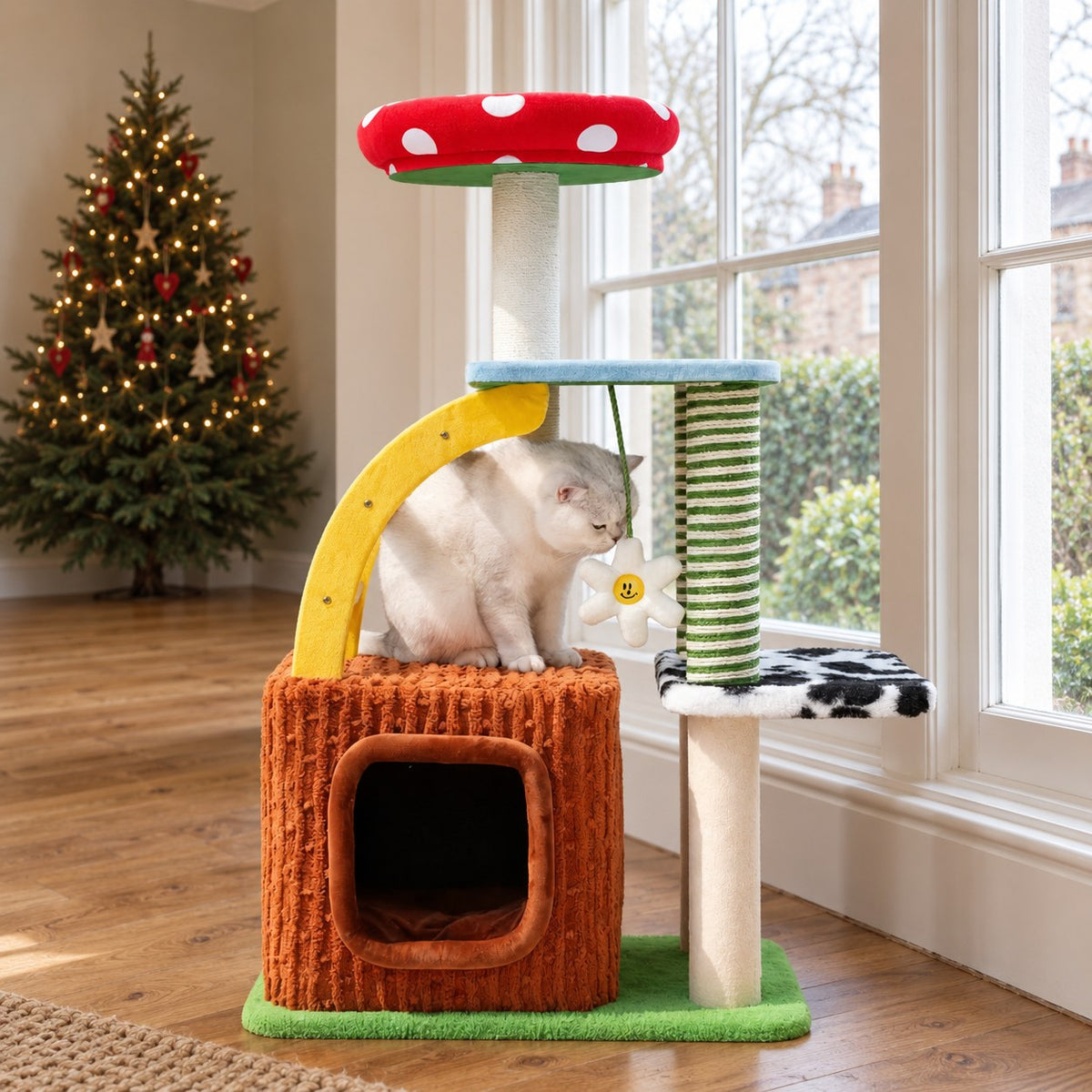
A cat tree has to beat the Christmas tree on three things. The first is the view: stand it at a window, nearer the glass than the Christmas tree is, because a cat picks the perch it can see the most from. The second is height: the top perch should be above the back of the sofa, so the cat is looking down on the room from it. The third is being there first. Put the cat tree up a week or two before the Christmas tree arrives, with the cat's own blanket on the top perch, so that it already smells of the cat when the new thing comes through the door.

Keep the two trees apart. A cat tree standing next to a Christmas tree is a ladder into it. Opposite sides of the room is best; failing that, far enough apart that the cat has to come down to the floor to get from one to the other.
Then add the other two things the Christmas tree offers. One is something to scratch, placed on the side of the Christmas tree the cat walks past, because cats scratch upright things on their way through a room and a trunk in a stand is as upright as it gets. The other is something on a string that it is allowed to hit: ten minutes with a wand toy in the early evening, before the room fills up, is where I would send the energy that otherwise goes on the baubles.
Nobody has run a trial of cat trees against Christmas trees, and a cat with a tree of its own may still try yours once. What changes is what happens next. A tree that is tied up, with nothing breakable on its lower branches, is dull after the first climb, and the perch by the window is not.
The rest of the room
Two things that arrive with the tree are more dangerous than the tree. The first is lilies. Every part of a lily is poisonous to cats, the pollen included, and less than one leaf, or pollen licked off the coat, is enough to cause kidney failure. Check every bunch of flowers that comes into the house in December and take the lilies out before it goes in water. Poinsettia has a worse name than it deserves: it irritates the mouth and may make a cat sick, and the charities list nothing worse for it. Holly and mistletoe berries and ivy upset the stomach and belong above cat height. The second is the snow globe: some are filled with antifreeze, which is poisonous to cats, so a broken one is mopped up at once and the cat kept out of the room until it is.
Christmas is also strangers, noise and the furniture moved round. Give the cat a quiet room or a covered bed where nobody will disturb it, feed it at the usual times, and put a second litter tray somewhere away from the guests. Cats Protection recommends that extra tray, and I would put it in the same quiet room as the bed, so the cat does not have to cross a sitting room full of people to reach it.
What this means for the cat's own tree
If there is room at a window, the zeze Farmhouse tree is the tallest I stock at 138cm, on a 70 by 60cm base, and it weighs about 13.5kg. The top is a wooden house with a cushioned floor and an arched door, and below it are a platform and two hammocks. It is shorter than a six-foot Christmas tree and it does not need to be taller. It needs the window.
For two cats, the zeze Deluxe 3-in-1 tower stands 118cm on a 68 by 65cm base, with two tree-trunk dens and a cushioned mushroom-top bed above them, so there is a den each when the doorbell starts. The zeze 3-in-1 tree is the one-den version at 102cm, with a catnip flower hanging on a cord where a paw can reach it.
In a small flat, the zeze Two-Tier Arch tree takes 45 by 45cm of floor and stands 86cm, with sisal posts, a rubbing pole and a stack of textured balls up one side. The zeze Happy Farm tree puts a nest 105cm up, on a 60 by 53cm base with two perches below it.
For the scratcher beside the Christmas tree, the zeze Cactus post is 65cm of rope-wound trunk on a 35cm weighted base, with a pom-pom on a cord low enough to catch a paw: a thing on a string, and this one is the cat's. For a long cat, the Shy Tulip post is 85cm with a ball on a cord and a 39cm base. Which post suits which cat is in the scratcher piece.
Cats sit in the boxes under the tree whatever is in them, so I would put one there that is theirs. The zeze Checkered scratcher box is 44.5 by 29cm with 16cm walls and a scratch pad set into the floor, and it comes with a sachet of catnip. It can stay when the wrapping paper goes.

For things to hit, the pidan bouncy ball and feather set is three 30mm balls with a feather on each, and the caterpillar and dachshund wands are for the ten minutes before the guests arrive. For the quiet room, the zeze Blue Monster house is a plush dome with a wide doorway, and where cats sleep covers where to put it.
The trees are all in the trees and beds collection, the posts and boxes in scratchers, and the wands in toys, with the rest of the zeze range.
Before the tree comes in
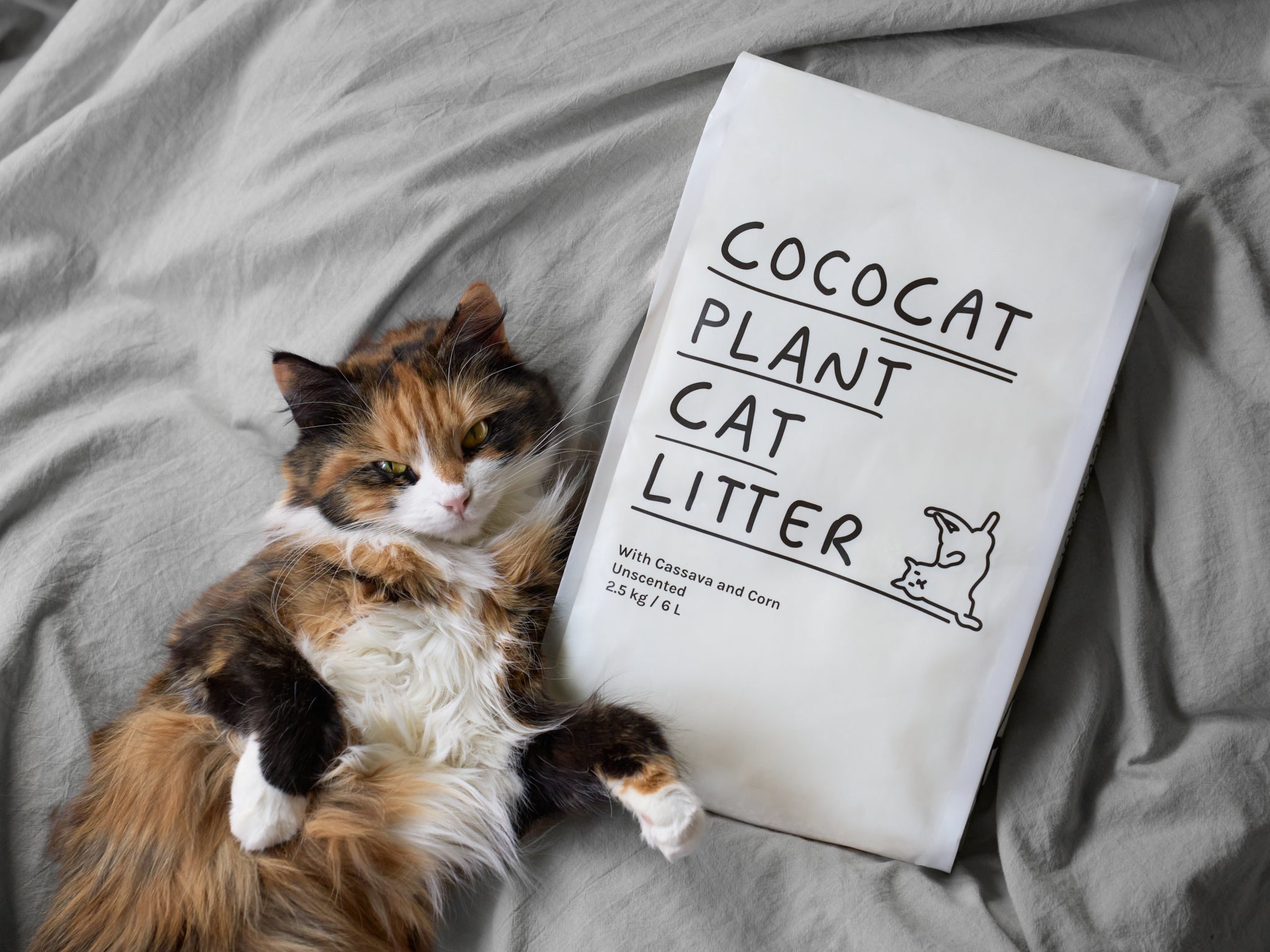
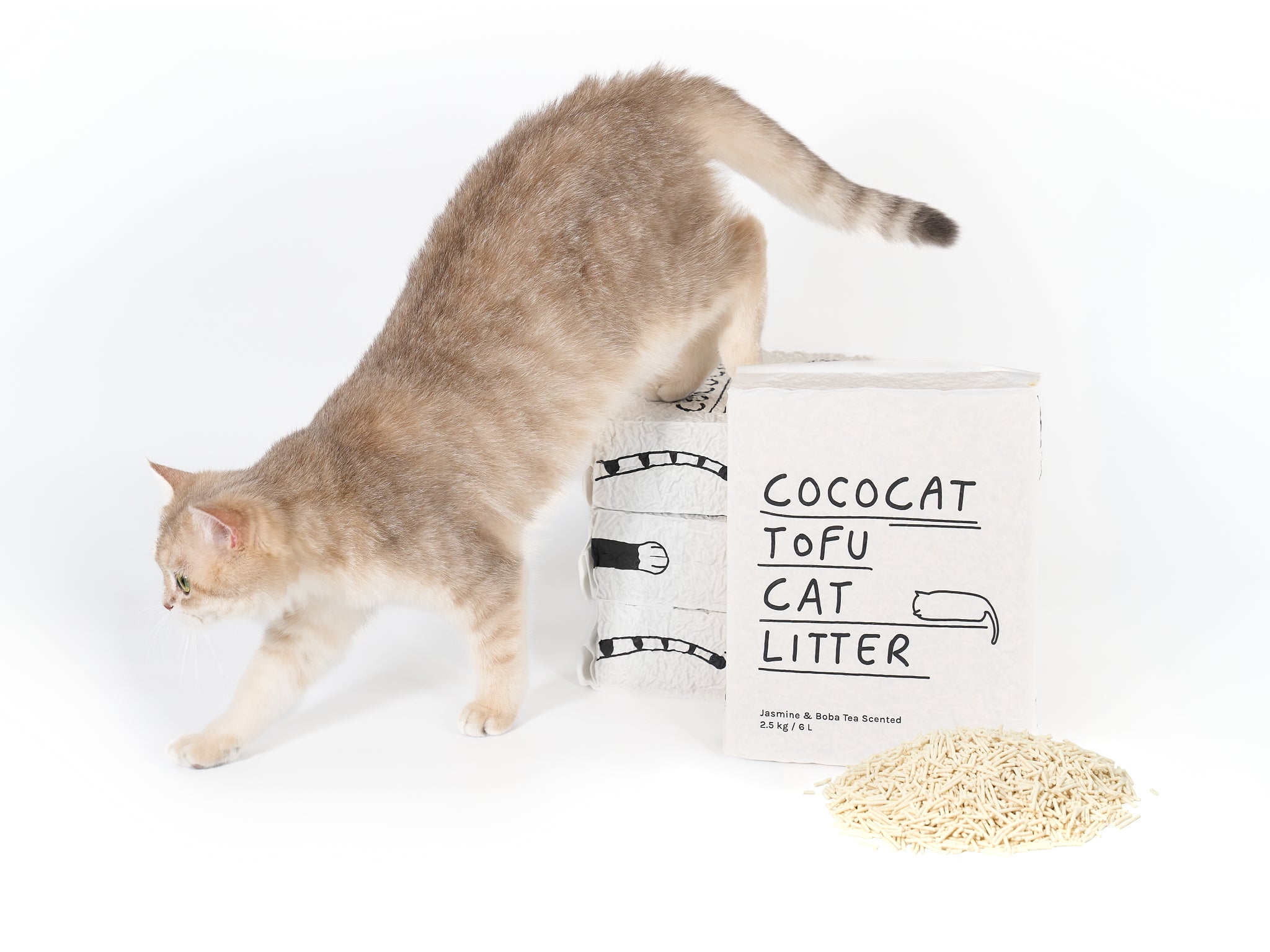
Put the cat's tree up first, at the window, a week ahead: the trees and beds collection has every one named above. If the sofa arm is already taking the scratching, the scratcher piece says which post goes where. For the days when the house is full, where cats sleep covers what a cat wants from a hiding place. The extra tray goes in that same quiet room, filled with the litter the cat already uses, because Christmas week is the wrong week to change it; keeping a cat in a flat covers where a tray fits when there is not much room to choose from, and the two litters I make are CocoCat tofu litter and CocoCat cassava litter.
Related posts
- Sisal, cardboard or carpet: choosing a scratcher your cat will use
- Where cats actually sleep, and whether a bed changes it
- Keeping a cat in a flat: the tray, the smell and the space
Sources
- Cats Protection: Cats at Christmas
- Journal of Small Animal Practice, 2009: Gastrointestinal foreign bodies in dogs and cats: a retrospective study of 208 cases
- British Veterinary Association, 2019: Eye on the pies: vets warn pet owners to keep edible festive hazards out of paws' reach
- International Cat Care: Cats and poisons
- Journal of Feline Medicine and Surgery, 2013: AAFP and ISFM Feline Environmental Needs Guidelines