
Does Cassava Cat Litter Contain Cyanide?
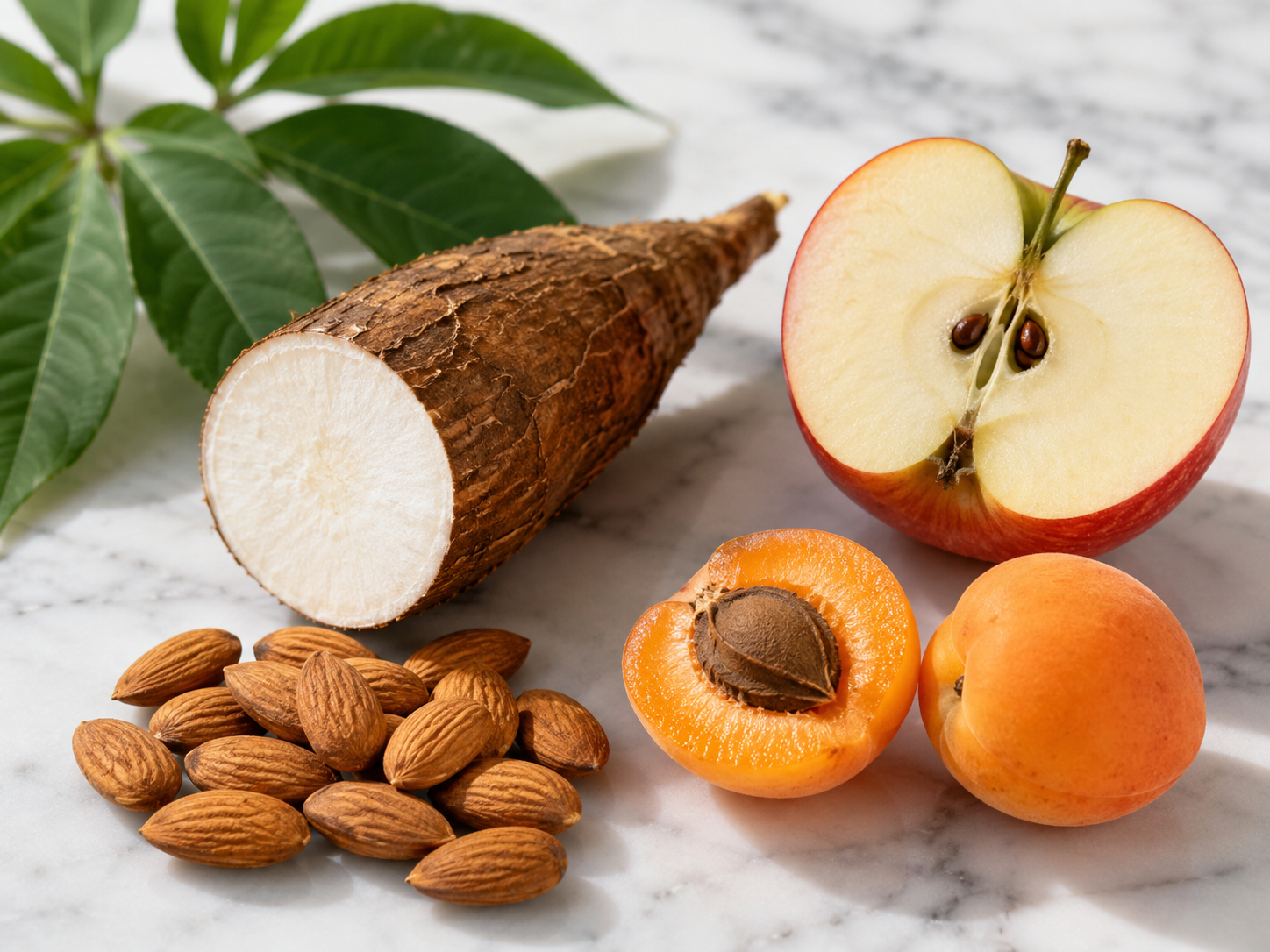
Yes, cassava holds a compound that can form cyanide. So does the almond in your baking cupboard, the pip inside an apple core, and the kernel at the centre of an apricot stone. Bitter almonds, cherry stones and flaxseed carry the same chemistry. It is one of the most ordinary defences in the plant kingdom, a way for a root or a seed to make itself unpleasant to whatever tries to eat it. Presence, then, settles nothing. The question worth asking is not whether the compound exists in cassava, because it plainly does, but whether it can ever travel from a bag of litter to you or your cat. That answer depends entirely on chemistry and manufacture, and it is worth getting exactly right.
The chemistry, named and precise
The compound in cassava is called linamarin, a cyanogenic glucoside. Bitter cassava varieties carry a second one, lotaustralin, in smaller amounts. On its own, linamarin is a stable white solid. It sits inertly in plant tissue and does nothing dangerous by simply being present. It contains no free cyanide at all.
Hydrogen cyanide appears only when a specific set of conditions line up at once. The plant makes its own enzyme, linamarase, which breaks linamarin apart. When that enzyme meets linamarin in the presence of water, the reaction runs through an unstable intermediate called acetone cyanohydrin and finally releases hydrogen cyanide gas. Crucially, in the living plant the enzyme and the glucoside are held in separate compartments of the cell, kept apart so that nothing happens until the tissue is physically ruptured. Crush the root, add water, and the two meet. That is the whole trigger.2
This matters because it tells you what kind of event cyanide release actually is. It is wet, it is enzymatic, and it happens on the ingestion side, inside crushed tissue or inside a digesting gut. It is not something a dry solid does sitting in the air.
Where cassava has harmed people, and when
Cassava has caused real and serious harm, and the honest thing is to say where and when. Two conditions stand out. Konzo is a sudden, irreversible paralysis of the legs. Tropical ataxic neuropathy is a slower nerve disease affecting movement, sensation and sometimes sight. Both appear in the historical and medical record in one particular setting: subsistence farming communities during drought, war and famine, in years when hungry families leaned on bitter, high-cyanide cassava and cut short the days of soaking and fermenting that normally make it safe. The danger was compounded because those same famine diets were low in protein, which left the body short of the sulphur-bearing amino acids it uses to clear cyanide. These were events tied to a time, a place and a set of hard conditions, not a property of cassava as it reaches a shop today. Documented cassava harm comes from eating unprocessed bitter root in a subsistence emergency, which is the precise opposite of a washed, dried, food-grade product made to a modern standard.5
Why modern, food-grade cassava is safe

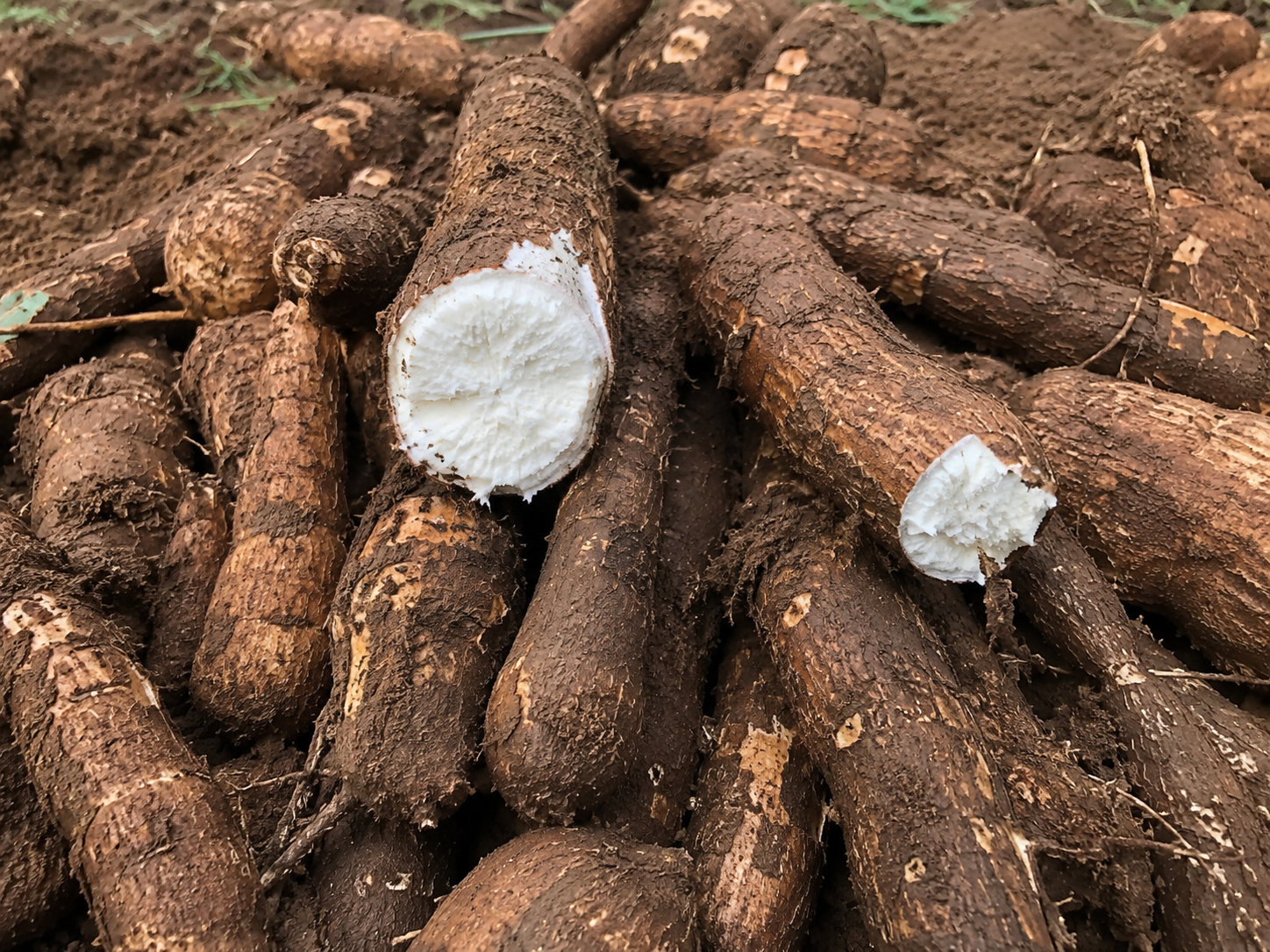
What separates a bag of food-grade flour from that history is standardisation. The harm above came from processing done by hand, under pressure, with no measurement and no margin for error. A modern food supply does the same job deliberately, at scale, and to a number. Two things carry it: the variety and the processing. Sweet cassava, the kind grown for eating, carries far less cyanogenic content than the bitter, high-yield varieties. And the industrial steps that turn a root into flour or starch strip out most of what remains. Crushing and drying removes 96 to 99 per cent of total cyanogens. Wet-milling to extract starch carries 40 to 70 per cent of them off into the wash water. Heap fermentation removes roughly half. These processes work precisely because they do deliberately, under controlled conditions, what the plant does accidentally when chewed: they rupture the cells, add water, let the enzyme act, then wash and drive off the products.3
"Food grade" is not a marketing mood, either. It is a measured threshold. The international Codex Alimentarius standard for edible cassava flour (CXS 176-1989) sets a hard ceiling of 10 milligrams of hydrogen cyanide per kilogram. That figure was not chosen arbitrarily. The Joint FAO/WHO Expert Committee on Food Additives concluded that flour at this level is not associated with acute toxicity. A flour that has been certified food grade has, by definition, already cleared that bar before it is sold for anything.4
Why "cyanide dust" specifically is a non-thing

The phrase sounds alarming, which is exactly why it is worth taking apart. A particle of dry cassava flour is not a particle of cyanide. It may contain a trace of the glucoside, but the glucoside is not cyanide and cannot become cyanide without the enzyme, the water and the ruptured cells all present together. A dry bag of litter, and the fine flour dust that puffs up when you pour it, provides none of these. There is no moisture to run the reaction and no enzymatic release happening in the air.
Even the ingestion route, the one that genuinely matters for cassava, is heavily buffered. If a cat swallowed a little of the glucoside, stomach acid deactivates the enzyme that would otherwise free the cyanide. And the record backs this up: no case of cyanide poisoning from cat litter appears in the veterinary or toxicology literature.
It helps to hold the numbers next to each other. The acute lethal dose of hydrogen cyanide for an adult human is roughly 50 to 60 milligrams of free cyanide. That is the quantity in play. Against it you have trace amounts of a stable, non-volatile solid, arriving by a route that has no chemical mechanism to convert it. The two are not close. They are not on the same scale.1
Why CocoCat's litter specifically is safe
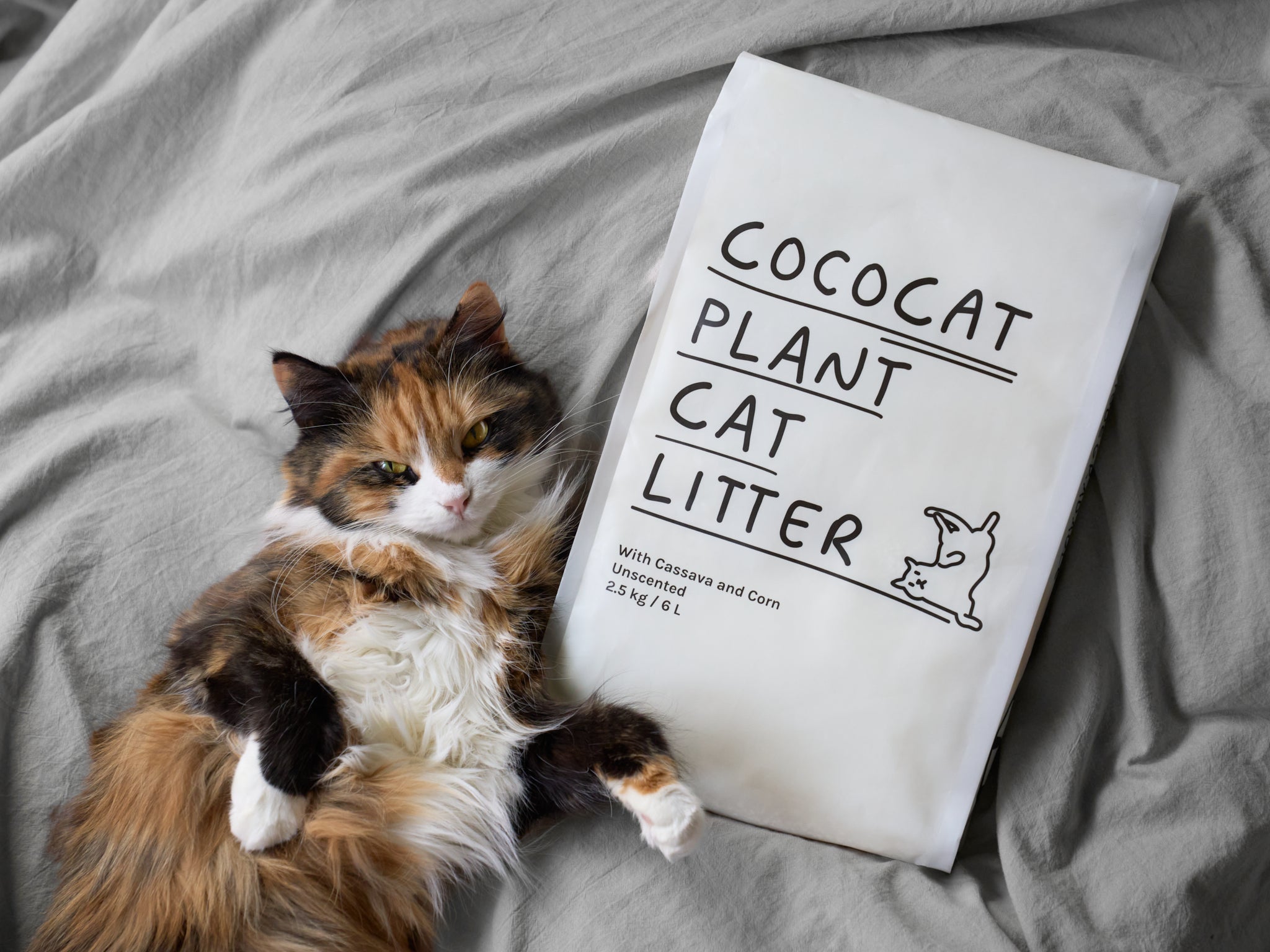
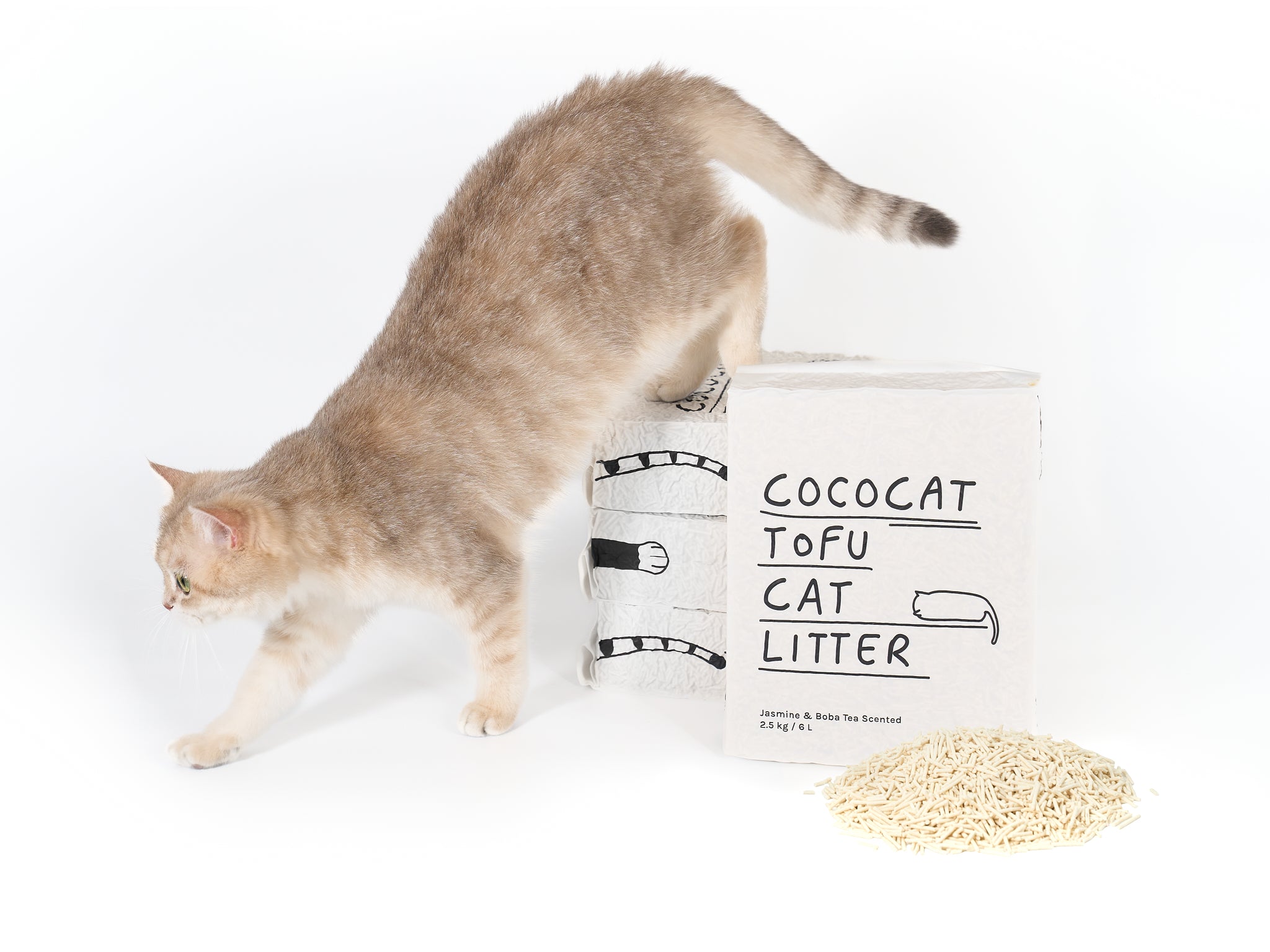
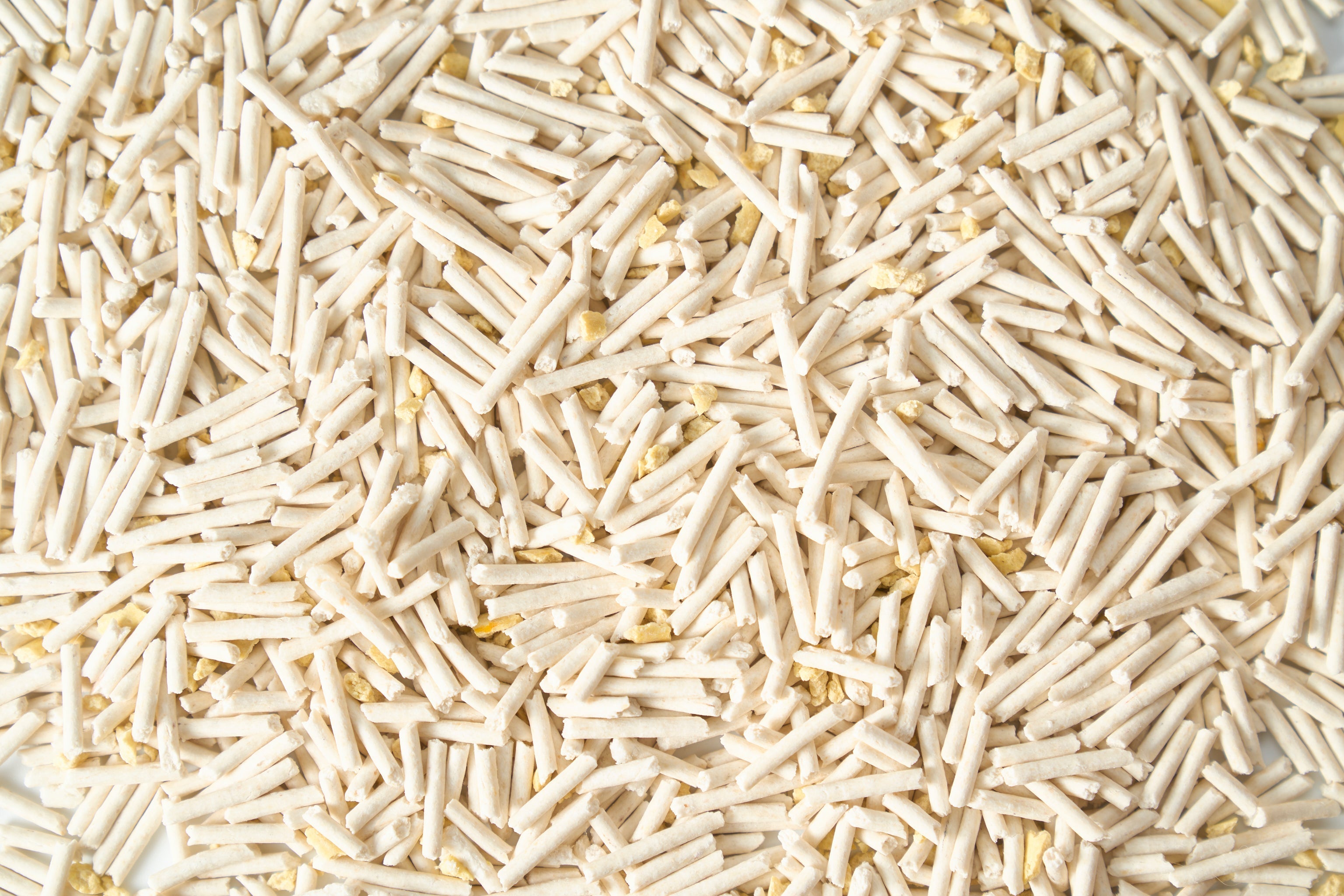
CocoCat uses cassava flour imported from Thailand under the human-food import standard rather than any looser industrial grade. That single fact carries the weight of this whole article: to enter the country as human food, the flour has already been held under the regulated cyanide ceiling described above. It starts safe. The recipe adds corn starch, corn flour and food-grade guar gum, and nothing else of concern.
Then manufacture repeats the very actions that make cassava safe to eat in the first place. The material is heated and pressed: the same crushing, and heat that carry cyanogens away and drive off any volatile trace. There is no added fragrance, no colourant and no mineral filler, a point worth keeping distinct from the calcium-carbonate filler question some other cassava litters raise. If you want the fuller picture of what cassava actually is and where it comes from, that sits in what is cassava, and is it safe for cats.
One more thing, stated plainly because it is not yet finished: an independent laboratory test of the finished litter is under way, and the certificate will be published here when it is complete. Until then, the case rests on the chemistry and the sourcing, both of which are above.
Request cassava litter lab test report download
The bottom line is simple, and it is the one the science keeps pointing at. The material was never the danger. What matters is how it is made.
Sources
- Food Standards Australia New Zealand, Technical Report Series 28: Cyanogenic glycosides in cassava and bamboo shoots (2004). Lethal-dose figures and the stomach-acid deactivation of the enzyme. foodstandards.gov.au
- Linamarin and the linamarase mechanism. Linamarin (Wikipedia); Cyanide in Cassava: A Review
- Processing-removal figures. FAO, Roots, tubers, plantains and bananas in human nutrition, fao.org; Montagnac et al. (2009), Comprehensive Reviews in Food Science and Food Safety, Wiley Online Library
- Codex Alimentarius, Standard for Edible Cassava Flour (CXS 176-1989): 10 mg/kg hydrogen cyanide ceiling, assessed by JECFA as not associated with acute toxicity. Codex Alimentarius
- Konzo and cassava cyanogen toxicity. PubMed

Leave a comment
This site is protected by hCaptcha and the hCaptcha Privacy Policy and Terms of Service apply.